Introduction
A battery discharge test provides valuable information about the actual performance and reliability of an industrial battery system. However, completing a discharge test is only part of the process. Engineers and maintenance technicians also need to understand the recorded data, evaluate voltage behavior, identify abnormal battery performance, and determine whether the battery bank can continue supporting critical loads.
A well-prepared Battery Discharge Test Report turns raw testing measurements into useful maintenance information. It helps facility managers understand battery capacity, identify weak cells, compare test results over time, and make informed decisions about battery maintenance or replacement.
This is particularly important in telecommunications base stations, UPS installations, electrical substations, railway power systems, and hydroelectric power stations, where backup batteries must remain available during unexpected power interruptions.
In this article, we explain the essential information contained in a battery discharge report, how to interpret discharge curves, which parameters deserve attention, and how automated testing equipment can improve reporting accuracy and maintenance efficiency.
-
What Is a Battery Discharge Test Report?
A battery discharge test report is a technical record generated during or after a controlled battery discharge test. It documents how a battery or battery bank performs when supplying a specified load over a period of time.
During the test, a battery discharge tester applies a controlled discharge current or power and records important operating parameters. These measurements provide an objective basis for evaluating battery performance under actual discharge conditions.
A typical report may contain:
- Battery identification and system information
- Initial battery voltage and operating conditions
- Discharge current or power
- Voltage measurements during discharge
- Total discharge duration
- Discharged capacity in ampere-hours (Ah)
- Individual cell voltage measurements, when available
- Discharge termination conditions
- Voltage and current curves
- Test conclusions and maintenance recommendations
Unlike a simple voltage measurement, a discharge test evaluates battery behavior over time under a defined electrical load.
For industrial backup power systems, this information is essential because a battery may show an acceptable resting voltage while still having insufficient capacity to support its designated load.
The report therefore provides a more complete understanding of battery condition and helps maintenance teams identify performance deterioration before an actual power interruption occurs.
-
Essential Parameters in a Battery Discharge Test Report
Understanding the main parameters is the first step toward accurate report interpretation. Each measurement provides a different perspective on battery performance.
2.1 Initial and Final Battery Voltage
Initial voltage refers to the battery voltage measured before the discharge process begins. It helps establish the starting condition of the battery bank.
Final voltage is the voltage recorded when the test reaches its termination condition. This may be determined by a preset battery group voltage, individual cell voltage, discharge duration, or another configured limit.
Comparing initial and final voltage helps engineers understand the overall voltage drop during discharge.
However, voltage alone cannot fully determine battery capacity. The discharge current, test duration, temperature, battery condition, and specified cutoff voltage must also be considered.
2.2 Discharge Current
Discharge current represents the electrical current supplied by the battery during testing.
In a constant-current discharge test, the tester maintains a preset current throughout the process, allowing engineers to evaluate battery performance under a controlled load.
A stable discharge current is important because significant variations can affect the comparability and interpretation of test results.
For this reason, the report should clearly record the configured current and actual measured current.
2.3 Discharge Duration
Discharge duration indicates how long the battery can continue supplying the specified current before reaching the termination condition.
For example, if two battery banks are tested under comparable conditions, but one reaches its cutoff voltage much earlier, the difference may indicate capacity deterioration or an abnormal battery condition.
Discharge duration should always be interpreted together with the discharge current and test conditions rather than as an independent indicator.
2.4 Discharged Capacity
Discharged capacity is commonly expressed in ampere-hours (Ah).
Under constant-current discharge conditions, capacity can be calculated using:
Discharged Capacity (Ah) = Discharge Current (A) × Discharge Time (h)
For example, if a battery supplies 20 A continuously for 8 hours, the discharged capacity is:
20 × 8 = 160 Ah
For variable-current discharge conditions, capacity must be calculated by integrating current over time.
When evaluating rated capacity, engineers should compare the measured result with the manufacturer’s specified rating under the applicable discharge rate, temperature, and cutoff voltage.
These conditions are important because battery capacity is not a fixed value independent of operating conditions.
2.5 Individual Cell Voltage
For battery banks consisting of multiple series-connected cells, individual cell voltage measurements can provide additional diagnostic information.
A battery group may maintain an acceptable total voltage while one or more cells experience abnormal voltage drops.
Therefore, individual cell monitoring is particularly useful for identifying weak cells that might otherwise be hidden by the overall battery bank voltage.
-
How to Read a Battery Discharge Curve
A battery discharge curve is one of the most useful visual elements in a technical discharge report.
It typically illustrates how battery voltage changes over time during the discharge process. Depending on the testing configuration, the report may also display current and other recorded parameters.
Understanding the shape of the curve helps engineers identify abnormal discharge behavior and evaluate battery performance.
3.1 Initial Voltage Drop
At the beginning of discharge, battery voltage may decrease relatively quickly as the applied load is connected.
This initial voltage drop is associated with the battery’s internal resistance, electrochemical response, and operating condition.
A significantly larger-than-expected voltage drop may indicate increased internal resistance, poor connections, or battery deterioration.
However, engineers should consider the battery type, discharge current, temperature, and measurement configuration before drawing conclusions.
3.2 Stable Discharge Region
After the initial voltage response, many battery systems enter a relatively stable discharge region.
During this period, voltage gradually decreases while the battery continues supplying energy to the connected load.
This section is particularly useful for evaluating whether the battery can maintain an acceptable operating voltage throughout the required backup period.
Unexpected voltage fluctuations may indicate unstable connections, changing load conditions, or battery-related abnormalities.
3.3 End-of-Discharge Voltage Drop
As the battery approaches its discharge limit, voltage may decline more rapidly.
The point at which the battery reaches its specified cutoff voltage is important for determining its usable discharge capacity under the test conditions.
A sudden voltage decline before the expected discharge duration may suggest that the battery has deteriorated or that one or more cells are limiting the performance of the entire battery bank.
Engineers should review the individual cell measurements, when available, to determine whether the problem is concentrated in specific cells.
-
How to Identify Weak Batteries from Test Results
One of the most important purposes of a battery discharge test report is identifying batteries that may compromise the reliability of an entire backup power system.
In a series-connected battery bank, the performance of individual cells can directly affect the discharge capability of the complete system.
Several warning signs deserve attention.
4.1 Abnormally Low Cell Voltage
If one cell consistently shows a lower voltage than the other cells during discharge, it may indicate reduced performance.
Possible causes include aging, sulfation in lead-acid batteries, internal degradation, or poor electrical connections.
Maintenance technicians should investigate abnormal readings rather than relying exclusively on the total battery bank voltage.
4.2 Early Voltage Collapse
A weak battery may experience a rapid voltage drop under load, causing the battery bank to reach its cutoff voltage earlier than expected.
This behavior can reduce the available backup time and increase the risk of unexpected power interruption.
Comparing the discharge curve with historical test records can help identify gradual deterioration.
4.3 Reduced Discharge Capacity
When the measured discharge capacity is significantly below the expected value under comparable test conditions, the battery may no longer provide sufficient backup power.
Before deciding whether replacement is necessary, technicians should verify the test configuration, temperature, discharge rate, connection condition, and battery manufacturer’s specifications.
4.4 Increasing Performance Differences Between Cells
A growing voltage difference between cells may indicate an increasingly unbalanced battery bank.
Although a voltage difference does not independently establish the exact cause of deterioration, it provides a useful indication that further inspection and maintenance may be required.
Combining group-level discharge measurements with individual cell monitoring provides a more comprehensive evaluation.
-
Battery Discharge Test Report Format: What Should Be Included?
A consistent Battery Discharge Test Report Format makes it easier to compare results between different testing periods, battery banks, and maintenance teams.
For industrial applications, a practical report should include the following sections.
A. Basic Battery Information
- Site or facility name
- Battery bank identification
- Battery manufacturer and model
- Battery chemistry
- Rated voltage and capacity
- Number of battery units or cells
- Installation or commissioning date, if available
B. Test Configuration
- Test date and time
- Ambient temperature
- Initial battery voltage
- Configured discharge current or power
- Discharge mode
- Specified cutoff voltage
- Test termination conditions
C. Recorded Test Data
- Actual discharge current
- Battery group voltage
- Individual cell voltage, if monitored
- Discharge duration
- Discharged capacity
- Voltage and current curves
- Abnormal alarms or interruptions
D. Test Results and Evaluation
- Measured discharge performance
- Comparison with rated capacity
- Abnormal cell identification
- Potential performance issues
- Maintenance recommendations
E. Supporting Records
- Original measurement data
- Test curves and graphs
- Photographs or supporting records, where necessary
- Equipment identification
- Technician information
- Final report and approval records
A standardized reporting structure improves traceability and reduces the possibility of missing important test information.
It also makes historical performance comparisons more meaningful, particularly when multiple battery banks are maintained across different facilities.
-
Why Automated Battery Discharge Reporting Matters
Manual recording can become difficult during long-duration discharge tests involving large industrial battery banks.
Technicians may need to record current, voltage, discharge time, and other measurements at regular intervals. This process takes time and can introduce recording errors.
Automated battery discharge testing equipment helps simplify the process by collecting and storing measurements throughout the test.
Important advantages include:
Real-Time Data Monitoring
Automated equipment continuously monitors important discharge parameters, allowing technicians to observe voltage and current changes during testing.
Consistent Data Recording
Automatic recording reduces dependence on manual measurement and helps maintain a consistent testing record.
Visual Curve Analysis
Voltage and current curves make it easier to identify abnormal changes and compare performance throughout the discharge process.
Automatic Report Generation
Professional testing equipment can organize recorded data into structured reports, reducing the time required for manual documentation.
Improved Maintenance Traceability
Stored test records allow maintenance teams to review historical results and identify performance changes over multiple testing cycles.
For organizations responsible for multiple backup power systems, automated reporting can significantly improve maintenance workflow and documentation quality.
-
Choosing the Right Battery Discharge Testing Equipment
The quality of a discharge test report depends partly on the capabilities of the testing equipment.
When selecting a battery discharge tester, engineers should consider several technical factors.
Discharge Control Accuracy: The equipment should support the required discharge mode and maintain stable output under the intended test conditions.
Measurement Capability: Voltage, current, discharge time, and capacity measurements should meet the accuracy requirements of the application.
Data Storage: Sufficient internal or external storage is important when conducting long-duration tests or managing multiple battery banks.
Curve and Report Functions: Data visualization, historical record access, and automatic report generation can improve testing efficiency.
Safety Protection: Overcurrent, overtemperature, reverse polarity, and other protection functions help reduce operational risks during discharge testing.
Application Compatibility: The equipment should match the battery voltage range, discharge current requirements, and installation environment.
For industrial battery maintenance, portable or movable discharge testing equipment can also provide greater flexibility when testing battery banks at different locations.
-
HDGC3980: Supporting Accurate Battery Discharge Testing and Reporting
HDPOWER provides professional battery testing solutions for industrial backup power applications, including telecommunications, substations, railway systems, hydroelectric power stations, and UPS installations.
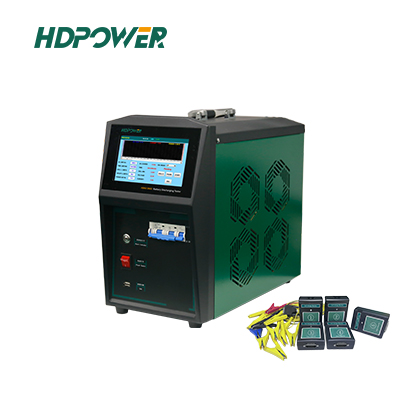
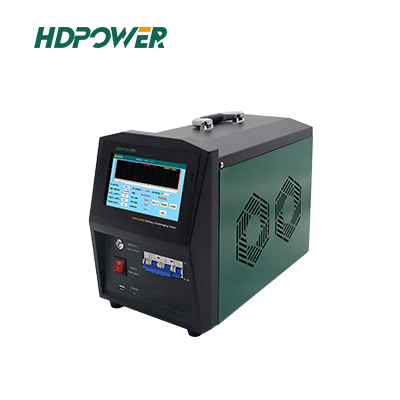
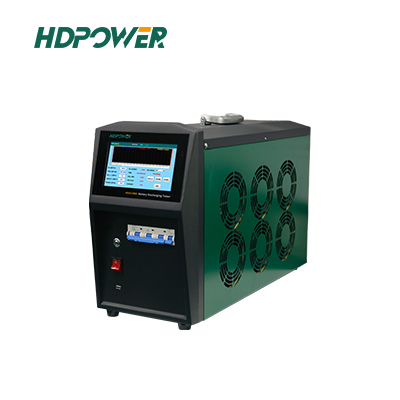
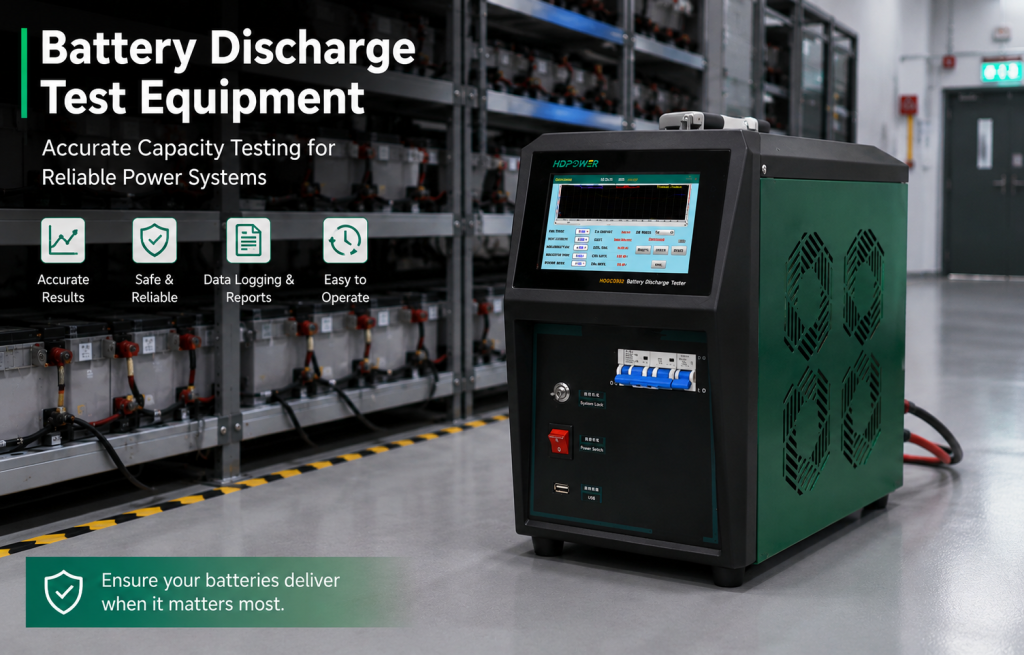
The HDGC3980 Battery Discharging Tester is designed for battery discharge experiments, capacity testing, and routine maintenance.
During discharge, the instrument monitors battery voltage, discharge current, discharge time, and discharged capacity in real time.
Its reporting and data management functions help maintenance technicians organize test information and review battery performance.
Key features include:
- Multiple Voltage Configurations: Supports DC 48V, 110V, 220V, 380V, and 480V system configurations.
- Discharge Current Capability: Supports different current ranges according to the selected voltage configuration.
- 7-Inch Touchscreen: Provides a convenient interface for test configuration and real-time monitoring.
- Data Storage: Internal storage and external USB data access support test record management.
- Curve Visualization: Displays voltage and current curves for reviewing discharge behavior.
- Automatic Report Generation: Supports Excel and Word report generation for documentation and analysis.
- Multiple Protection Functions: Includes overcurrent, overtemperature, reverse polarity, and other protection mechanisms.
- Parallel Operation: Multiple units can operate in parallel when higher discharge current is required.
The equipment also supports a rapid discharge function that can predict remaining battery capacity within approximately 3–5 minutes. This function is useful for preliminary assessment, while a complete discharge test remains necessary when detailed capacity verification is required.
For maintenance teams looking to improve discharge testing and documentation, explore the HDGC3980 Battery Discharging Tester to learn more about its technical specifications and applications.
-
Applications in Industrial Backup Power Systems
Battery discharge reports are particularly valuable in facilities where backup power reliability is essential.
Telecommunications Base Stations
Telecom operators use discharge testing to evaluate backup battery banks and monitor their ability to maintain power during grid interruptions. Historical reports help identify deteriorating batteries before they affect communication availability.
UPS Systems and Data Centers
UPS batteries must provide reliable backup power when the main supply fails. Discharge test reports help maintenance teams verify battery performance and assess whether the installed battery bank can support the required backup duration.
Electrical Substations
Substation DC battery systems supply power to protection, control, and switching equipment. Regular discharge testing provides useful evidence of battery condition and supports preventive maintenance planning.
Railway Power Systems
Battery systems are used in railway control, signaling, and backup power applications. Consistent testing records help maintenance personnel monitor battery performance and identify abnormal conditions.
Hydroelectric Power Stations
Reliable DC backup systems are important for plant control and emergency operations. Discharge test reports provide documented information for evaluating battery performance and planning maintenance activities.
Across these applications, standardized reporting helps organizations maintain consistent inspection procedures and improve long-term battery management.
-
Conclusion: Turn Battery Test Data into Better Maintenance Decisions
A battery discharge test is more valuable when its results are properly recorded, interpreted, and compared with historical performance data.
A comprehensive Battery Discharge Test Report helps engineers understand voltage behavior, evaluate discharged capacity, identify weak cells, and determine whether a battery bank requires further inspection or maintenance.
By combining controlled discharge testing, reliable measurement, automatic data recording, and structured reporting, industrial facilities can improve battery maintenance efficiency and make more informed decisions about backup power reliability.
For organizations operating telecom backup systems, UPS installations, substations, railway power systems, and other critical infrastructure, choosing suitable battery discharge testing equipment is an important part of maintaining dependable battery performance.
HDPOWER is committed to providing professional battery testing and maintenance equipment for industrial power applications. With appropriate testing procedures and reliable reporting tools, maintenance teams can build a clearer picture of battery condition and manage backup power systems more effectively.
Frequently Asked Questions
- What is included in a battery discharge test report?
A typical report includes battery identification, initial and final voltage, discharge current, discharge duration, discharged capacity, individual cell voltage (if monitored), discharge curves, and test conclusions.
- How do you calculate battery capacity from a discharge test?
For a constant-current discharge, multiply the discharge current in amperes by the discharge time in hours. For example, a battery discharged at 20 A for 8 hours delivers 160 Ah under those test conditions.
- Why is a battery discharge curve important?
A discharge curve illustrates how battery voltage changes during discharge. It helps engineers identify abnormal voltage drops, evaluate discharge stability, and understand when the battery reaches its specified cutoff voltage.
- How often should industrial battery discharge tests be performed?
Testing frequency depends on battery chemistry, manufacturer recommendations, operating conditions, applicable maintenance procedures, and system criticality. Organizations should establish a documented maintenance schedule rather than applying one universal interval.
- Can a battery discharge tester generate reports automatically?
Yes. Professional battery discharge testers can record measurements, display voltage and current curves, store test data, and generate electronic reports. For example, the HDGC3980 supports Excel and Word report generation, helping maintenance teams organize and review test results.