Introduction
A battery can show a normal voltage reading and still fail to deliver its expected backup capacity. This is one of the reasons why voltage checks alone are not enough for professional battery maintenance.
For UPS systems, telecommunications infrastructure, substations, industrial facilities, and other critical power applications, controlled battery discharge testing provides a more practical way to evaluate actual battery performance. By applying a defined load and monitoring voltage, current, discharge time, and capacity, maintenance teams can identify deteriorating batteries before they become a serious reliability risk.
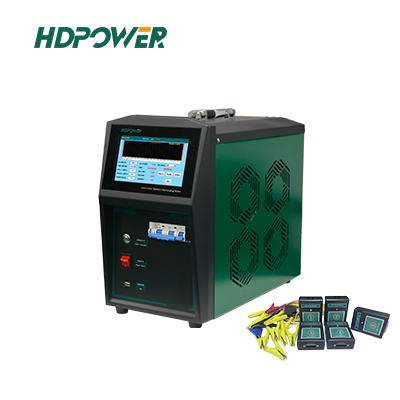
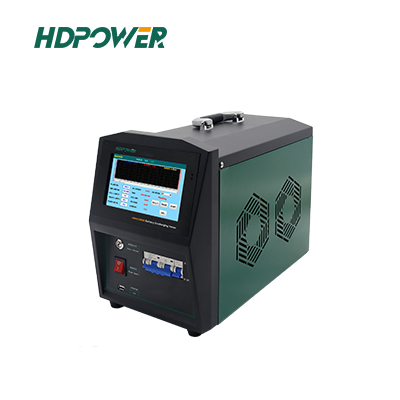
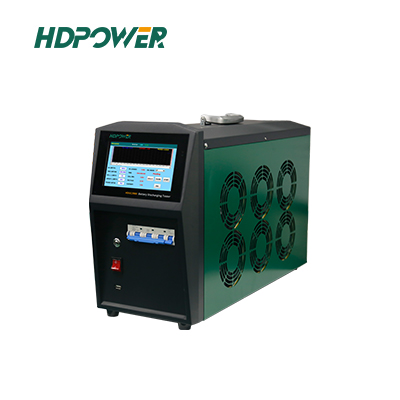
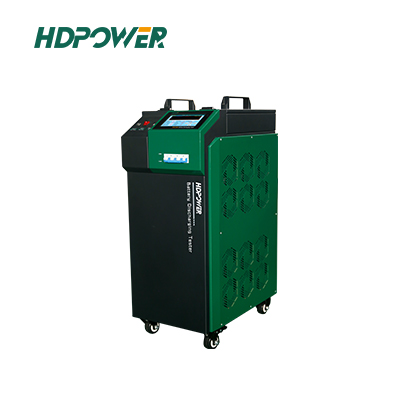
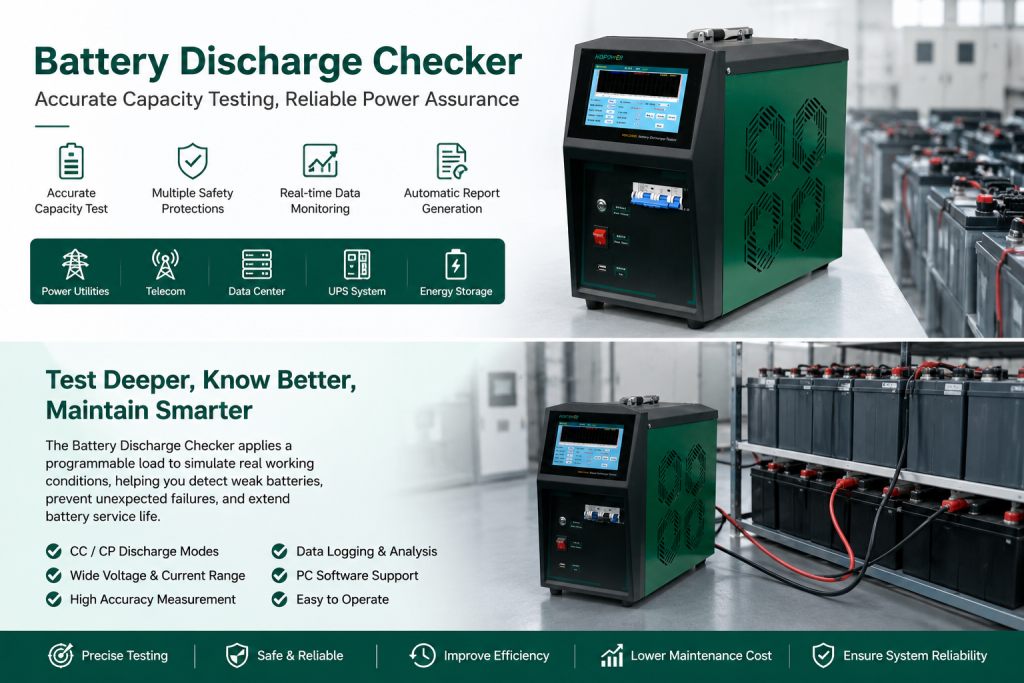
Professional Battery Discharge Test Equipment is designed for this purpose. It provides controlled discharge conditions and records important test data, helping technicians determine whether a battery or battery bank can still provide the required backup performance.
For lead-acid battery systems, which are widely used in stationary backup applications, discharge testing is particularly useful for verifying available capacity and identifying batteries that may require further inspection or replacement.
Why Battery Discharge Testing Matters
Battery degradation is not always obvious during normal operation.
A battery may remain connected to a charger or float system for months or years while continuing to show an acceptable terminal voltage. However, its internal condition and available capacity can gradually deteriorate because of aging, sulfation, temperature, charging conditions, repeated cycling, and other factors.
The problem becomes more serious when the battery is required to provide backup power during an actual power interruption.
At that point, the most important question is not simply whether the battery has the correct nominal voltage. The more important question is:
Can the battery deliver the required power for the required amount of time?
A controlled discharge test provides measurable evidence.
During the test, the equipment applies a predefined electrical load and records how the battery responds. The resulting voltage curve, current, discharge time, and delivered capacity can then be evaluated against the battery’s rated performance or previous test records.
This makes discharge testing an important part of preventive battery maintenance.
What Is Battery Discharge Test Equipment?
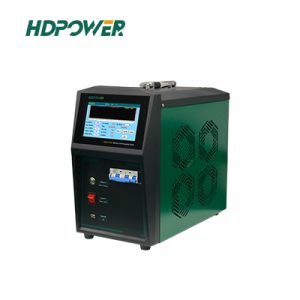
Battery Discharge Test Equipment is specialized test equipment used to apply a controlled electrical load to a battery or battery bank while monitoring its discharge performance.
Compared with a simple handheld battery checker, professional discharge equipment is designed for controlled and repeatable testing over a defined period.
Depending on the equipment configuration, the test may involve:
- Constant-current discharge
- Constant-power discharge
- Programmable discharge conditions
- Voltage cutoff protection
- Automatic test termination
- Real-time voltage and current monitoring
- Capacity calculation
- Test data recording
- Report generation
During a discharge test, the battery voltage normally decreases as energy is delivered to the load. The equipment can continuously monitor this process and stop the test when the programmed cutoff condition is reached.
A professional Battery Discharge Tester therefore provides more than a simple load. It acts as a controlled testing platform that allows engineers and maintenance technicians to evaluate actual battery performance.
How a Battery Discharge Test Works
A typical battery discharge test consists of several stages.
- Verify the Battery and Test Conditions
Before testing, technicians should confirm the battery chemistry, nominal voltage, rated capacity, state of charge, and connection configuration.
For a battery bank, the total number of cells and the series/parallel configuration should also be checked.
The discharge equipment must be selected according to the battery’s voltage and expected current range.
- Configure the Test Parameters
The operator then sets the required discharge conditions.
Typical parameters include:
- Discharge current
- Discharge power
- Test duration
- Cutoff voltage
- Capacity threshold
- Data recording interval
- Automatic stop conditions
The correct values should be based on the battery manufacturer’s specifications and the intended maintenance procedure.
- Apply the Controlled Load
Once the test begins, the equipment applies the programmed load to the battery.
Instead of relying on an uncontrolled external load, the test system maintains the selected operating condition and continuously monitors the battery response.
If the battery voltage reaches the predefined cutoff point, or another programmed condition is met, the equipment can automatically stop the test.
- Record and Analyze the Results
The recorded data provides a much clearer picture of battery performance than a simple voltage measurement.
Depending on the equipment, test results may include:
- Battery voltage
- Discharge current
- Discharge power
- Discharge time
- Delivered capacity
- Voltage curve
- Minimum voltage
- Individual cell voltage
- Temperature
- Test status
These results can be used to determine whether the battery is still capable of meeting its intended operating requirements.
Battery Capacity Testing: More Than a Voltage Check
Voltage is an important battery parameter, but it does not necessarily represent available capacity.
For example, an aging lead-acid battery may display an acceptable voltage when measured without a load. Once a significant load is applied, however, its voltage may fall much faster than expected.
This is why capacity verification requires a controlled discharge condition.
A Battery Capacity Tester can be used to evaluate how much usable capacity a battery delivers during a defined test. This information can then be compared with the battery’s rated capacity or historical test results.
Capacity testing can be particularly useful for:
- Stationary lead-acid batteries
- UPS battery banks
- Telecom backup batteries
- Substation battery systems
- Industrial standby batteries
- Emergency power systems
For maintenance teams, historical capacity data can also reveal gradual performance deterioration. A single test provides a snapshot, while repeated tests can help establish a trend.
Battery Discharge Testing for Lead-Acid Batteries
Lead-acid batteries remain widely used in backup power systems because of their established technology, availability, and suitability for stationary applications.
However, lead-acid batteries are also affected by aging and operating conditions. Capacity can gradually decline even when the battery remains in service and appears normal during routine inspections.
A suitable Lead Acid Battery Tester can support different stages of battery maintenance, including basic electrical checks and more comprehensive performance evaluation.
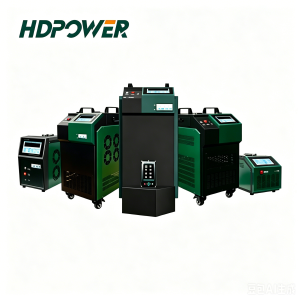
For capacity verification, controlled discharge testing is particularly valuable because it evaluates the battery under an actual electrical load.
The test can help maintenance personnel identify:
- Reduced available capacity
- Abnormal voltage drops
- Weak cells
- Uneven battery performance
- Deterioration over time
- Batteries approaching replacement requirements
The exact discharge procedure should always follow the battery manufacturer’s recommendations and the requirements of the relevant maintenance program.
Battery Load Testing and Discharge Testing
Battery load testing and battery discharge testing are closely connected.
A load test applies an electrical load to evaluate how the battery responds. In professional battery maintenance, this principle can be extended into a controlled discharge test where the load, duration, cutoff conditions, and data recording are defined in advance.
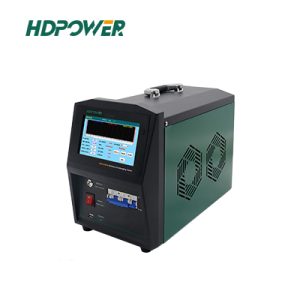
A Battery Load Tester can therefore be an important part of a battery discharge testing solution.
For industrial battery systems, the equipment should ideally provide stable load control, continuous monitoring, automatic protection, and reliable data recording.
The objective is not simply to place a load on the battery. The objective is to obtain meaningful and repeatable information about its performance.
Key Parameters to Consider When Selecting Battery Discharge Test Equipment
Not all discharge testing applications require the same equipment. Several parameters should be evaluated before purchasing.
Voltage Range
The equipment should support the actual voltage range of the battery or battery bank.
Testing a single battery and testing a large stationary battery bank may require completely different voltage capabilities.
Discharge Current
The maximum discharge current determines whether the equipment can perform the intended test.
However, buyers should also consider whether the equipment can maintain stable operation throughout the complete discharge process.
Discharge Mode
Different battery systems may require different discharge methods.
Common modes include:
- Constant current
- Constant power
- Constant resistance
- Programmable discharge profiles
A programmable system provides greater flexibility when the same equipment is expected to serve different battery types or applications.
Automatic Protection
Battery discharge testing should include appropriate protection functions.
Depending on the equipment, automatic protection may include:
- Low-voltage cutoff
- Overtemperature protection
- Overcurrent protection
- Test-time limits
- Abnormal condition detection
Automatic cutoff is particularly useful for long-duration tests because it reduces the need for technicians to monitor the equipment continuously.
Data Recording
Test data is an important part of professional battery maintenance.
The equipment should provide a convenient way to record voltage, current, capacity, time, and other relevant parameters.
Exportable reports can also make it easier to maintain historical records and compare test results from different maintenance cycles.
Cell-Level Monitoring
For a battery bank consisting of multiple cells, total battery voltage does not always reveal an individual weak cell.
If cell-level monitoring is available, technicians can observe individual cell behavior during discharge and identify abnormal cells more efficiently.
This can be especially useful when diagnosing large stationary battery systems.
Applications of Battery Discharge Test Equipment
Professional discharge testing is used wherever battery reliability is important.
UPS Battery Testing
UPS systems depend on batteries to provide backup power when the primary power supply fails.
A controlled discharge test can help verify whether the battery bank can deliver sufficient backup capacity.
Regular testing can also provide historical data for maintenance planning and replacement decisions.
Telecommunications
Telecommunications infrastructure often relies on stationary battery banks for backup power.
Discharge testing can help verify battery capacity and identify battery strings that may no longer meet the required performance level.
Substations and Power Facilities
Stationary batteries in substations may remain on float charge for long periods.
Because their real capacity may not be obvious during normal operation, controlled discharge testing can provide valuable information about their condition.
Industrial Backup Power
Industrial control systems, emergency equipment, and other critical installations may depend on batteries during power interruptions.
Periodic discharge testing can help maintenance teams identify potential battery problems before an actual emergency occurs.
Why Automated Battery Discharge Testing Improves Maintenance
Manual battery discharge testing can require technicians to monitor voltage, current, time, and test conditions throughout the entire process.
This becomes increasingly difficult when multiple battery banks must be tested.
Modern Battery Discharge Test Equipment can automate many of these tasks.
Depending on the system, operators can:
- Configure the discharge parameters.
- Start the test.
- Monitor real-time electrical data.
- Allow automatic cutoff conditions to control the test.
- Save the test results.
- Generate a report for maintenance records.
This approach improves test consistency and reduces manual intervention.
It also makes it easier to compare current results with previous tests.
How to Improve Battery Discharge Test Accuracy
The accuracy and usefulness of a discharge test depend on both the equipment and the test procedure.
Before testing, technicians should make sure the battery is properly charged and stabilized according to the manufacturer’s requirements.
The discharge current, cutoff voltage, and test duration should be selected according to the applicable battery specifications.
Temperature should also be considered because battery performance can vary with temperature.
Another important factor is consistency.
If the same battery is tested using significantly different discharge conditions each time, comparing the results may become difficult.
For this reason, organizations should establish standardized test procedures and retain historical test records.
Battery Discharge Testing for Preventive Maintenance
One of the biggest advantages of professional discharge testing is that it can support preventive maintenance rather than reactive replacement.
Replacing batteries too early increases operating costs.
Replacing them too late increases the risk of unexpected failure.
Discharge test results provide objective information that can support a more balanced decision.
For example, maintenance teams can compare the latest capacity result with previous records and identify whether the battery’s performance is stable, gradually declining, or approaching a predefined replacement threshold.
This is especially valuable for organizations managing multiple UPS systems, telecom sites, substations, or industrial battery banks.
How to Choose the Right Battery Discharge Testing Solution
Before purchasing equipment, buyers should evaluate the actual requirements of their application.
Consider the following questions:
- What type of battery will be tested?
- What is the battery or battery-bank voltage?
- What discharge current is required?
- Is constant-current or constant-power testing needed?
- Is programmable discharge control required?
- What cutoff conditions should be supported?
- Is individual cell monitoring necessary?
- How should test data be stored?
- Are automated reports required?
- Will the equipment be used for individual batteries or complete battery banks?
The answers to these questions can help buyers choose equipment that matches the real testing workflow rather than selecting a device based only on its maximum current.
Battery Discharge Test Equipment for Professional Battery Maintenance
Reliable battery testing requires more than a quick voltage measurement.
For industrial and stationary battery systems, controlled discharge testing provides a direct way to evaluate how a battery performs under a defined electrical load.
A professional Battery Discharge Test Equipment solution can combine controlled loading, real-time measurement, automatic protection, capacity calculation, and test-data recording in one testing process.
For organizations responsible for lead-acid battery systems, UPS installations, telecommunications backup power, substations, and industrial battery banks, this approach can provide more reliable information for maintenance and replacement decisions.
The right equipment should be selected according to the battery voltage, discharge current, test method, monitoring requirements, protection functions, and data-management needs.
Ultimately, effective battery discharge testing is not simply about discharging a battery. It is about obtaining reliable performance data that can answer one critical question:
Can this battery still provide the required backup power when it is needed most?
A properly selected Battery Discharge Tester can make that evaluation more controlled, measurable, and repeatable.