-
Introduction
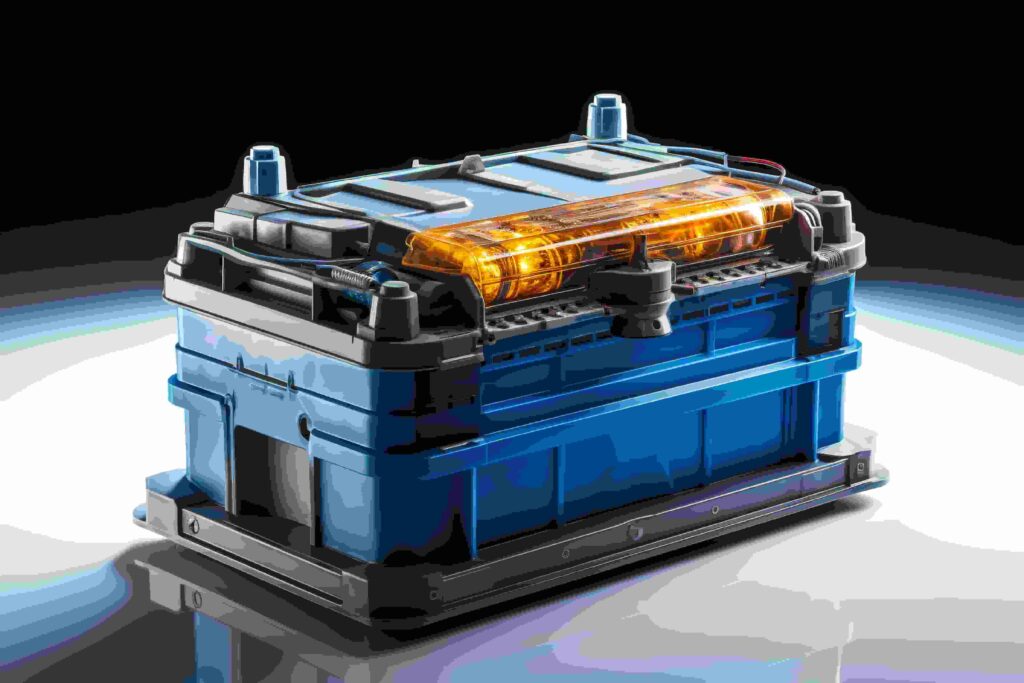
DC battery banks are essential components of reliable backup power systems. In substations, power plants, telecommunications facilities, and industrial installations, they supply DC power to protection relays, control circuits, switching mechanisms, emergency lighting, and other critical loads when normal power is unavailable.
However, a battery bank’s normal operating voltage does not necessarily indicate whether it can deliver sufficient power throughout an emergency. Batteries may experience capacity deterioration, increased internal resistance, connection problems, or uneven performance as they age. These issues can remain unnoticed during routine voltage checks.
DC battery bank discharge testing provides a practical method of evaluating battery performance under a controlled load. By monitoring discharge current, voltage, elapsed time, and other relevant parameters, maintenance teams can assess whether a battery bank meets its specified requirements and identify potential weaknesses before they affect system reliability.
This article explains how to plan and perform DC battery bank discharge testing, interpret the results, avoid common testing errors, and select suitable test equipment for industrial applications.
-
Why Is DC Battery Bank Discharge Testing Important?
A DC battery bank is often designed to remain on standby for extended periods. Its actual performance becomes critical when an outage or abnormal operating condition requires the battery to supply power.
Several factors can affect battery performance over time:
Capacity degradation: Aging, temperature exposure, and operating conditions can reduce the amount of usable energy available.
Increased internal resistance: Deterioration inside a battery or poor electrical connections can contribute to excessive voltage drop under load.
Cell or unit imbalance: Individual batteries in a series-connected string may deteriorate at different rates.
Connection problems: Loose, corroded, or damaged connections can increase resistance and create localized heating.
Inadequate maintenance: Irregular inspections and incomplete historical records can make deterioration difficult to identify.
Routine voltage measurements are useful, but they cannot independently establish the full discharge capability of a battery bank. A controlled discharge test evaluates the system under a defined electrical load and provides measurable evidence of performance.
For facilities where DC power supports protection and control functions, periodic testing can help maintenance teams plan corrective work, reduce uncertainty, and maintain backup-power readiness.
-
Which Battery Systems Require Discharge Testing?
The appropriate testing method depends on the battery chemistry, system configuration, operating requirements, and applicable maintenance procedures.
Substation DC battery systems
Substations commonly use stationary battery banks to support protective relays, circuit-breaker tripping and closing circuits, monitoring systems, and emergency control functions. A discharge test can help verify whether the battery bank can meet its specified duty cycle.
Testing plans should account for the required backup duration, expected load profile, system voltage, and the consequences of temporarily taking equipment out of its normal operating arrangement.
Power plants and industrial facilities
Power plants and industrial installations may depend on DC batteries for control systems, emergency shutdown functions, instrumentation, and other essential operations. Discharge testing helps assess whether these batteries remain capable of supporting their intended loads.
Telecommunications and data infrastructure
Telecommunications sites and data facilities rely on backup batteries to maintain essential services during interruptions to the normal power supply. Testing can help maintenance teams identify declining performance and prioritize battery replacement or further investigation.
The test current, duration, and acceptance criteria must be determined from the battery manufacturer’s recommendations, system design, and applicable maintenance requirements. One testing procedure should not automatically be applied to every installation.
-
How to Prepare for a DC Battery Bank Discharge Test
Proper preparation is fundamental to reliable results and safe operation.
Step 1: Review the battery specifications
Before testing, confirm the battery chemistry, rated capacity, nominal voltage, number of cells or units, installation configuration, and manufacturer’s discharge specifications.
Identify the applicable discharge rate, temperature reference, terminal voltage limits, and required test duration. If the purpose is to verify a specified duty cycle, establish the corresponding load profile before connecting the equipment.
Step 2: Assess system availability and risk
A discharge test may temporarily reduce the energy available for emergency use. The responsible electrical or maintenance team should review operational risks and determine whether the battery can safely undergo testing.
Where required, establish an approved contingency arrangement or alternative backup supply. Confirm authorization, communication procedures, emergency termination criteria, and the process for returning the battery bank to service.
Never begin a test if doing so would leave critical equipment without the required protection.
Step 3: Inspect the battery bank
Perform a visual inspection for damaged cases, leakage, corrosion, loose connections, unusual heating, and other abnormal conditions. Check that ventilation and environmental conditions are suitable for the installed battery technology.
Record relevant preliminary measurements, including ambient or battery temperature where required, individual battery or cell voltages, and overall bank voltage.
Step 4: Verify the test equipment
Select equipment compatible with the battery bank’s voltage, expected discharge current, and required test duration. Confirm the condition and rating of test leads, connectors, protective devices, and measurement instruments.
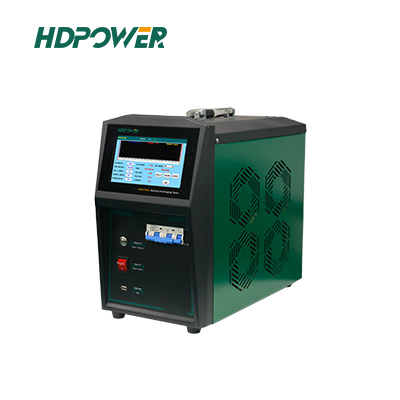
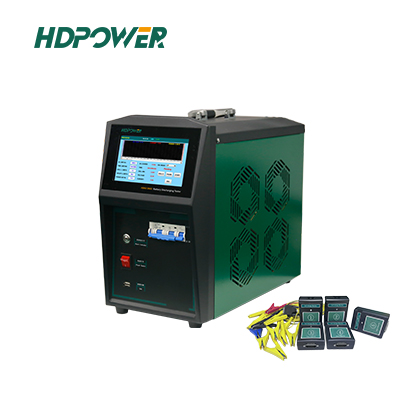
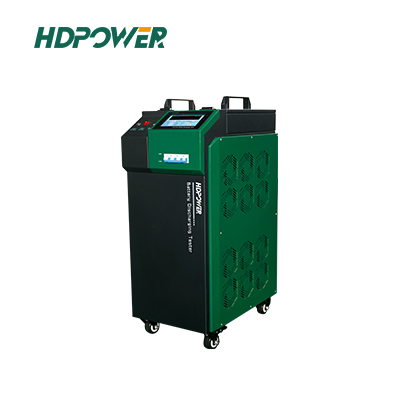
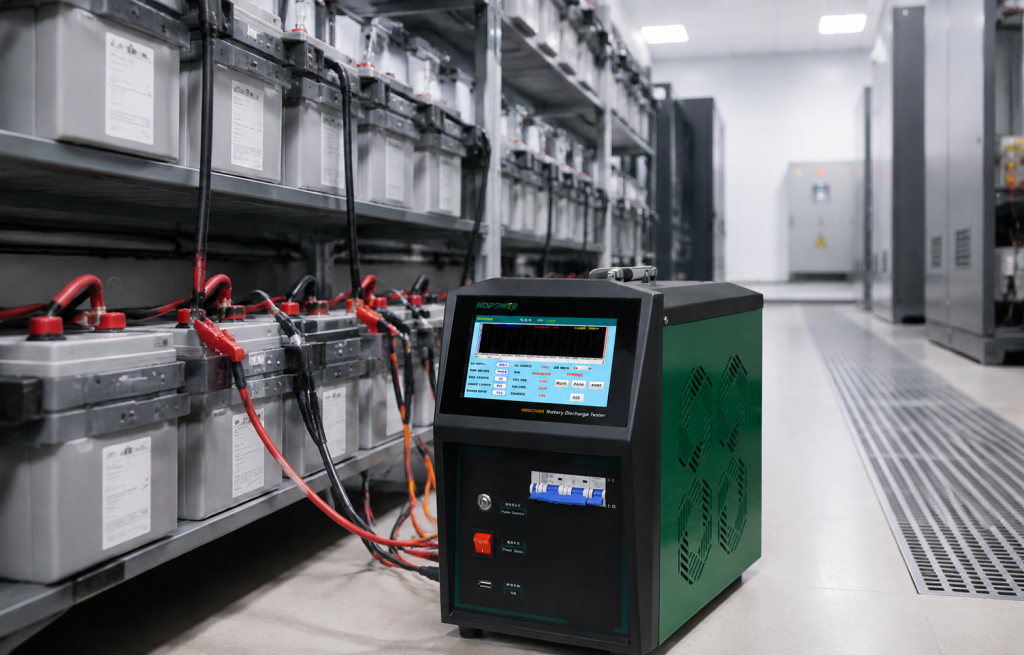
A suitable Battery Discharging Tester can be considered for applicable stationary battery discharge testing. Its configuration and operating limits must be checked against the actual test requirements before use.
-
DC Battery Bank Discharge Testing Procedure
A structured procedure improves repeatability and makes test results easier to compare over time.
Step 1: Establish the test conditions
Document the test objective, battery identification, rated capacity, discharge rate, expected duration, temperature conditions, and applicable termination criteria.
For a capacity verification test, use a defined current or other approved discharge profile. A constant-current test is commonly used when specified by the battery manufacturer or the relevant maintenance procedure.
Step 2: Connect the discharge equipment
Follow the equipment manufacturer’s instructions and the site’s approved electrical safety procedure. Verify polarity, connection integrity, current rating, and the correct placement of measurement leads before initiating the test.
Battery banks can deliver extremely high fault currents. Use appropriately rated equipment and protective arrangements, and never connect or disconnect test leads under load unless the equipment and procedure explicitly permit it.
Step 3: Start the test and monitor operating conditions
Initiate the discharge using the selected settings. Monitor the discharge current, total bank voltage, elapsed time, and individual cell or unit voltages where the test setup supports these measurements.
Observe the battery bank for unexpected voltage drops, abnormal heating, unusual sounds, or other signs requiring investigation. Monitoring frequency should reflect the test procedure, battery condition, and risk level.
Step 4: Apply the defined termination criteria
Stop the test when the specified duration is reached, the applicable voltage limit is met, or an abnormal condition requires termination.
Do not continue discharging simply to obtain a longer test duration. Excessive discharge can damage batteries, and the permitted cutoff voltage varies with battery chemistry, cell count, discharge rate, and manufacturer requirements.
Step 5: Restore the battery system
After the discharge test, follow the approved procedure for restoring the battery bank to its required state of charge. Confirm that the charging arrangement is operating correctly, all temporary connections are removed as required, and the battery system is returned to its designated service condition.
Document any abnormalities and confirm completion of the restoration process before closing the maintenance activity.
-
Key Parameters to Monitor During Testing
Accurate data collection is essential for meaningful evaluation.
Discharge current: The applied current determines the rate at which the battery supplies energy. It must be appropriate for the selected test method and the battery’s specifications.
Bank voltage: The overall voltage trend shows how the battery system responds under load. A rapid or unexpected decline may indicate a problem requiring investigation.
Individual cell or unit voltage: Where available, individual measurements can reveal weak units that may be obscured by the total bank voltage.
Discharge duration: Elapsed time helps determine whether the battery meets its specified duty requirements under the defined test conditions.
Temperature: Battery temperature can influence performance and test interpretation. Record it when required by the test method, especially when comparing results obtained under different environmental conditions.
Calculated capacity: For a constant-current discharge, delivered capacity can be calculated from current and elapsed time:
Capacity (Ah) = Discharge Current (A) × Time (h)
For example, a battery delivering 20 A for 5 hours supplies 100 Ah over that interval. This is a mathematical example, not a prediction of the performance of a particular battery.
The calculated result must be interpreted against the rated capacity, discharge rate, temperature, cutoff voltage, and applicable test criteria. Where the current varies, capacity should be calculated by integrating current over time or using an appropriate measurement method.
-
How to Interpret Discharge Test Results
Test results should be evaluated against documented acceptance criteria rather than a single universal threshold.
A battery bank that completes the required discharge profile within the specified voltage limits may satisfy the relevant test requirement. However, acceptance also depends on the condition of individual units, the required duty cycle, and any additional criteria established by the manufacturer or facility.
Unexpectedly short discharge duration can indicate capacity deterioration, unsuitable test conditions, or a problem with the applied load. A pronounced voltage drop in one unit may justify further inspection or individual battery testing.
When comparing results from different dates, ensure that the discharge current, temperature reference, cutoff conditions, and test duration are sufficiently comparable. Otherwise, apparent changes may reflect differences in test conditions rather than a real change in battery health.
For a broader assessment, discharge results can be considered alongside battery internal resistance testing, visual inspections, historical maintenance records, and other appropriate diagnostic measurements. Internal resistance measurements provide useful supplementary information, but they do not replace a properly conducted discharge test when direct performance verification is required.
-
Common Mistakes to Avoid
Several avoidable errors can undermine test quality or create operational risks.
Using an unsuitable discharge rate: A current that does not match the specified test method can make the results misleading.
Ignoring individual unit behavior: A satisfactory total bank voltage does not guarantee that every battery or cell is performing correctly.
Using inconsistent termination limits: Comparisons become unreliable when different cutoff criteria are applied without documenting the changes.
Failing to record environmental conditions: Temperature differences may affect measured performance and complicate trend analysis.
Overlooking connection resistance: Poor connections can contribute to voltage drop and heating, potentially distorting the assessment.
Neglecting post-test restoration: A battery bank must be returned to the required service condition after testing, with its availability confirmed.
Standardized procedures, trained personnel, suitable equipment, and complete records help reduce these risks.
-
How to Select Suitable Discharge Test Equipment
Selecting equipment begins with the battery system’s technical requirements, not simply the highest available current rating.
First, verify the supported voltage range and discharge-current capability. The equipment must accommodate the actual battery configuration and the intended test profile, including the required duration and termination conditions.
Second, evaluate measurement and recording functions. Depending on the application, useful capabilities may include current and voltage monitoring, elapsed-time recording, configurable test parameters, alarm functions, data storage, and report generation.
Third, consider the working environment. Substation and industrial maintenance teams may need equipment that can be transported between battery rooms, withstand the relevant site conditions, and support repeatable testing procedures.
Finally, confirm the manufacturer’s documentation, protection features, operating instructions, and compatibility with the planned test. Parallel operation or additional measurement modules should only be used when supported by the specific equipment configuration.
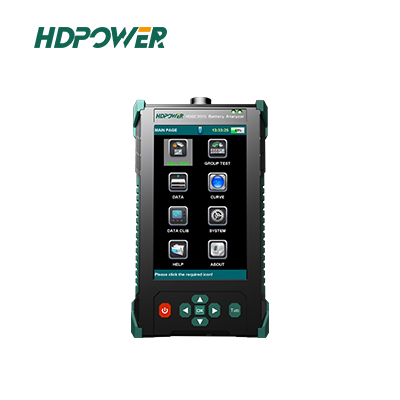
HDPOWER provides battery testing equipment for industrial battery maintenance applications. For suitable stationary battery systems, the HDGC3980 Battery Discharging Tester is one option to evaluate against the project’s voltage, current, measurement, and reporting requirements. Always consult the product specifications to confirm suitability for the intended application.
-
Conclusion
DC battery bank discharge testing is an important part of maintaining reliable backup power in substations, power plants, telecommunications facilities, and industrial installations. By applying a defined discharge profile, monitoring relevant electrical parameters, and evaluating the results against documented criteria, maintenance teams can identify performance issues and make better-informed maintenance decisions.
Reliable testing requires more than connecting a load. Proper planning, safe test arrangements, consistent procedures, accurate records, and post-test restoration are all essential. Combining discharge results with inspections and complementary diagnostic measurements can provide a more complete understanding of battery condition.
For organizations maintaining stationary DC battery systems, selecting equipment that matches the actual test requirements is a practical step toward more consistent and traceable maintenance. HDPOWER’s battery discharge testing solutions can be evaluated according to the specific voltage range, discharge profile, monitoring needs, and reporting requirements of each installation.