Introduction: Why Battery Discharge Testing Matters
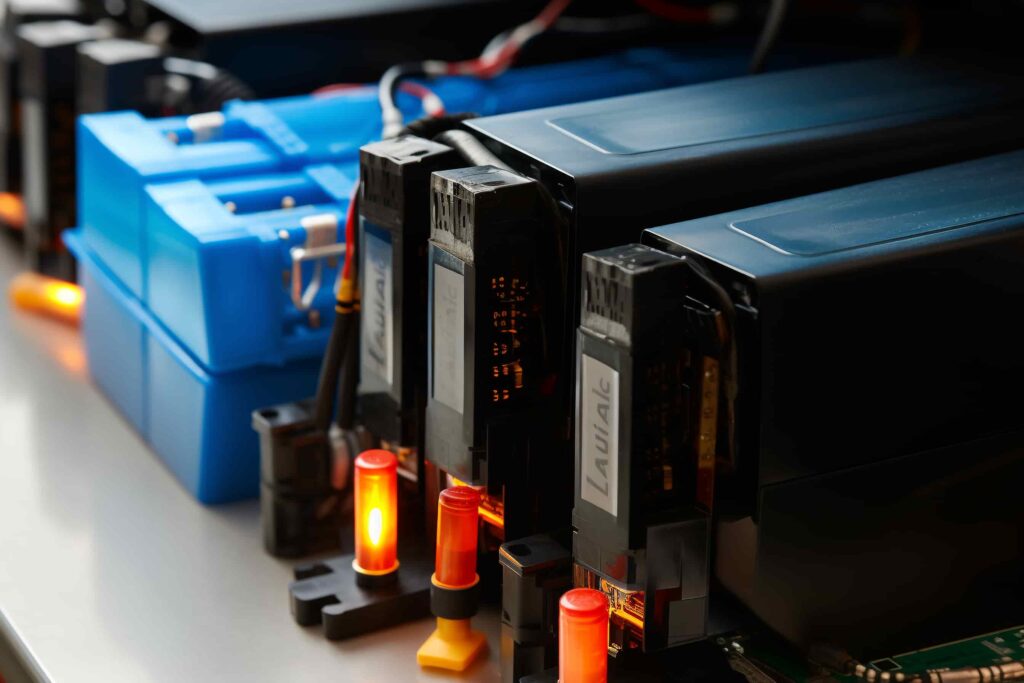
Lead acid batteries remain widely used in UPS systems, telecommunications, power stations, data centers, and industrial backup power applications because of their reliability and cost efficiency. However, battery performance gradually decreases due to aging, sulfation, improper charging, and long-term standby operation.
A professional Battery Discharge Test System provides an effective solution to evaluate battery health by simulating real operating conditions, measuring discharge characteristics, and identifying batteries with reduced capacity before unexpected failures occur.
Unlike simple voltage measurements, discharge testing can accurately determine the actual available capacity, discharge time, voltage stability, and overall battery performance. For critical power systems, regular discharge testing is essential to ensure backup power reliability and reduce maintenance costs.
What Is a Battery Discharge Test System?
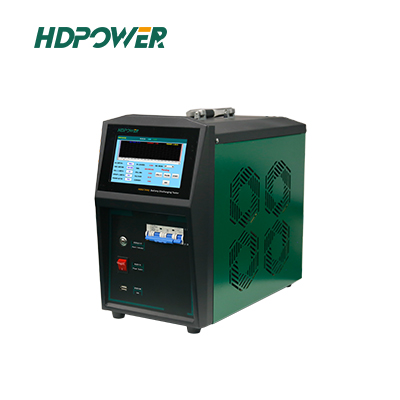
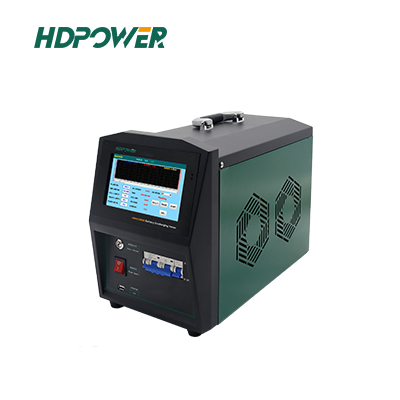
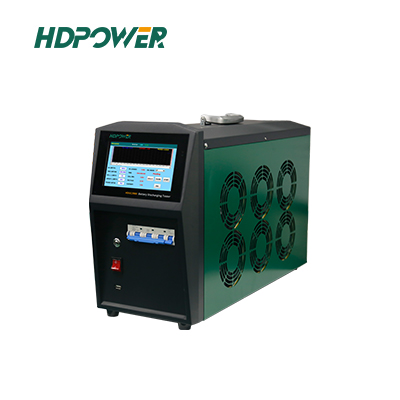
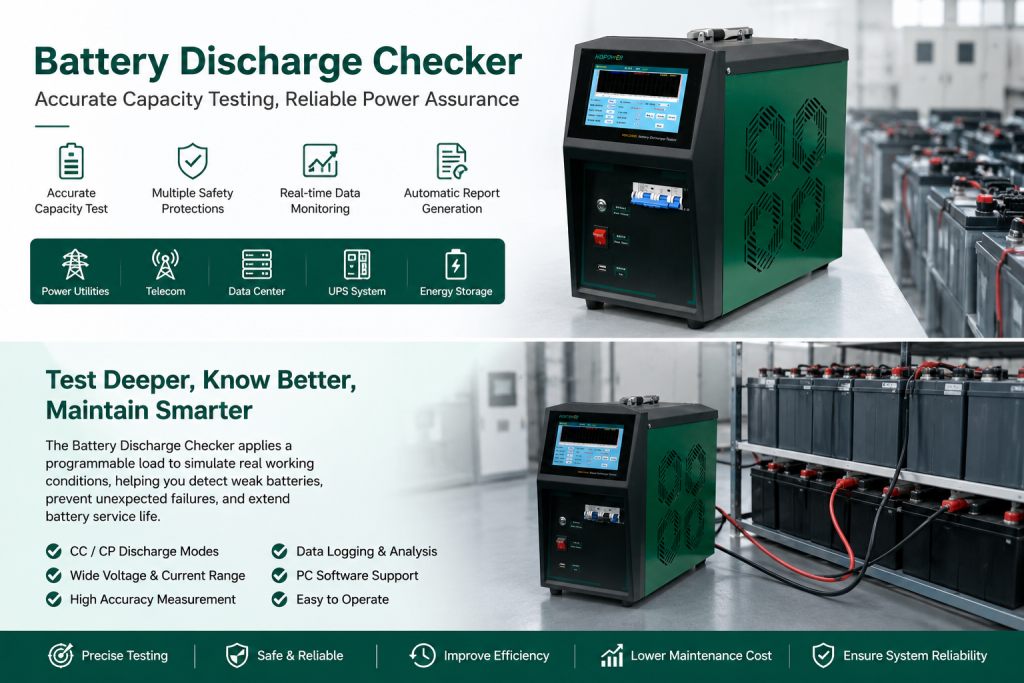
A Battery Discharge Test System is specialized equipment designed to test the discharge performance of batteries under controlled conditions. During the testing process, the system applies a preset discharge current or power load to the battery and continuously records important parameters, including voltage, current, capacity, and discharge time.
For lead acid battery applications, the system helps maintenance engineers evaluate whether batteries can provide sufficient backup power during emergency situations.
Compared with traditional manual testing methods, an advanced system can automatically control the discharge process, monitor real-time data, and generate detailed test reports.
The main functions of a professional Battery Discharge Test System include:
- Constant current (CC) discharge testing
- Constant power (CP) discharge testing
- Battery capacity verification
- Voltage and current monitoring
- Automatic test data recording
- Test report generation
- Over-voltage and over-temperature protection
These functions make it suitable for battery maintenance teams, electrical contractors, and industrial users who require accurate and repeatable testing results.
How Does a Battery Discharge Test System Work?
The working principle of a Battery Discharge Test System is based on applying a controlled electrical load to the battery and measuring its response during the discharge process.
The typical testing procedure includes:
- Connecting the Battery
The battery terminals are connected to the testing equipment through high-current cables. The system detects battery voltage and prepares the test parameters.
- Setting Discharge Parameters
Users can configure:
- Discharge current
- Discharge power
- Cut-off voltage
- Testing duration
Different batteries require different testing conditions depending on capacity and application requirements.
- Performing the Discharge Test
During discharge, the system continuously monitors battery performance. Any abnormal voltage drop or insufficient capacity can indicate battery degradation.
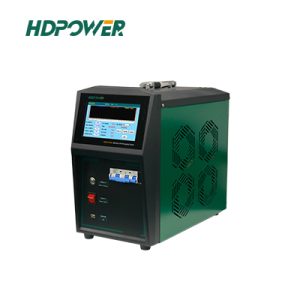
A professional Battery Discharge Tester simplifies this process by providing automatic control, real-time monitoring, and accurate measurement results.
- Generating Test Reports
After completion, testing data can be exported for analysis, maintenance records, and battery replacement decisions.
Why Lead Acid Batteries Need Regular Discharge Testing
Although lead acid batteries are reliable, their performance decreases over time. Many battery failures cannot be detected through simple voltage checks because a battery may show normal voltage while having significantly reduced capacity.
Regular discharge testing helps identify:
- Reduced battery capacity
- Aging batteries
- Internal deterioration
- Poor charging performance
- Battery string imbalance
For UPS systems, communication backup power, and emergency power supplies, preventive testing is especially important.
A reliable Lead Acid Battery Tester allows technicians to evaluate battery conditions accurately and make maintenance decisions based on real performance data rather than assumptions.
This reduces the risk of unexpected power interruptions and extends the service life of battery systems.
Key Features of a Professional Battery Discharge Test System
When selecting a Battery Discharge Test System, users should consider several important features.
- Wide Testing Range
Industrial applications often involve different battery voltage levels. A flexible system should support various battery specifications, including:
- 12V battery systems
- 24V battery systems
- 48V telecom batteries
- High-voltage battery strings
- Accurate Capacity Measurement
Battery capacity is one of the most important indicators of battery health.
A professional Battery Capacity Tester measures the actual discharge capacity by recording the relationship between current, voltage, and discharge time.
Accurate capacity testing helps users:
- Identify weak batteries
- Compare battery performance
- Optimize replacement schedules
- Reduce unnecessary battery replacement costs
- Intelligent Data Management
Modern battery testing equipment supports:
- Digital display
- Real-time curve monitoring
- Automatic data storage
- USB data export
- Test report generation
These features improve testing efficiency and make maintenance records easier to manage.
- Safety Protection
Industrial battery testing involves high current operation. Therefore, professional systems should include:
- Over-current protection
- Over-temperature protection
- Reverse connection protection
- Emergency shutdown function
Safety features ensure reliable operation during long-duration discharge tests.
Applications of Battery Discharge Test Systems
A Battery Discharge Test System is widely used in industries where reliable backup power is essential.
UPS Battery Maintenance
Data centers, financial institutions, and communication facilities depend on UPS systems. Regular discharge testing ensures batteries can provide backup power during outages.
Telecom Backup Battery Testing
Telecommunication networks require stable battery performance for uninterrupted operation. Battery discharge testing helps identify weak battery cells before they affect network reliability.
Power Plants and Substations
Substations use lead acid battery systems for protection and control equipment. Periodic discharge testing verifies battery readiness for emergency conditions.
Battery Manufacturing and Service
Manufacturers and service providers use discharge testing equipment for quality inspection, repair evaluation, and after-sales maintenance.
Battery Analyzer vs Battery Discharge Test System: What Is the Difference?
A Battery Analyzer is commonly used for quick battery condition evaluation, including voltage measurement, internal resistance testing, and basic health assessment.
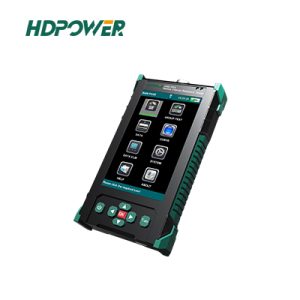
However, a Battery Discharge Test System provides a deeper performance evaluation by simulating actual operating conditions through controlled discharge testing.
The differences include:
| Feature | Battery Analyzer | Battery Discharge Test System |
| Voltage measurement | Yes | Yes |
| Internal resistance testing | Yes | Optional |
| Capacity testing | Limited | Accurate |
| Long-duration discharge test | No | Yes |
| Real load simulation | Limited | Yes |
| Battery performance verification | Basic | Professional |
For critical battery systems that require accurate capacity verification, discharge testing provides more reliable results.
Why Choose HDPOWER Battery Discharge Test Solution?
HDPOWER develops professional battery testing equipment for industrial battery maintenance, UPS systems, telecom applications, and energy storage industries.
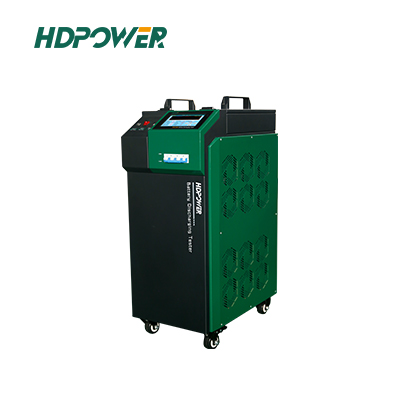
The HDPOWER Battery Discharge Test System features:
- High-precision voltage and current measurement
- Intelligent discharge control
- Real-time testing curve display
- Automatic test data recording
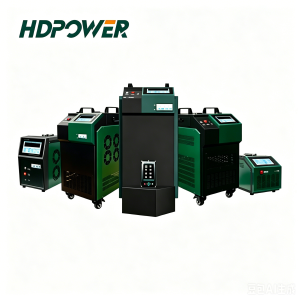
- Portable and industrial models available
- Reliable protection design
With advanced testing technology, HDPOWER helps customers improve battery maintenance efficiency, reduce downtime risks, and extend battery service life.
Conclusion
A Battery Discharge Test System is an essential tool for evaluating lead acid battery performance and ensuring reliable backup power operation.
Compared with traditional inspection methods, professional discharge testing provides accurate capacity verification, detailed performance analysis, and reliable maintenance decisions.
For UPS systems, telecom networks, power facilities, and industrial applications, investing in advanced battery discharge testing equipment helps prevent unexpected failures and improves overall system reliability.
By using professional solutions such as HDPOWER battery testing equipment, organizations can achieve safer, smarter, and more efficient battery management.