Introduction
Accurately evaluating battery condition is essential in industrial power systems, telecommunications infrastructure, data centers, and transportation applications. As batteries age or operate under demanding conditions, their performance may degrade long before obvious failures occur. Identifying early signs of degradation is therefore critical for maintenance planning and system reliability.
A portable battery analyzer is designed to provide on-site diagnostic insight into battery health by measuring key electrical parameters. Among these parameters, internal resistance is one of the most important indicators of battery condition. This article explains what a portable battery analyzer is, how it works, and why internal resistance measurement plays a central role in battery performance evaluation.
What Is a Portable Battery Analyzer?
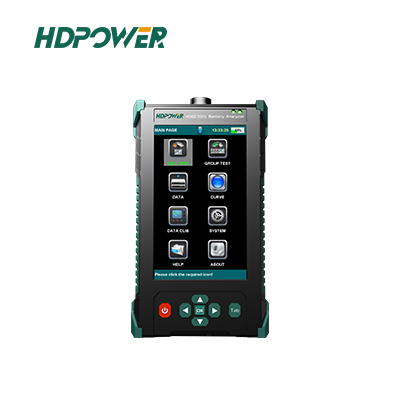
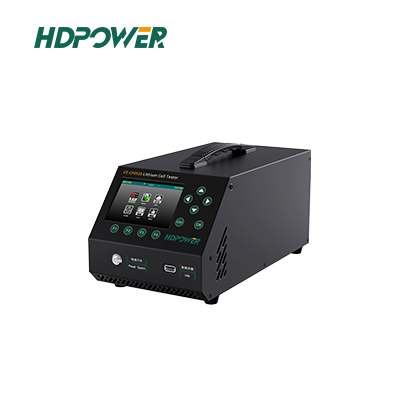
A portable battery analyzer is a compact diagnostic instrument designed for field use. It measures parameters such as battery voltage, internal resistance, and estimated capacity under controlled test conditions.
Unlike fixed laboratory equipment, portable analyzers allow technicians to perform measurements directly at installation sites. This is particularly valuable in environments where batteries are deployed in large numbers or located in restricted or remote areas.
Portable battery analyzers support both single-cell testing and group testing, making them suitable for routine inspections as well as detailed troubleshooting.
Why Internal Resistance Is a Key Indicator of Battery Health
Battery internal resistance represents the resistance encountered by current flowing inside the battery during operation. It directly affects a battery’s discharge capability, voltage stability, and usable capacity.
Under normal conditions, a battery with low internal resistance can deliver higher current with minimal voltage drop, resulting in strong discharge performance. Conversely, a battery with high internal resistance exhibits reduced discharge capability, lower working voltage, and shortened discharge time.
Internal resistance is not a fixed value. It varies depending on battery type, chemistry, structure, operating temperature, and state of aging. Even batteries of the same type may show different internal resistance characteristics due to variations in chemical composition and manufacturing processes.

Components of Battery Internal Resistance
From an engineering perspective, battery internal resistance consists of multiple components rather than a single resistive element.
Ohmic Internal Resistance
Ohmic resistance originates from the physical materials inside the battery, including electrode materials, electrolyte, current collectors, and internal connections. This component responds instantly to current flow and remains relatively stable over short time scales.
Polarization Internal Resistance
Polarization resistance arises from electrochemical processes during charging and discharging. It can be further divided into:
● Electrochemical polarization resistance, related to reaction kinetics at the electrode surfaces
● Concentration polarization resistance, caused by ion concentration gradients in the electrolyte
Polarization resistance changes dynamically during battery operation and plays a significant role in voltage behavior under load.
When internal resistance—particularly polarization resistance—becomes excessive, the battery experiences increased voltage drop, reduced discharge duration, and degraded overall performance.
How Internal Resistance Reflects Battery Condition
Changes in internal resistance often reveal battery issues earlier than capacity measurements alone. Battery aging, insufficient capacity, improper charging, overcharging, or overdischarging can all manifest as increases in internal resistance.
Because of this sensitivity, internal resistance measurement is widely used to:
● Assess battery health and aging status
● Identify underperforming or failing batteries
● Evaluate the effectiveness of charging and maintenance practices
● Detect inconsistencies within battery groups
Measuring internal resistance provides a fast, non-destructive method for evaluating battery condition without requiring full discharge testing.
In practical field maintenance, a Battery IR Tester is commonly used to quantify internal resistance changes that indicate battery aging or performance degradation. By accurately measuring internal resistance under controlled test conditions, technicians can identify weak or failing batteries before capacity loss becomes critical. This type of tester enables fast, non-destructive evaluation and is widely applied in preventive maintenance programs where reliability and early fault detection are essential.
How a Portable Battery Analyzer Works
AC Internal Resistance Measurement Method
Many professional portable battery analyzers use an AC discharge testing method to measure internal resistance. Instead of applying a large DC load, a small AC signal is injected into the battery. The analyzer then measures the resulting voltage response and calculates internal resistance based on the relationship between current and voltage.
This approach offers several advantages:
● Minimal impact on battery operation
● High measurement accuracy
● Reduced influence from surface charge effects
● Safe testing without deep discharge
By simultaneously measuring terminal voltage and internal resistance, the analyzer provides a clear picture of the battery’s electrical condition.
Multi-Parameter Evaluation
In addition to internal resistance measurement, portable battery analyzers typically support:
● Voltage measurement
● Capacity estimation
● Comparative analysis before and after discharge
Users can select specific test items based on maintenance requirements, allowing flexible and targeted diagnostics.
Applications of Portable Battery Analyzers
Portable battery analyzers are widely used across industries where battery reliability is critical.
Battery Manufacturing and Assembly
During battery production and pack assembly, internal resistance matching is essential for grouping cells with similar characteristics. Portable analyzers help ensure consistency and improve overall pack performance.
Telecommunication Base Stations
Telecom base stations rely on battery systems for backup power. Regular internal resistance testing allows maintenance teams to identify deteriorating batteries before failures occur.
UPS and Data Centers
In UPS systems and data centers, battery failures can cause significant downtime. Portable battery analyzers support preventive maintenance by identifying weak batteries within large battery strings.
Substations and Power Infrastructure
Electrical substations use battery systems for control and protection circuits. Portable analyzers enable efficient inspection during scheduled maintenance without system interruption.
Rail Transit and Transportation Systems
Railway stations and transportation facilities depend on reliable battery systems for signaling and emergency power. Portable testing tools allow rapid on-site evaluation and replacement decisions.
Benefits of Using a Portable Battery Analyzer
Using a portable battery analyzer provides several practical advantages:
● Early detection of battery degradation
● Reduced maintenance costs through targeted replacement
● Improved system reliability and safety
● Faster inspection and decision-making in the field
Rather than relying solely on voltage readings, internal resistance measurement offers a deeper and more accurate assessment of battery condition.
Conclusion
A portable battery analyzer is an essential diagnostic tool for evaluating battery health in real-world operating environments. By accurately measuring internal resistance and voltage using AC testing methods, it reveals performance degradation that may not be visible through conventional measurements.
Understanding how internal resistance reflects battery condition enables technicians and engineers to identify failing batteries, optimize maintenance strategies, and extend the service life of critical battery systems. As battery-dependent infrastructure continues to expand, portable battery analyzers play an increasingly important role in ensuring safe, stable, and reliable operation.