Introduction
In industrial power environments, battery banks serve as the backbone of backup and emergency power supply. Whether deployed in substations, telecommunications base stations, data centers, renewable energy systems, or manufacturing plants, battery banks must deliver stable and predictable power during grid interruptions. However, verifying the true performance of a battery bank requires more than routine voltage monitoring. Static measurements cannot reveal whether the system can sustain rated load under real operating conditions.
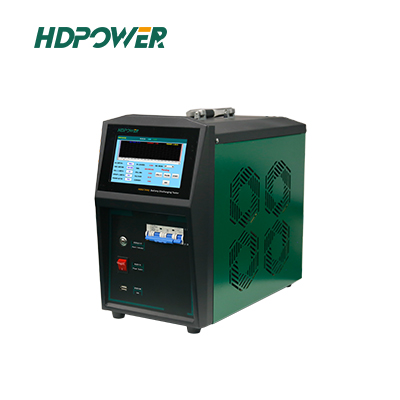
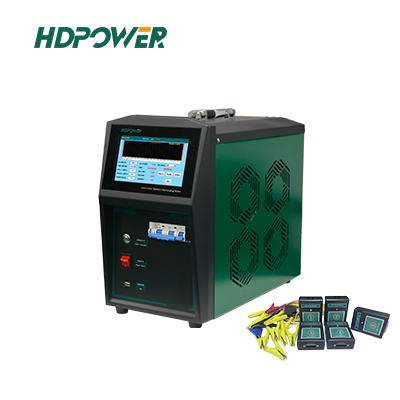
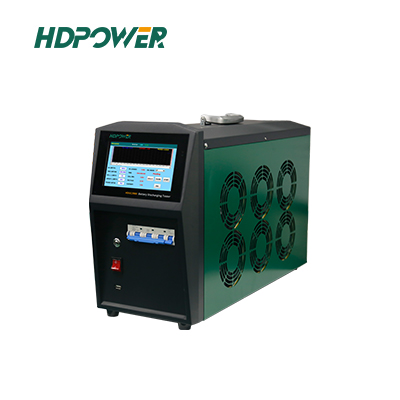
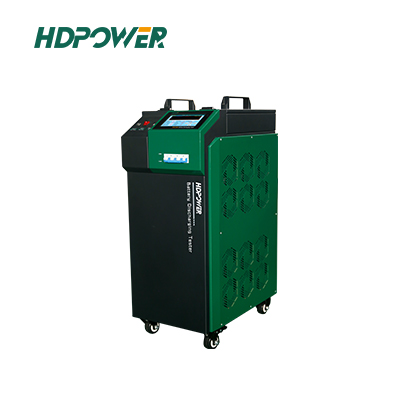
A battery bank discharger is specifically engineered to perform controlled discharge testing on large-capacity battery systems. By applying a regulated load and recording real-time electrical data, it enables accurate capacity verification, fault detection, and performance evaluation. In critical applications where reliability is non-negotiable, battery bank discharge testing becomes an essential maintenance practice rather than an optional procedure.
Why Battery Bank Discharge Testing Is Necessary
Battery banks naturally degrade over time due to chemical aging, internal resistance growth, temperature fluctuations, and operational stress. In lead-acid systems, sulfation and electrolyte stratification gradually reduce effective capacity. In lithium systems, cell imbalance and aging-related impedance increase can limit discharge performance. Despite these internal changes, terminal voltage under float conditions may still appear within acceptable range.
This creates a hidden risk. A battery bank that appears normal under no-load conditions may experience rapid voltage drop or premature cutoff when subjected to real discharge current. Without controlled testing, weak strings or degraded cells may go undetected until a power outage exposes the issue.
A battery bank discharger addresses this problem by replicating actual load conditions in a controlled and measurable manner. It forces the battery system to operate under stress, revealing its true energy delivery capability.
What Is a Battery Bank Discharger
A battery bank discharger is a high-capacity discharge system designed to apply adjustable resistive or electronic loads to large battery banks. Unlike small portable testers intended for individual cells, a battery bank discharger is built for industrial-scale applications, capable of handling high voltage ranges and significant current output.
These systems typically support programmable discharge modes, allowing operators to configure constant current or constant power profiles according to battery specifications. Integrated monitoring systems track voltage, current, discharge time, and capacity throughout the test process. Some advanced units also provide multi-channel voltage monitoring for individual battery strings, ensuring more granular performance analysis.
In structured maintenance environments, battery bank dischargers are often used in conjunction with a professional
battery discharge tester to enhance data accuracy, automate capacity calculations, and generate detailed discharge reports. Together, they provide a comprehensive battery performance evaluation framework suitable for mission-critical installations.

Voltage Platform Matching and Typical Application Scenarios
The multi-voltage design of a battery bank discharger is not merely a specification feature; it directly determines its applicability across different industrial DC systems. Each voltage platform corresponds to specific infrastructure environments, and selecting the correct discharge range ensures accurate capacity testing without overstressing the battery system.
For DC 48V systems (32–60V, 0–300A), the high current capability makes this configuration particularly suitable for telecommunications base stations, data communication cabinets, and low-voltage backup systems. These installations often use large parallel battery strings, requiring higher discharge current to simulate real operational loads. The 0–300A adjustable range enables precise C-rate testing and full-load simulation for telecom-grade lead-acid or lithium battery banks.
The DC 110V platform (88–132V, 0–100A) is commonly deployed in substations, control panels, and medium-scale industrial DC systems. In these environments, battery banks support relay protection, monitoring equipment, and emergency control systems. A 0–100A discharge capability provides sufficient testing current while maintaining stable voltage tracking across the entire string.
For DC 220V systems (176–270V, 0–100A), typical applications include power utilities, railway signaling systems, and large industrial UPS installations. These systems often operate with higher string voltages to reduce transmission losses. The discharge range allows controlled high-voltage testing while maintaining safe current density.
The DC 380V (300–460V, 0–40A) and DC 480V (380–580V, 0–30A) configurations are primarily used in high-voltage industrial DC networks and large-scale energy storage systems. At these voltage levels, total system power remains substantial even at lower current settings. For example, at 480V and 30A, the discharge power reaches 14.4 kW (P = V × I), sufficient for meaningful load simulation in high-capacity battery arrays. Lower current limits at higher voltage improve safety and thermal stability during testing.
By supporting multiple DC platforms within one system architecture, the battery bank discharger allows maintenance teams to standardize testing procedures across diverse assets. This reduces equipment redundancy, improves operational efficiency, and ensures consistent performance evaluation methodologies throughout industrial infrastructure networks.
Discharge Testing Methodology
A structured discharge test using a battery bank discharger generally follows a defined methodology. First, system parameters are configured according to battery manufacturer guidelines, including discharge current level and end-of-discharge voltage. Next, the controlled discharge begins, with voltage and current continuously monitored throughout the test.
As discharge progresses, engineers observe voltage behavior. A healthy battery bank demonstrates a stable and gradual voltage decline. In contrast, abnormal patterns such as sudden voltage collapse, steep early drop, or uneven string behavior may indicate internal resistance growth or cell imbalance.
Upon reaching the preset cutoff voltage, the test terminates automatically. Capacity is calculated by multiplying discharge current by total discharge time. These results provide objective performance data that can be compared against rated capacity values and historical records.
Applications Across Industrial Sectors
Battery bank dischargers are widely applied across multiple industries. In substations and power utilities, discharge testing verifies the reliability of control and protection systems that depend on DC backup power. In telecommunications networks, regular load testing ensures that base stations can sustain operation during extended grid outages.
Data centers rely on battery banks to bridge power gaps before generators stabilize output. Discharge testing validates runtime capability and identifies degraded strings before they compromise uptime. Renewable energy storage systems also benefit from periodic discharge evaluation to ensure predictable output under grid-support operations.
In each of these sectors, battery bank discharge testing supports preventive maintenance, risk mitigation, and compliance with operational standards.
Advantages of Implementing Battery Bank Discharge Programs
Integrating battery bank dischargers into routine maintenance strategies provides measurable operational advantages. Accurate capacity verification prevents premature battery replacement while also avoiding unexpected failures caused by hidden degradation. Data-driven analysis supports optimized lifecycle management and improves budgeting accuracy.
From a safety perspective, identifying weak or unstable battery strings reduces the likelihood of thermal events or system instability. From an economic standpoint, structured discharge testing improves return on investment by extending usable battery service life when appropriate and enabling timely replacement when necessary.
Conclusion
A battery bank discharger is a critical diagnostic tool for verifying real-world battery performance in industrial systems. By applying controlled load and generating objective capacity data, it reveals performance limitations that static monitoring cannot detect. In mission-critical environments where uninterrupted power is essential, systematic discharge testing enhances reliability, safety, and long-term asset management efficiency.
Implementing a structured battery bank discharge program is not merely a technical recommendation; it is a strategic requirement for modern industrial power systems.