Introduction
Electric vehicles rely on high-energy lithium battery packs operating under demanding electrical and thermal conditions. Unlike small-scale battery systems, EV battery packs function at elevated voltage levels and substantial current output, directly influencing driving range, acceleration stability, charging performance, and long-term safety.
As global EV deployment expands, accurate battery pack testing has become essential across manufacturing, quality control, aftermarket service, and recycling operations. An EV battery pack tester is specifically engineered to evaluate real-world pack capacity, discharge characteristics, and operational reliability through controlled electrical load simulation.
Structured testing ensures that battery packs meet design specifications, maintain safety margins, and deliver predictable performance throughout their lifecycle.
Why EV Battery Pack Testing Is Critical
EV battery packs consist of hundreds or thousands of lithium-ion cells connected in series and parallel configurations. While onboard battery management systems monitor voltage and temperature during vehicle operation, they primarily rely on estimation algorithms and real-time protection logic rather than standardized capacity verification.
Battery degradation occurs gradually due to:
● Cycle aging
● Calendar aging
● High discharge stress
● Fast charging exposure
● Thermal fluctuations
● Cell imbalance
As internal resistance increases and usable lithium inventory decreases, the pack’s effective capacity declines. Without controlled discharge validation, performance loss may go undetected until driving range becomes noticeably reduced.
An EV battery pack tester provides objective measurement under repeatable conditions, allowing engineers to determine actual ampere-hour (Ah) and kilowatt-hour (kWh) output rather than relying solely on BMS estimation.
What Is an EV Battery Pack Tester
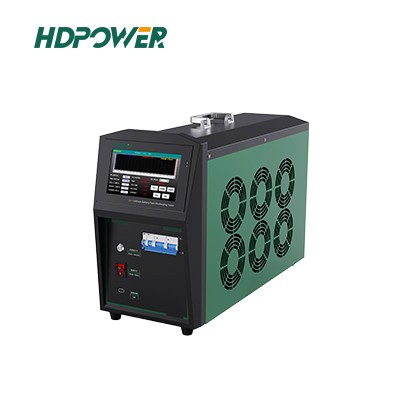
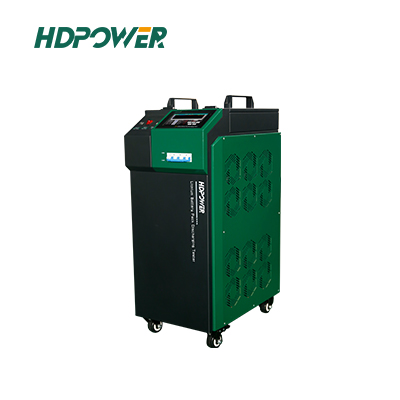
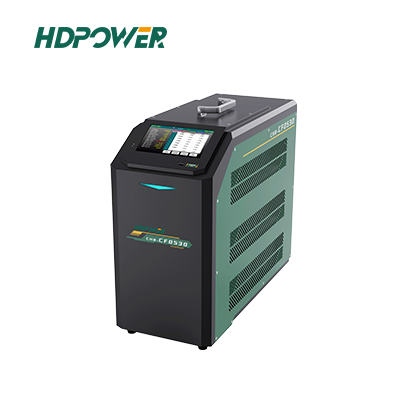
An EV battery pack tester is a high-voltage, high-power testing system designed to simulate real driving loads and measure battery performance accurately. Unlike handheld analyzers intended for small modules, these systems are built for high voltage platforms (commonly 300V–800V), large-capacity battery packs, adjustable high-current discharge, and continuous load stability.
In practical applications, an EV battery pack tester may function similarly to a professional
lithium battery discharger, particularly when controlled energy release or high-power discharge testing is required prior to maintenance, transportation, or recycling. However, a pack tester extends beyond simple discharge by integrating capacity calculation, voltage curve analysis, and dynamic performance validation into a comprehensive testing framework.
Through programmable constant current (CC), constant power (CP), and dynamic load modes, the tester applies controlled discharge profiles to evaluate voltage stability, energy output, and pack integrity.
An EV battery pack tester is a high-voltage, high-power testing system designed to simulate real driving loads and measure battery performance accurately. Unlike handheld analyzers intended for small modules, these systems are built for:
● High voltage platforms (commonly 300V–800V)
● Large-capacity battery packs
● Adjustable high-current discharge
● Continuous load stability
Through programmable constant current (CC), constant power (CP), and dynamic load modes, the tester applies controlled discharge profiles to evaluate voltage stability, energy output, and pack integrity.
Example High-Voltage Testing Configurations
To support modern EV architectures, professional EV battery pack testers must accommodate wide voltage and power ranges.
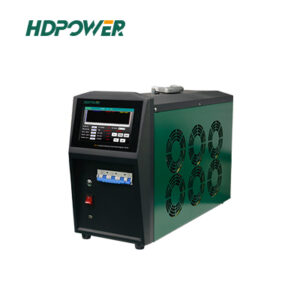
CP-F600 Series
● DC voltage range: 10–600V
● Power options: 15kW / 30kW
● At 300V:
15kW model supports up to 50A
30kW model supports up to 100A
● At 600V:
15kW model supports up to 25A
30kW model supports up to 50A
This configuration is suitable for mid-voltage EV platforms, including many passenger vehicles operating in the 300V–600V range.
CP-F800 Series
● DC voltage range: 10–800V
● Power options: 20kW / 40kW
● Maximum discharge current:
20kW model: 0–50A
40kW model: 0–100A
The 800V capability aligns with next-generation high-voltage EV systems designed to improve efficiency and reduce current stress. At 800V and 100A, discharge power reaches 80kW, requiring robust thermal management and precision current control.

Core Testing Functions
Capacity Verification
Capacity testing measures total usable energy from full charge down to defined cutoff voltage. The tester applies stable discharge current and records discharge duration:
Capacity (Ah) = Current × Time
Energy (kWh) = Voltage × Current × Time
This data supports warranty validation, performance benchmarking, and aging analysis.
Discharge Performance Analysis
Voltage response during discharge reveals pack health. A stable and gradual decline indicates balanced cells and healthy impedance levels. Sudden voltage collapse may indicate internal imbalance or module degradation.
Dynamic Load Simulation
Advanced systems simulate fluctuating current conditions similar to acceleration bursts or regenerative braking cycles. This provides deeper insight into real-world EV performance.
Product Positioning and Lifecycle Applications
Modern EV battery pack testers are developed for the broader new energy market and support lithium battery applications across manufacturing, transport, storage, and recycling sectors.
They are commonly used for:
● Controlled discharge before battery transportation
● Capacity verification during storage
● After-sales warranty evaluation
● Refurbishment and remanufacturing validation
● Pre-recycling energy release
Rapid and controlled discharge capability reduces energy-related risk during logistics and maintenance procedures. By integrating performance validation and discharge management into a single platform, the tester supports the entire EV battery lifecycle.
Operational Features and Technical Advantages
Wide Voltage Compatibility
Support for DC 10–800V platforms ensures compatibility across diverse EV architectures.
Multi-Function Integration
One system can perform capacity testing, controlled discharge, and performance validation, reducing the need for multiple devices.
Simplified Operation
Touchscreen interfaces and one-touch discharge initiation streamline workflow. Automated parameter storage ensures repeatable testing conditions.
High-Efficiency Discharge Control
Stable electronic load application prevents oscillation and protects battery integrity during high-power testing.
Comprehensive Protection Systems
Industrial-grade EV battery pack testers incorporate:
● Overcurrent protection
● Overvoltage and undervoltage safeguards
● Thermal monitoring
● Reverse polarity detection
● Power loss protection
These safety layers are critical when operating at high voltage and high energy density.
EV Battery Pack Tester vs Onboard Diagnostics
While BMS systems provide continuous monitoring during vehicle operation, they do not replace standardized discharge validation. BMS-based capacity estimation may deviate due to algorithm assumptions and usage patterns.
An EV battery pack tester provides controlled, repeatable, and measurable performance data, enabling more accurate lifecycle management decisions.
Long-Term Benefits of Structured EV Battery Testing
Implementing periodic EV battery pack testing programs offers measurable advantages:
● Accurate driving range assessment
● Early detection of degraded modules
● Improved safety margins
● Optimized maintenance scheduling
● Extended usable battery life
● Data-driven refurbishment decisions
As EV systems increase in value and complexity, professional testing infrastructure becomes an essential component of sustainable battery management.
Conclusion
An EV battery pack tester is a critical tool for verifying capacity, discharge performance, and operational stability in electric vehicle battery systems. By applying controlled load profiles and capturing precise electrical data, it enables manufacturers, service providers, and fleet operators to assess true battery health beyond onboard monitoring.
With high-voltage support, scalable power capability, and comprehensive protection mechanisms, modern EV battery pack testing systems ensure reliability, safety, and long-term efficiency across the evolving electric mobility ecosystem.