Introduction
As electric vehicles, energy storage systems, and other lithium-powered applications continue to develop, battery repair shops face growing demands for accurate diagnosis and efficient maintenance. One recurring challenge is the voltage difference between individual cells in a battery module. When cells behave differently during charging or discharging, the usable performance of the entire module may be limited by its weakest components.
For maintenance professionals, identifying voltage inconsistency is only the first step. They must also determine whether balancing is appropriate, select a suitable maintenance method, and verify the results before returning a battery to service. A process that relies entirely on manual adjustments or low-current equipment may require considerable technician time, especially when multiple cells or modules need attention.
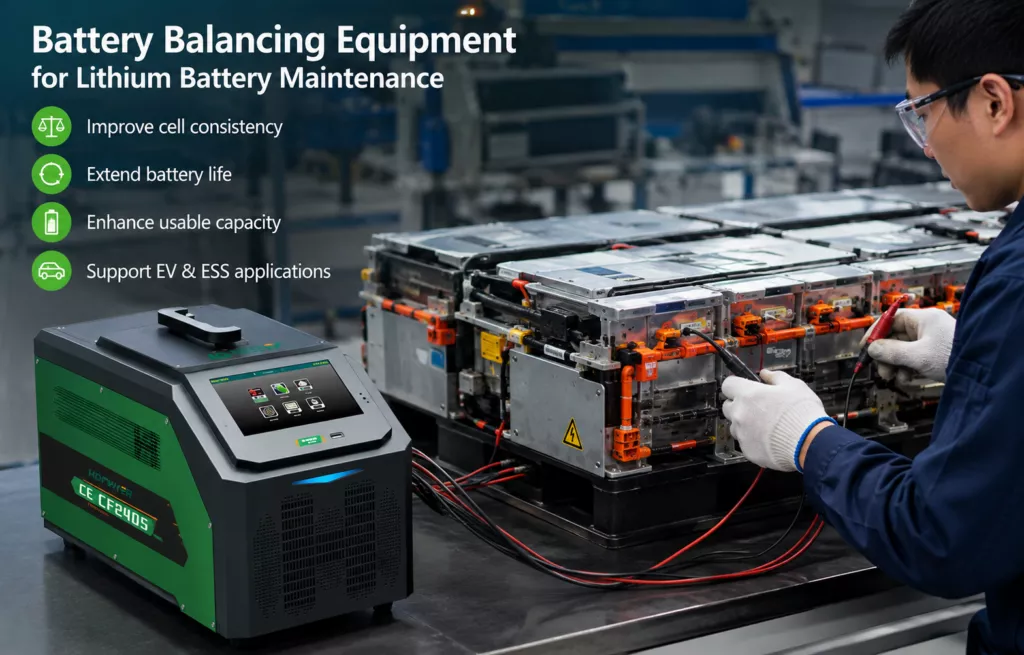
High-current lithium battery balancing offers a practical option for suitable cell-level maintenance tasks. By providing controlled charging, discharging, and equalization at higher current levels, professional equipment can help technicians manage voltage differences more efficiently.
However, higher current alone does not guarantee a successful repair. Battery condition, internal resistance, temperature, chemistry, protection settings, and post-maintenance verification all influence the outcome. This article explains how repair businesses can evaluate balancing needs, improve their maintenance workflow, and choose appropriate equipment for lithium battery cells and modules.
-
Why Lithium Battery Cells Develop Voltage Differences
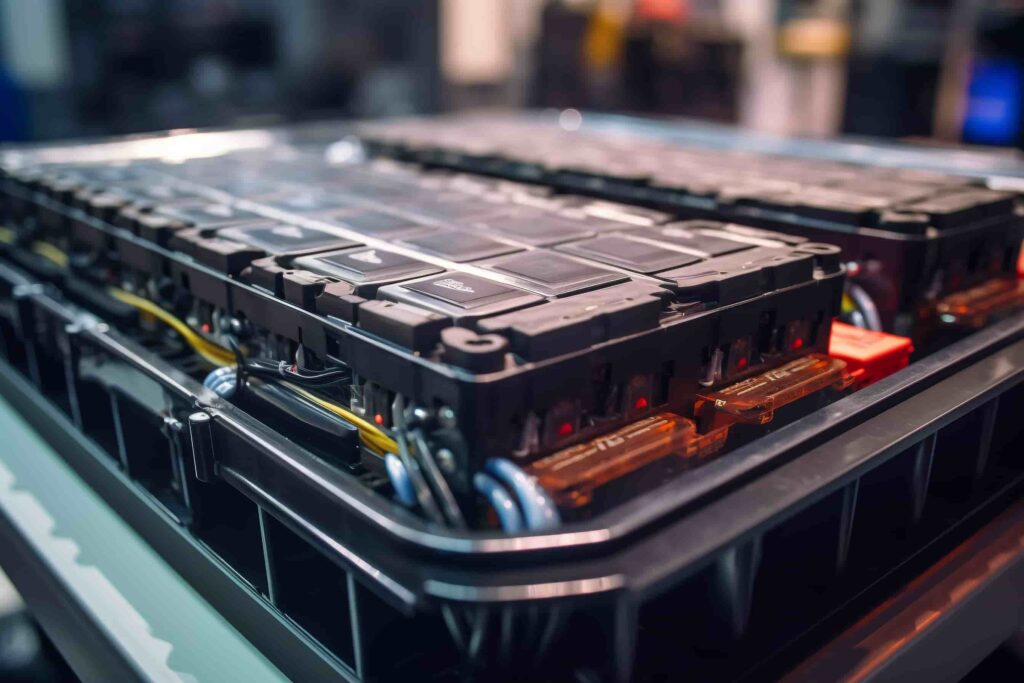
A lithium battery module contains multiple cells connected in series, parallel, or a combination of both. Although cells may share the same nominal specifications, their actual behavior can gradually diverge during use.
Several factors can contribute to cell voltage inconsistency.
Differences in capacity: Cells with different available capacities may reach charging or discharging limits at different times. Even if their voltage readings initially appear similar, their behavior can separate as current flows.
Variations in internal resistance: A cell with higher internal resistance may experience a different voltage response under load or during charging. This can affect how the battery management system evaluates the module.
Different operating temperatures: Temperature influences electrochemical behavior. Cells exposed to different thermal conditions may exhibit different voltage and performance characteristics.
Aging and usage history: Repeated cycling, storage conditions, and previous operating stresses can cause cells within the same module to age at different rates.
Self-discharge differences: Some cells may lose charge faster than others during storage. This can gradually increase the voltage difference between cells.
For an EV repair shop or battery service provider, these factors mean that a voltage difference should be treated as a diagnostic clue rather than proof of a single fault. A low-voltage cell may need balancing, further testing, or replacement depending on its actual condition.
-
When Is High-Current Battery Balancing Appropriate?
The suitability of a balancing procedure depends on the type of battery, the severity of the inconsistency, and the condition of the affected cells.
High-current balancing may be useful when technicians need to adjust cell voltage efficiently during controlled maintenance. It can also support service workflows involving repeated charging, discharging, and equalization operations.
Before selecting a balancing method, technicians should consider three questions.
First, is the voltage difference caused primarily by an imbalance? If a cell has a substantially different state of charge but remains otherwise serviceable, controlled balancing may help improve consistency. If the difference is associated with abnormal self-discharge, internal damage, or excessive resistance, balancing alone may not resolve the underlying problem.
Second, can the cells safely accept the planned current? The permitted current depends on the cell manufacturer’s specifications, chemistry, temperature, state of charge, and condition. The equipment’s maximum current must never be interpreted as a universal recommended operating current.
Third, what result must the repair process achieve? Some jobs require reducing cell voltage differences. Others require additional capacity checks, charging and discharging tests, or investigation of recurring voltage deviations. Defining the objective helps technicians choose the right maintenance procedure.
High-current equipment is therefore best understood as a tool for controlled maintenance, not a universal solution for every degraded battery.
-
How High-Current Balancing Can Improve Repair Efficiency
In a busy repair workshop, equipment selection affects more than the electrical process. It also influences technician workload, test scheduling, record keeping, and the number of battery modules that can be serviced.
Shorter balancing time under suitable conditions
A higher available current can allow a cell to receive or release charge more quickly than a lower-current method, provided the cell and operating conditions permit it. This can be especially valuable when a workshop handles multiple maintenance jobs or needs to reduce equipment waiting time.
Actual time savings depend on the amount of charge adjustment required, cell capacity, operating limits, thermal conditions, and the selected maintenance procedure. A 30A rating does not mean that every cell can or should be balanced at 30A throughout the entire process.
More flexible maintenance modes
A professional device that supports charging, discharging, and equalization gives technicians more options than a tool limited to one function. Depending on the battery condition, a service procedure may involve charging low-voltage cells, discharging higher-voltage cells, or using a defined sequence of operations.
The selected mode should follow the battery manufacturer’s limits and the workshop’s approved procedure.
Better handling of multiple cells
Multi-channel equipment can help workshops organize work across several cells or maintenance points. Where independent channels are available, technicians can configure different channels according to the task, within the equipment’s rated limits.
This flexibility can be particularly helpful for battery service centers, manufacturers’ after-sales teams, and energy storage maintenance providers that handle recurring cell-level maintenance work.
More consistent maintenance records
When equipment records voltage, current, operating status, or test results, technicians can compare conditions before and after maintenance. These records also help supervisors review work quality and investigate repeated failures.
The goal is not simply to finish a balancing cycle quickly. It is to establish a repeatable process that supports efficient work and reliable technical decisions.
-
A Practical Workflow for Lithium Battery Repair Shops
A structured workflow helps technicians avoid unnecessary balancing operations and makes the final result easier to evaluate.
Step 1: Inspect the battery before connecting equipment
Review the battery’s service history and check for visible damage, leakage, swelling, unusual odor, damaged terminals, or signs of overheating. Follow the workshop’s isolation and high-voltage safety procedures before accessing the battery.
Do not attempt routine balancing on a cell or module suspected of having internal damage or another condition that makes continued operation unsafe.
Step 2: Measure individual cell voltages
Record the voltage of each accessible cell or measurement point using suitable test equipment. Identify the maximum and minimum readings and calculate the voltage difference.
A simple comparison can reveal which cells require further investigation, but voltage alone does not establish overall battery health. Measurement conditions should be consistent, and readings should be interpreted in the context of the battery’s chemistry and operating state.
Step 3: Assess the cause of the inconsistency
Compare voltage readings with available information about internal resistance, capacity, temperature, and charging or discharging behavior. If one cell repeatedly diverges from the others, investigate whether it has reduced capacity, abnormal resistance, self-discharge, or another fault.
Where necessary, use dedicated testing equipment to distinguish a temporary state-of-charge difference from a deeper performance problem.
Step 4: Configure the balancing equipment
Select the appropriate voltage range, current limit, maintenance mode, and termination conditions. Confirm that the equipment is compatible with the cell chemistry and voltage range.
Check the connections, polarity, sensing leads, and temperature monitoring arrangements where applicable. Start with the operating limits specified by the battery manufacturer and the approved service procedure.
Step 5: Monitor the maintenance process
Observe voltage, current, temperature, alarms, and other available operating information throughout the procedure. Stop the operation if readings become abnormal or a protection condition is triggered.
Technicians should never bypass protection functions simply to shorten the process. Higher-current maintenance requires appropriate connections, suitable conductors, adequate ventilation, and attention to heat dissipation.
Step 6: Verify the result
After balancing, measure individual cell voltages again under consistent conditions. Compare the new readings with the initial record and check whether the voltage difference has decreased.
For a more complete assessment, allow the battery to rest where required by the service procedure, then observe whether the voltage difference returns. Additional controlled charging, discharging, or capacity testing may be necessary to confirm that the module performs as expected.
A reduced voltage difference is useful evidence, but it does not prove that all cells have equal capacity or that the battery pack has been fully restored.
-
What to Look for in High-Current Balancing Equipment
Choosing a high-current lithium battery balancer requires more than comparing the maximum current rating. Repair businesses should evaluate the following features against their actual workload.
Current range and control
Check the available charging and discharging current, adjustment resolution, and continuous operating limits. Confirm whether the rated current applies to each channel and whether output restrictions change when multiple channels operate simultaneously.
Independent channel operation
Independent channels can offer greater flexibility when servicing several cells or groups with different requirements. If the equipment supports channel combination or current superposition, review the manufacturer’s configuration instructions and electrical limits before use.
Charging, discharging, and equalization modes
Multiple maintenance modes allow technicians to select an appropriate process for different cell conditions. The equipment should provide clear settings and suitable termination controls for each supported mode.
Measurement accuracy and data recording
Accurate voltage and current measurements are essential when assessing small differences between cells. Data storage, operating status displays, and export functions can help technicians document maintenance and compare results over time.
Protection and temperature monitoring
Look for relevant protection against overvoltage, undervoltage, overcurrent, overtemperature, short circuits, and incorrect connections. Confirm which protections are built into the equipment and which monitoring functions require optional accessories.
Battery compatibility and service support
Check the supported cell voltage range, chemistry, connection configuration, and application requirements. For workshops that service different battery types, flexible settings and accessible technical support can be important factors in long-term equipment selection.
-
Supporting EV, Energy Storage, and Battery Refurbishment Services
High-current cell maintenance equipment can serve several professional applications, although the required configuration and workflow will differ by industry.
EV repair shops and 4S service centers may use cell-level testing and balancing as part of a broader diagnostic process. The objective is to determine whether voltage inconsistency can be addressed through maintenance or whether further repair or cell replacement is necessary.
Energy storage maintenance teams may need to investigate voltage differences in battery modules used in stationary storage systems. Because these systems can contain many cells and substantial stored energy, maintenance must follow the system manufacturer’s procedures and applicable electrical safety requirements.
Battery manufacturers and after-sales service teams can use controlled charging, discharging, and balancing to investigate cell consistency issues and document maintenance outcomes.
Battery refurbishment and second-life projects may require screening cells before deciding whether they are suitable for reuse. Balancing can be one part of the process, but it must be combined with appropriate capacity, resistance, safety, and performance evaluations.
In all these applications, the correct decision may be to balance, test further, replace a defective cell, or retire a module. Equipment should support that decision rather than encourage balancing as the default response to every fault.
-
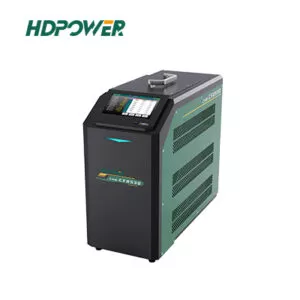
HDPOWER CH-CF0530: High-Current Cell Maintenance
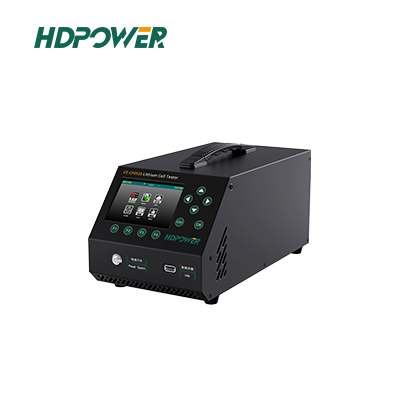
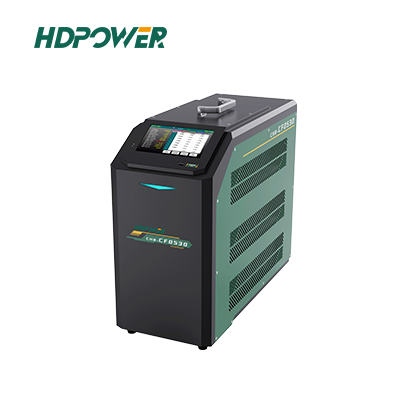
For service teams that need controlled charging, discharging, and balancing at the cell level, the HDPOWER CE-CF0530 series provides a dedicated maintenance option.
The CE-CF0530-4C and CE-CF0530-8C configurations offer four and eight channels respectively, with a cell voltage range of 1–5V and a rated current of up to 30A per channel, according to the published specifications. Each channel can operate independently, and supported configurations also allow combined operation or current superposition.
The equipment supports charging, discharging, and equalization, along with a touchscreen interface and protection functions. Depending on the configuration, communication and data management can support maintenance tracking and review.
These features are relevant to EV battery repair shops, battery manufacturers’ after-sales teams, energy storage maintenance providers, and battery refurbishment businesses that need a more structured cell-level service process.
Before selecting a configuration, buyers should confirm the required channel count, current, cell chemistry, measurement needs, operating conditions, and any optional monitoring accessories with the manufacturer.
For detailed specifications, refer to the CE-CF0530-8C Lithium Battery Multichannel Tester product page and request a configuration suited to the intended maintenance task.
-
Common Mistakes to Avoid
Even capable equipment cannot compensate for an unsuitable maintenance procedure. Repair teams should avoid several common mistakes.
Balancing without diagnosis: A voltage difference may indicate capacity loss, increased internal resistance, or cell damage. Measure and investigate before choosing a corrective action.
Using the maximum current by default: Higher current is not automatically better. Set current according to the cell’s limits, temperature, and condition.
Ignoring temperature and protection alarms: Abnormal heat or an alarm may indicate an unsafe operating condition. Stop and investigate rather than continuing the cycle.
Treating voltage consistency as proof of battery health: Cells with similar voltages may still have different capacities or load responses. Use additional tests when the application requires them.
Failing to keep maintenance records: Without initial and final measurements, it becomes harder to evaluate the effectiveness of a procedure or identify recurring faults. Record the settings, measurements, alarms, and verification results.
Conclusion
High-current lithium battery balancing can help professional repair teams improve workflow efficiency when cell voltage inconsistency is suitable for corrective maintenance. The greatest benefit comes from combining appropriate current control with accurate measurement, multiple maintenance modes, safety protection, and post-maintenance verification.
For repair shops, EV service centers, energy storage maintenance teams, and battery refurbishment businesses, equipment selection should be based on the cells being serviced, the required channel configuration, current limits, monitoring needs, and the complete diagnostic workflow.
The practical objective is not simply to make cell voltages look more consistent. It is to determine the actual battery condition, carry out an appropriate maintenance procedure, and verify whether the result meets the requirements for continued use.
By following a structured process and selecting equipment that matches the application, maintenance teams can make more informed repair decisions, document their work more effectively, and avoid unnecessary replacement when a battery is suitable for safe and reliable maintenance.