Introduction
Lithium battery packs consist of multiple cells connected in series and parallel to achieve the required voltage and capacity. Although these cells may have similar specifications when new, differences in capacity, internal resistance, self-discharge rate, temperature, and aging can gradually cause cell voltage imbalance.
When the voltage difference between cells becomes significant, the battery pack may not be able to deliver its full available capacity. One weak or overcharged cell can reach its operating limit earlier than the other cells, affecting the performance of the entire pack.
Battery balancing equipment provides a controlled way to correct cell-to-cell differences and improve battery pack consistency. Professional equipment can be used for lithium battery cells, modules, and packs in applications such as EV battery maintenance, energy storage, battery manufacturing, and battery repair.
For service providers and battery manufacturers, choosing the right balancing equipment is important because balancing is not simply about reducing voltage differences. The equipment should match the battery chemistry, cell count, voltage range, balancing current, and maintenance requirements.
What Is Battery Balancing Equipment?
Battery balancing equipment is specialized electrical equipment designed to reduce differences between cells in a multi-cell battery pack.
In a series-connected lithium battery pack, current flows through multiple cells, but individual cells do not always have exactly the same electrical characteristics. Even small differences can become more noticeable after repeated charging and discharging cycles.
A professional balancing system can monitor cell voltage and apply controlled charging, discharging, or balancing procedures to improve consistency between cells.
Unlike a basic battery charger, balancing equipment focuses on the relationship between individual cells rather than simply charging the entire battery pack.
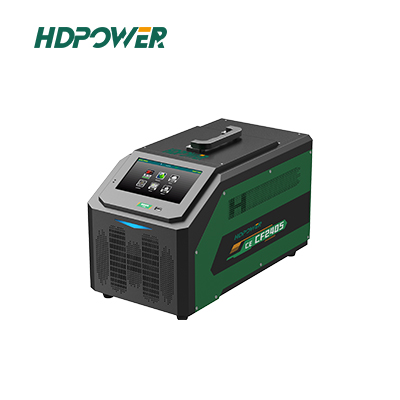
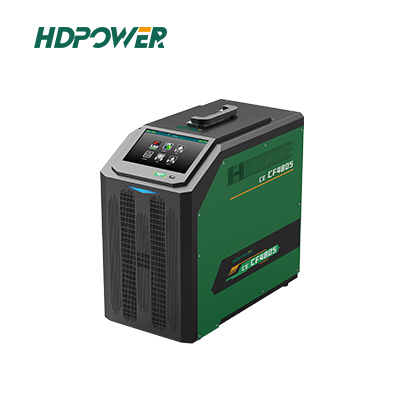
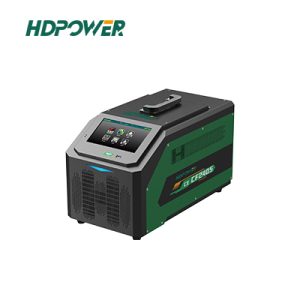
For professional battery maintenance, a dedicated Battery Equalizer can provide more controlled balancing and maintenance functions. HDPOWER’s battery equalizing equipment supports charging, discharging, and equalizing modes and is designed for lithium battery pack maintenance.
Why Do Lithium Battery Cells Become Imbalanced?
Cell imbalance can occur for many reasons. Even cells produced in the same batch may have slightly different characteristics.
Common causes include:
- Different cell capacities
- Different internal resistance
- Unequal self-discharge rates
- Temperature variations
- Manufacturing tolerances
- Different aging rates
- Repeated charge and discharge cycles
- Long-term storage
- Uneven operating conditions
As a battery pack ages, these differences can accumulate.
For example, if one cell has lower capacity than the others, it may reach the lower voltage limit earlier during discharge. During charging, another cell with higher voltage may reach the upper voltage limit before the rest of the pack.
The battery management system may then restrict charging or discharging to protect the cells. As a result, the entire battery pack can become limited by the condition of individual cells.
This is why battery balancing is an important part of lithium battery maintenance.
What Happens When Battery Cell Voltage Is Imbalanced?
Voltage imbalance does not necessarily mean that a battery cell is permanently damaged. However, a significant or continuously increasing voltage difference should be investigated.
Cell imbalance can lead to:
- Reduced usable battery capacity
- Shorter operating time
- Uneven cell aging
- Premature charging cutoff
- Premature discharge cutoff
- Reduced battery pack performance
- Increased maintenance requirements
For example, imagine a battery pack in which most cells remain within a normal voltage range while one cell reaches the lower voltage limit much earlier during discharge. The entire pack may have to stop discharging even though the remaining cells still contain usable energy.
In this situation, balancing may help restore better voltage consistency if the cells themselves remain in acceptable condition.
However, balancing should not be considered a universal solution for battery failure. A cell with severely degraded capacity, abnormal self-discharge, physical damage, or significantly increased internal resistance may require further testing or replacement.
How Does Battery Balancing Equipment Work?
The basic purpose of battery balancing is to reduce differences between cells.
Depending on the technology and application, balancing can involve different methods.
Passive Balancing
Passive balancing removes excess energy from higher-voltage cells, normally through resistive components.
The method is relatively simple, but the excess energy is dissipated as heat instead of being transferred to lower-voltage cells.
Passive balancing is commonly integrated into battery management systems where gradual balancing during normal battery operation is acceptable.
Active Balancing
Active balancing transfers energy between cells or battery sections instead of simply dissipating excess energy.
Different active balancing architectures can use capacitors, inductors, transformers, or DC-DC converters.
For professional battery maintenance, however, the most important consideration is not simply whether a system is described as “active” or “passive.” Technicians should evaluate the equipment’s actual balancing current, voltage accuracy, supported cell count, operating range, control functions, and safety protection.
Battery Balancing Equipment vs. BMS Balancing
A battery management system (BMS) and professional battery balancing equipment can both be involved in cell balancing, but they serve different purposes.
A BMS is normally integrated into the battery system and continuously monitors operating parameters such as cell voltage, temperature, current, and protection status.
Professional balancing equipment is typically used externally during battery inspection, maintenance, repair, or testing.
For example, a BMS may perform balancing during normal battery operation, while a service center may use dedicated equipment when a battery pack has developed a significant cell voltage difference.
This makes professional balancing equipment particularly useful for:
- EV battery repair
- Battery maintenance centers
- Energy storage maintenance
- Battery manufacturing
- Battery pack refurbishment
- Battery testing laboratories
When balancing is combined with charging, discharging, and testing functions, technicians can perform a more complete battery maintenance workflow.
Key Factors When Choosing Battery Balancing Equipment
Choosing balancing equipment requires more than looking at the maximum balancing current. The equipment should be selected according to the actual battery and application.
- Supported Cell Count
Different battery packs contain different numbers of series-connected cells.
Before purchasing equipment, determine whether you need to work with individual cells, modules, or complete battery packs.
For example, HDPOWER’s battery equalizing tester range includes configurations from 12-string to 72-string lithium battery packs, providing options for different battery architectures.
- Voltage Range
The equipment should match the voltage characteristics of the battery being serviced.
Lithium battery chemistries such as LFP, NCM, NCA, and LTO have different voltage characteristics and operating requirements. Therefore, technicians should verify compatibility before selecting a balancing system.
- Balancing Current
Balancing current directly affects how quickly cell voltage differences can be corrected.
Higher current may reduce balancing time, which can be important for battery repair centers handling multiple battery packs.
However, higher current is not automatically better. The appropriate current depends on the battery cell specifications, pack configuration, wiring, connectors, and manufacturer’s requirements.
- Voltage Measurement Accuracy
Accurate cell voltage measurement is essential for identifying small differences between cells.
High measurement accuracy allows technicians to determine whether a battery pack has a minor imbalance or a more significant problem requiring additional investigation.
- Charging and Discharging Functions
For professional battery maintenance, balancing alone may not provide enough information.
A more complete workflow can be:
Initial inspection → Cell voltage measurement → Balancing → Charging/discharging → Final evaluation
Equipment that integrates multiple maintenance modes can simplify this process.
HDPOWER’s Battery Equalizing Tester supports charging, discharging, and equalizing maintenance modes, allowing technicians to perform different maintenance procedures with one system.
- Data Management
Data recording is increasingly important for professional battery maintenance.
Technicians may need to record initial cell voltages, balancing progress, final voltage differences, charging or discharging data, and maintenance results.
Equipment with data storage and report functions can make troubleshooting, after-sales service, and maintenance traceability easier.
How to Check a Battery Before Balancing
Balancing should not automatically be the first step whenever a battery pack shows a voltage difference.
A professional inspection should first determine the condition of the battery.
A basic process can include:
- Measure the voltage of each cell.
- Record the highest and lowest cell voltage.
- Calculate the voltage difference.
- Check for abnormal cells.
- Inspect connectors, wiring, and terminals.
- Check internal resistance when necessary.
- Evaluate battery capacity when required.
- Determine whether balancing is appropriate.
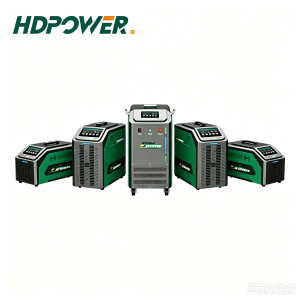
A lithium battery tester can be used during the initial evaluation to measure battery parameters and identify potential problems before balancing. HDPOWER’s lithium battery testing range includes equipment for cell, module, and battery pack testing.
This approach helps technicians distinguish between a simple voltage imbalance and deeper battery degradation.
Applications of Battery Balancing Equipment
Professional battery balancing equipment is used in a wide range of lithium battery applications.
EV Battery Maintenance
Electric vehicle battery packs contain many series-connected cells and modules. Differences between cells can develop as the battery ages or experiences repeated charging and discharging.
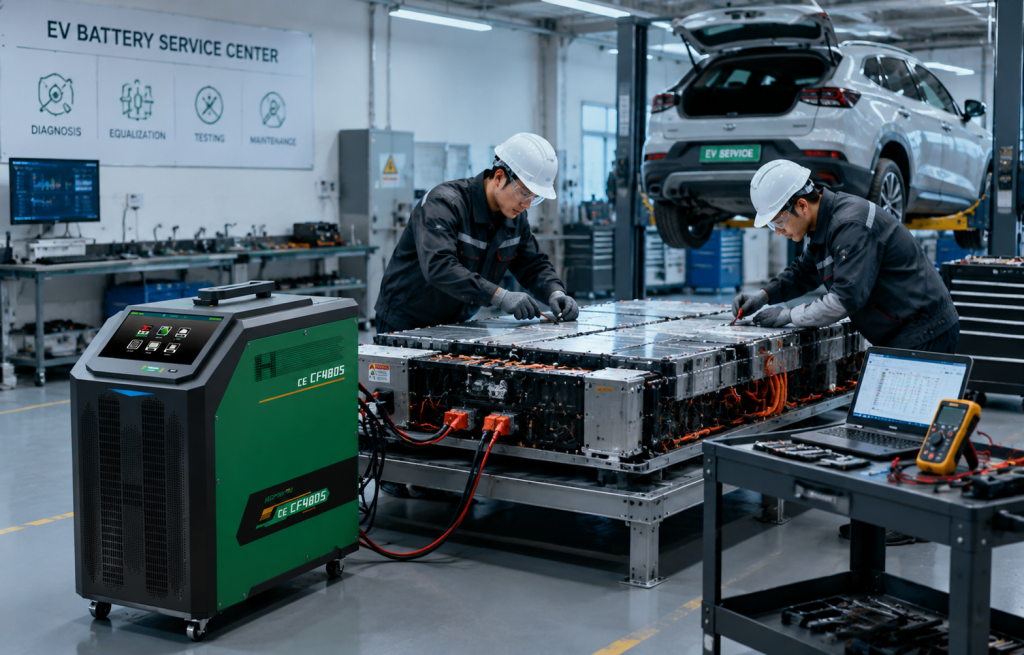
Battery service centers can use balancing equipment to correct cell voltage differences during inspection and maintenance.
Energy Storage Systems
Energy storage batteries may operate through frequent charge and discharge cycles over long periods.
Cell imbalance can gradually develop as the battery ages. Balancing can therefore become part of a broader maintenance program for energy storage systems.
Battery Manufacturing
Battery manufacturers can use balancing equipment during battery pack assembly, quality inspection, testing, and after-sales service.
Balancing can help improve consistency between cells before a pack enters service.
Battery Repair and Refurbishment
Battery repair companies often need to determine whether a battery pack can be maintained or whether individual cells or modules need to be replaced.
Balancing combined with electrical testing can provide technicians with more information when making this decision.
HDPOWER identifies EV battery maintenance, energy storage systems, battery manufacturing, battery repair centers, and research laboratories among the major application areas for its battery equalizing testers.
How to Verify Battery Performance After Balancing
Completing a balancing procedure does not necessarily mean that the battery has been fully restored.
After balancing, technicians should evaluate the battery again.
Useful measurements include:
- Cell voltage consistency
- Pack voltage
- Charge behavior
- Discharge behavior
- Battery capacity
- Internal resistance
- Voltage difference under load
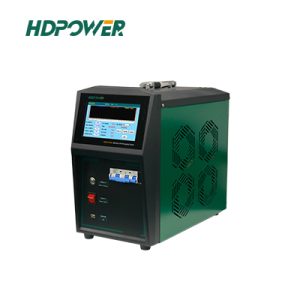
A battery capacity tester can be used when technicians need to verify whether the battery still delivers the expected capacity after balancing.
This step is particularly important for older battery packs. A battery may show excellent voltage consistency after balancing while still having significantly reduced capacity because of cell aging.
Therefore, balancing and battery testing should be viewed as complementary maintenance processes.
Battery Balancing Cannot Replace a Bad Cell
One of the most important considerations when using battery balancing equipment is understanding its limitations.
Balancing can help correct electrical differences between cells, but it cannot reverse every form of battery degradation.
If a cell has:
- Severely reduced capacity
- Excessive self-discharge
- Abnormally high internal resistance
- Physical damage
- Severe aging
then balancing alone may not solve the problem.
In such cases, technicians should perform additional testing to determine whether the cell or module should be repaired, replaced, or removed from service.
This is why a professional maintenance process should distinguish between cell voltage imbalance and cell degradation.
Choose Battery Balancing Equipment Based on Your Application
The right battery balancing equipment depends on the battery configuration and the maintenance objective.
Before selecting equipment, consider:
- Battery chemistry
- Cell count
- Cell and pack voltage
- Required balancing current
- Voltage measurement accuracy
- Cell/module/pack configuration
- Charging and discharging requirements
- Safety protection
- Data recording requirements
- Expected workload
For a repair center, balancing speed and flexible battery configurations may be particularly important. For a battery manufacturer, testing accuracy and data management may receive greater priority. For energy storage maintenance, voltage range, scalability, safety, and long-duration operation may be more important.
A dedicated lithium battery equalizing tester can be a practical solution when the application requires controlled charging, discharging, and cell balancing in one professional system. HDPOWER’s current range includes multiple configurations designed for different lithium battery pack sizes and maintenance requirements.
Conclusion
Battery balancing equipment plays an important role in maintaining the consistency of lithium battery cells and battery packs. By reducing cell-to-cell voltage differences, professional balancing equipment can help technicians improve battery pack consistency and support maintenance operations.
However, effective battery maintenance should not stop at balancing. Battery condition should be evaluated before the process, and capacity, voltage behavior, internal resistance, and other parameters should be checked afterward when necessary.
For EV battery service centers, energy storage operators, battery manufacturers, and battery repair companies, the right equipment should be selected according to battery chemistry, cell count, voltage range, balancing current, measurement accuracy, and required maintenance functions.
When balancing is combined with professional battery testing, technicians can make better decisions about whether a battery pack should be maintained, refurbished, or replaced.