Introduction
Lithium battery packs are widely used in electric vehicles, energy storage systems, industrial equipment, and automotive aftermarket applications. As these battery packs increase in size and capacity, maintaining consistency among individual cells becomes one of the most critical challenges affecting performance, safety, and service life.
Over time, differences in cell voltage inevitably develop due to manufacturing tolerances, operating temperature variations, load conditions, and uneven aging rates. These imbalances can lead to reduced usable capacity, shortened cycle life, and increased safety risks. A smart active balancer is designed specifically to address these issues by restoring balance at the cell level and improving overall battery pack performance.
Why Cell Voltage Imbalance Matters
A lithium battery pack is only as strong as its weakest cell. When individual cells within a pack become imbalanced, some cells reach charge or discharge limits earlier than others. As a result, the entire battery pack may stop charging or discharging prematurely to protect those cells.
This imbalance causes several practical problems. Usable capacity declines because stronger cells cannot be fully utilized. Cycle life shortens as weaker cells experience repeated voltage stress. In more serious cases, excessive voltage deviation increases the risk of overheating or abnormal operation. Correcting cell imbalance is therefore a fundamental requirement for maintaining battery reliability.
What Is a Smart Active Balancer
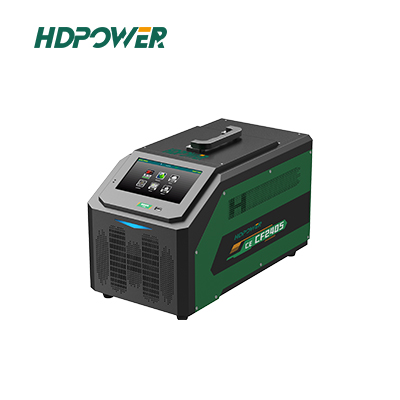
A smart active balancer is a standalone lithium battery maintenance and restoration device designed to correct voltage differences between individual cells in a battery pack. It operates independently as a dedicated service tool rather than as an embedded protection or control component.
In practical maintenance scenarios, this type of device is often referred to as a Battery Equalizer, emphasizing its role in restoring voltage consistency across the battery pack.
Its primary objective is to resolve performance degradation caused by uneven cell voltages, thereby recovering usable capacity and extending the overall service life of the battery pack.

Three Operating Modes: Charge, Discharge, and Balance
Unlike passive solutions that rely solely on energy dissipation, a smart active balancer operates through three coordinated modes: charging, discharging, and balancing at the individual cell level.
In charging mode, lower-voltage cells are selectively charged to reduce deviation from the pack average. In discharging mode, higher-voltage cells are safely discharged to eliminate excessive voltage differences. Through the balancing mode, the device continuously fine-tunes voltage alignment between cells.
This multi-mode operation allows the device to gradually correct voltage imbalance, restore effective capacity, and stabilize battery behavior during normal operation.
How Active Cell Balancing Restores Battery Performance
Active balancing addresses the root cause of battery degradation rather than masking its symptoms. By directly adjusting cell voltage through controlled charge and discharge processes, the device prevents weaker cells from limiting overall pack performance.
In contrast to purely resistive methods, active balancing conserves energy within the battery system and minimizes unnecessary heat generation. This makes it particularly suitable for high-capacity lithium battery packs and maintenance or refurbishment use cases, where efficiency and control are critical.
Benefits of Smart Active Balancing
One of the most immediate benefits of smart active balancing is the recovery of usable capacity. When voltage differences between cells are minimized, the battery pack can once again charge and discharge more fully.
Cycle life is also improved. Cells age more uniformly when voltage extremes are reduced, slowing down degradation and improving long-term consistency. From a safety perspective, maintaining balanced cell voltages reduces the likelihood of abnormal voltage conditions that could compromise battery stability.
For battery maintenance and reconditioning, a smart active balancer provides a practical method to extend the useful life of lithium battery packs that would otherwise show declining performance.
Typical Applications
Smart active balancers are widely used in electric vehicle battery maintenance, where long-term consistency directly affects range and durability. In energy storage systems, they help maintain predictable charge and discharge behavior over extended operating periods.
Industrial battery packs and backup power systems benefit from active balancing by maintaining reliability in demanding environments. In automotive aftermarket and custom battery pack servicing, the device is often referred to as a battery balancer, highlighting its role in correcting voltage inconsistency across individual cells.
This makes smart active balancing particularly valuable in refurbishment, repurposing, and long-term maintenance scenarios.
Engineering Considerations and Practical Use
While a smart active balancer is highly effective at correcting voltage imbalance, it should be understood as a maintenance and optimization tool. It improves performance within the existing condition of the battery pack but does not repair physically damaged or severely degraded cells.
Effective use involves monitoring cell voltages before and after balancing, selecting appropriate operating parameters, and allowing sufficient time for gradual correction. When applied correctly, the device becomes an essential part of lithium battery maintenance and performance recovery.
Conclusion
A smart active balancer is a dedicated lithium battery maintenance and restoration solution designed to address voltage imbalance at the cell level. By combining charging, discharging, and balancing functions, it directly corrects the voltage differences that lead to capacity loss, shortened cycle life, and safety concerns.
As lithium batteries continue to power transportation, energy storage, and industrial systems, smart active balancing offers a reliable and efficient approach to restoring performance and extending battery lifespan. For engineers, technicians, and battery service professionals, understanding and applying active balancing technology is an increasingly important aspect of modern lithium battery maintenance.