-
Introduction
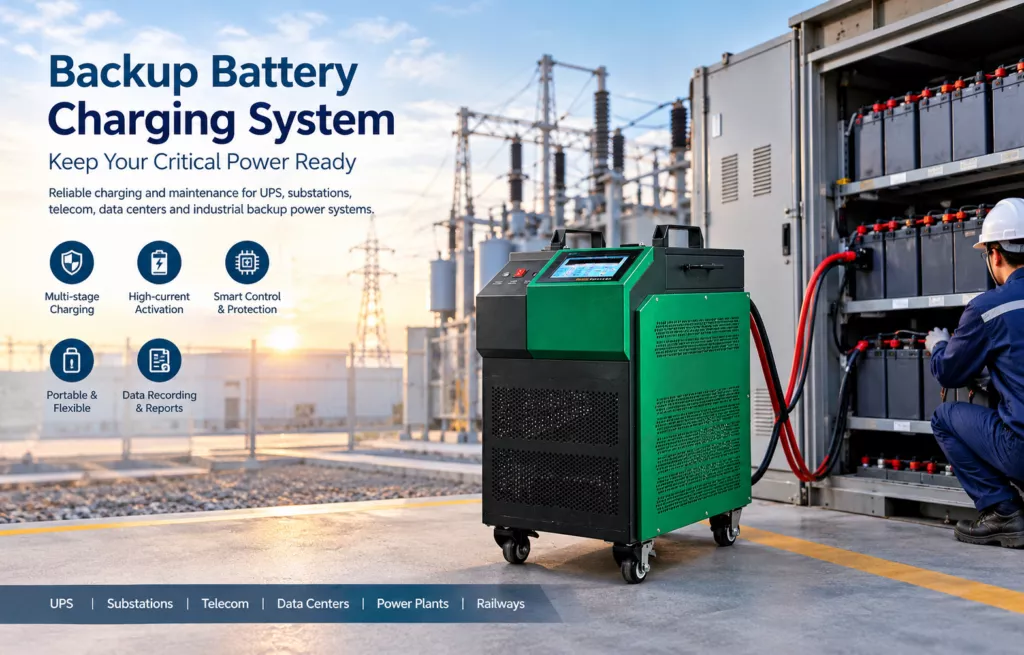
Lead-acid battery banks play an essential role in maintaining reliable DC power for substations, telecommunications facilities, UPS systems, industrial plants, and other critical infrastructure. These batteries provide backup power when the primary power supply is interrupted, helping protect essential equipment and maintain operational continuity.
However, battery performance depends not only on battery capacity but also on the ability of the charging equipment to restore the energy consumed during discharge. An undersized charger may take too long to recharge a battery bank, while an unnecessarily oversized charger can increase equipment costs and may exceed the battery manufacturer’s recommended charging current.
This is why battery charger sizing for lead-acid battery banks is an important part of DC power system design and battery maintenance.
A proper sizing calculation considers battery capacity, discharged ampere-hours, required recharge time, continuous DC loads, charging efficiency, and battery charging limitations.
This guide explains the main calculation methods, provides a practical engineering example, and discusses how to select suitable charging equipment for industrial battery applications.
-
What Is Battery Charger Sizing?
Battery charger sizing is the process of determining the required voltage and current output of a charger to meet the charging requirements of a battery system.
In stationary DC applications, a battery charger generally performs two important functions:
- Supplying the normal continuous DC loads connected to the system.
- Recharging the battery bank after it has supplied backup power during an outage.
The charger must be capable of performing both functions without exceeding the battery’s permitted charging limits.
For example, a substation DC system may use a lead-acid battery bank to supply protection relays, control circuits, communication equipment, and circuit breaker operating mechanisms.
When the AC supply is available, the charger supplies the normal DC loads and maintains the battery in a fully charged condition. After a power interruption, the battery supplies the connected loads. Once the AC supply returns, the charger must support the DC loads while restoring the discharged battery capacity.
Therefore, selecting a charger based only on the battery bank’s nominal voltage is insufficient. Its current output and charging characteristics must also match the actual system requirements.
-
Key Parameters Affecting Battery Charger Sizing
Before calculating the required charger output, engineers should collect several important parameters.
3.1 Battery Bank Capacity
Battery capacity is generally expressed in ampere-hours (Ah). It indicates how much electrical charge a battery can deliver under specified test conditions.
For example, a battery bank rated at 500Ah has a nominal capacity of 500 ampere-hours under its specified rating conditions.
The actual usable capacity depends on discharge rate, temperature, battery condition, and the manufacturer’s rating specifications.
For charger sizing, engineers should determine how many ampere-hours have actually been removed from the battery rather than automatically assuming that the entire nominal capacity must be restored.
Understanding the actual condition and available capacity of a battery bank is essential for accurate charger selection. Engineers can also refer to our guide on battery bank capacity assessment to learn more about evaluating battery performance and determining available capacity.
3.2 Depth of Discharge
Depth of discharge (DoD) represents the proportion of the battery’s available capacity that has been consumed.
If a 500Ah battery bank has been discharged by 40%, the approximate removed capacity is:
Discharged Capacity = 500Ah × 40% = 200Ah
This value provides the starting point for estimating the charging current required to restore the battery.
3.3 Required Recharge Time
Recharge time determines how quickly the battery bank must return to its required operating condition.
Different applications may have different recovery requirements. A telecommunications base station, a power substation, and a data center may operate under different backup power and maintenance strategies.
A shorter recharge target generally requires a higher available charging current, provided that the battery manufacturer permits it.
3.4 Continuous DC Load
In industrial DC systems, the charger may need to supply connected equipment while simultaneously recharging the battery.
Typical continuous loads include:
- Protection and control equipment.
- Communication and monitoring systems.
- Relay circuits.
- DC control panels.
- Other continuously energized auxiliary devices.
Ignoring these loads can result in selecting a charger with insufficient output capacity.
3.5 Charging Efficiency and Battery Limitations
Not all energy supplied by a charger is converted into stored battery capacity. Charging losses, battery chemistry, temperature, age, and charging conditions influence the actual charging process.
An appropriate charging factor should therefore be included in preliminary calculations.
The final charging current must also comply with the battery manufacturer’s recommended limits.
-
Battery Charger Sizing Formula
A practical preliminary calculation for a stationary lead-acid battery system is:
I = I_L + (Q × k) / T
Where:
- I = Required charger output current (A)
- I_L = Continuous DC load current (A)
- Q = Discharged battery capacity (Ah)
- k = Charging compensation factor
- T = Required recharge time (hours)
For preliminary engineering estimates, a factor of approximately 1.1 is sometimes used for lead-acid batteries. However, the actual value should be confirmed against the battery manufacturer’s charging characteristics and the applicable system design requirements.
This equation estimates the current needed to support the continuous load while replacing the discharged battery capacity within the specified time.
It is important to distinguish this preliminary calculation from a complete battery charging design. Actual charging current changes throughout the charging process, particularly during the absorption stage, when battery current may decrease as the battery approaches full charge.
For substation and stationary DC system applications, engineers can refer to IEEE 946-2020, which addresses the design of stationary DC power systems, including batteries and static battery chargers.
-
Practical Battery Charger Sizing Calculation Example
Consider an industrial backup power system with the following specifications:
- Battery bank capacity: 500Ah
- Battery type: Lead-acid
- Depth of discharge: 40%
- Continuous DC load: 8A
- Required recharge time: 10 hours
- Preliminary charging factor: 1.1
Step 1: Calculate the discharged battery capacity.
Q = 500Ah × 40%
Q = 200Ah
The battery bank has approximately 200Ah of capacity to restore.
Step 2: Calculate the required battery charging current.
I_B = (200Ah × 1.1) / 10h
I_B = 22A
Approximately 22A is required for battery capacity replacement under the simplified calculation.
Step 3: Add the continuous DC load.
I = 22A + 8A
I = 30A
Therefore, the preliminary charger output requirement is approximately 30A.
Step 4: Select the appropriate charger rating.
A charger should be selected with an output rating that can satisfy the calculated requirement while considering operating conditions, design margin, battery charging limits, and available standard configurations.
A nominal 30A charger may be insufficient if additional design allowance or operating requirements apply. The final selection should be verified against the battery manufacturer’s charging recommendations and the actual system load profile.
This example demonstrates why battery capacity alone cannot determine the correct charger rating. The discharged capacity, continuous load, and required recovery time must all be considered.
-
Factors That Affect Actual Battery Recharge Time
The calculated charger current provides a useful starting point, but actual charging time may differ from the theoretical estimate.
6.1 Constant Current and Constant Voltage Charging
Lead-acid battery charging commonly involves controlled current and voltage stages.
During the constant-current stage, the charger supplies a controlled current to restore battery capacity. When the battery reaches the specified charging voltage, the charging process transitions toward constant-voltage operation.
As the battery approaches full charge, the charging current generally decreases.
Consequently, a charger rated at 30A does not necessarily deliver 30A throughout the entire charging process.
6.2 Float Charging Requirements
Float charging maintains a battery at an appropriate voltage to compensate for self-discharge and maintain readiness.
The float voltage must follow the battery manufacturer’s recommendations. It should not be confused with the higher voltage used during the main charging stage.
A properly designed charging arrangement should support the battery’s intended operating and maintenance requirements.
6.3 Ambient Temperature
Temperature influences battery charging characteristics and available capacity.
Charging voltage compensation may be required depending on the battery type and manufacturer’s specifications.
For installations exposed to significant temperature variations, engineers should consider the operating environment when determining charging parameters.
6.4 Battery Aging and Condition
Older batteries may exhibit increased internal resistance, reduced capacity, and different charging behavior.
A battery bank that has experienced prolonged operation or inadequate maintenance may not respond to charging in the same way as a new battery bank.
For critical installations, battery condition should be evaluated rather than assuming that nominal capacity accurately represents actual performance.
-
Common Battery Charger Sizing Mistakes
Incorrect charger selection can affect system reliability, maintenance efficiency, and battery service life.
Several mistakes should be avoided.
Selecting a charger based only on nominal battery voltage
A charger must match both the battery system voltage and its required charging current. Voltage compatibility alone does not guarantee sufficient charging capacity.
Ignoring continuous DC loads
If the charger must support connected equipment while recharging the battery, the continuous load must be included in the calculation.
Assuming that nominal battery capacity equals discharged capacity
A battery bank may only be partially discharged during an actual outage. Using the full nominal capacity in every calculation can result in unnecessary oversizing.
Ignoring battery charging limits
A higher charger current does not automatically mean faster or better charging. Excessive charging current may damage batteries or shorten their service life.
Using theoretical recharge time as the actual charging time
Constant-current and constant-voltage charging behavior, temperature, battery age, and absorption characteristics all influence the final charging duration.
A reliable design should consider these factors before selecting the equipment.
-
How to Select an Industrial Battery Charger
After calculating the required voltage and current, engineers should evaluate the charger’s operating modes, control functions, protection features, and suitability for the intended application.
Important selection considerations include:
Wide voltage adaptability: The charger should match the battery bank’s nominal voltage and specified charging voltage range.
Multiple charging modes: Constant-current, constant-voltage, and float or trickle charging functions support different stages of battery maintenance.
Adjustable charging parameters: Flexible current and voltage settings help engineers configure the equipment according to different battery specifications.
Protection functions: Overcurrent, overtemperature, reverse-polarity, and other relevant protections help reduce operational risks.
Clear operating interface: A touchscreen interface and accessible operating parameters can simplify configuration and routine maintenance.
Application suitability: The equipment should be appropriate for the electrical environment and battery systems used in substations, telecommunications facilities, UPS installations, and industrial plants.
For critical DC systems, engineers should also consider redundancy, load-sharing requirements, and the consequences of charger failure.
For projects involving substations and critical DC power infrastructure, explore our guide to Battery Charger for Substation DC Systems for more information about charging requirements and equipment selection.

-
HDPOWER HDGC3970 Battery Charger for Industrial Applications
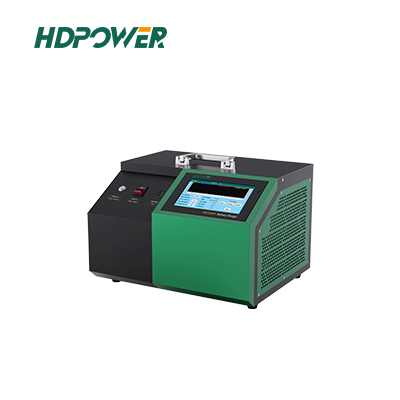
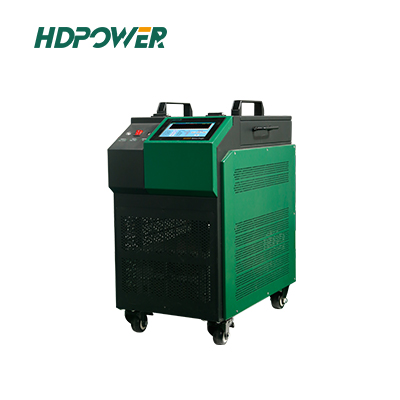
For industrial battery maintenance and charging applications, HDPOWER offers the HDGC3970 Battery Charger, designed for lead-acid battery systems.
The equipment supports a wide charging voltage range of 2–600V, with current configurations including 1–30A and 1–60A, depending on the selected model.
Its main functions include:
- Constant-current charging.
- Constant-voltage charging.
- Trickle charging.
- High-frequency PWM charging technology.
- 7-inch touchscreen operation.
- Overcurrent and overtemperature protection.
- Reverse-polarity protection.
- Data storage and communication functions.
These functions allow engineers to configure charging parameters for different industrial battery maintenance requirements.
The HDGC3970 can be used in applications involving UPS battery systems, telecommunications base stations, substations, and other industrial backup power installations.
Its three-stage charging operation supports controlled battery charging and maintenance. The appropriate configuration should be selected according to the battery voltage, capacity, charging current requirements, and manufacturer’s recommendations.
For detailed specifications and available configurations, visit the HDPOWER HDGC3970 Battery Charger product page.
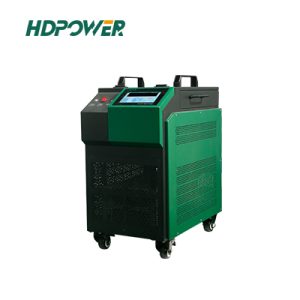
Explore our industrial battery charging solutions to find suitable equipment for lead-acid battery charging, maintenance, and backup power applications.
-
Frequently Asked Questions
Q1: How do I calculate the required current for a lead-acid battery charger?
A preliminary calculation is:
I = I_L + (Q × k) / T
You need to know the discharged battery capacity, continuous DC load, required recharge time, and an appropriate charging compensation factor.
Q2: Does a larger battery bank always require a higher-current charger?
Generally, a larger discharged capacity requires more charging current if the recharge time remains unchanged. However, the actual requirement also depends on the depth of discharge, connected loads, and permitted battery charging rate.
Q3: How long does it take to recharge a 500Ah lead-acid battery bank?
The answer depends on the discharged capacity, charger output, charging efficiency, battery condition, and charging stages. A 500Ah battery bank that has been discharged by 40% has approximately 200Ah to restore, but actual recharge time must account for the absorption stage and manufacturer specifications.
Q4: Why should continuous DC loads be included in charger sizing?
In stationary DC systems, the charger may need to supply connected equipment and recharge the battery simultaneously. Excluding continuous loads may result in insufficient charger output.
Q5: What charging modes are suitable for industrial lead-acid batteries?
Constant-current, constant-voltage, and float or trickle charging modes are commonly used. Their voltage and current settings should always follow the battery manufacturer’s recommendations.
Conclusion
Correct battery charger sizing is essential for maintaining the reliability of industrial lead-acid battery systems. Engineers should evaluate battery capacity, discharged ampere-hours, continuous DC loads, recharge time, charging efficiency, and battery limitations before selecting charging equipment.
A systematic calculation helps avoid undersized or unnecessarily oversized chargers while supporting reliable battery recovery and long-term maintenance.
With flexible voltage configurations, multiple charging modes, and integrated protection functions, HDPOWER provides industrial charging equipment for different lead-acid battery maintenance applications.
Need help selecting a suitable charging configuration for your battery bank? Contact HDPOWER with your battery voltage, capacity, and required charging current to discuss an appropriate solution.