Introduction
Reliable backup power depends not only on the battery itself, but also on how consistently the battery is charged and maintained. In UPS installations, substations, telecom base stations, data centers, power plants, and railway systems, batteries may remain on standby for long periods and then be required to deliver critical power immediately during an outage. A properly designed Backup Battery Charging System helps keep these batteries ready for service while supporting safe and controlled maintenance.
Unlike a basic charger intended for occasional battery charging, an industrial backup charging solution must consider battery voltage, capacity, charging current, charging stages, operating environment, and maintenance requirements. It should also provide stable charging performance after a discharge event and help technicians maintain battery condition over the service life of the system.
For industrial facilities, the charging process is therefore an important part of overall battery reliability.
What Is a Backup Battery Charging System?
A Backup Battery Charging System is a controlled charging solution designed to keep batteries used for emergency or standby power in an appropriate operating condition.
Backup batteries are commonly connected to critical DC power systems. Under normal conditions, the battery remains charged and available. When the primary power supply fails, the battery provides energy to essential equipment until the main supply is restored or another backup source becomes available.
The charging equipment has two important roles. First, it restores energy after a discharge. Second, it maintains the battery at an appropriate state of charge during standby periods.
This distinction is important for industrial applications. A battery may appear fully charged while still suffering from capacity degradation, sulfation, high internal resistance, or other aging problems. Charging is therefore only one part of a broader maintenance strategy.
For a complete maintenance workflow, operators can combine charging with Battery Capacity Testing, internal resistance measurement, discharge testing, and battery activation according to the battery manufacturer’s requirements.
Why Backup Batteries Need Controlled Charging
Industrial backup batteries can spend weeks or months in standby mode. During this period, the charging conditions have a direct influence on battery performance and service life.
If the charging voltage is too low, the battery may remain partially charged. Repeated undercharging can contribute to sulfation and gradual capacity loss in applicable lead-acid battery systems.
Excessive charging voltage or current can create different problems, including unnecessary heat generation, accelerated aging, and, depending on the battery type, electrolyte loss.
For this reason, industrial charging should not simply be based on the nominal battery voltage. Technicians should consider:
- Battery chemistry and construction
- Nominal voltage and cell configuration
- Rated battery capacity
- Recommended charging voltage
- Recommended charging current
- Battery temperature
- Battery condition
- Required recharge time
- Whether the battery is used continuously or primarily as standby power
The charging parameters should always follow the battery manufacturer’s specifications and the requirements of the actual installation.
Three-Stage Charging for Industrial Battery Maintenance
A professional industrial charging process may use multiple charging stages to provide better control throughout the charging cycle.
- Constant-Current Charging
During constant-current charging, the charging equipment maintains a controlled current while the battery voltage gradually increases.
This stage can provide efficient energy recovery after a discharge and can also be useful during certain battery maintenance procedures.
The selected current should be appropriate for the battery capacity and manufacturer recommendations. Higher current is not automatically better because excessive charging current can increase thermal stress and affect battery life.
- Constant-Voltage Charging
As battery voltage rises, the charging process can transition to constant-voltage control.
In this mode, the charging voltage is controlled while the current gradually decreases as the battery approaches a higher state of charge.
Accurate voltage control is particularly important for industrial battery banks because multiple cells or batteries may be connected in series. The charging voltage must therefore be appropriate for the complete battery configuration.
- Float or Trickle Charging
Once the battery has reached the required charging condition, a float or trickle stage can help maintain the battery during standby.
This is especially relevant to UPS, telecommunications, substations, and other applications where the battery must remain available for an extended period.
A suitable float strategy helps keep the battery ready without continuously applying an unnecessarily high charging level.
By combining these stages, an industrial charger can provide a more controlled process than a simple single-mode charger.
Backup Battery Charging in Substations
Substations rely on DC battery systems to support critical protection, control, communication, and switching functions.
During normal operation, the battery system is maintained in a charged condition. During a power interruption, it must provide reliable DC power to essential equipment.
A Substation Battery Charging System therefore needs stable output and predictable charging performance. It should be suitable for the battery voltage and capacity used by the station and should allow technicians to perform maintenance without unnecessarily disrupting the wider power system.
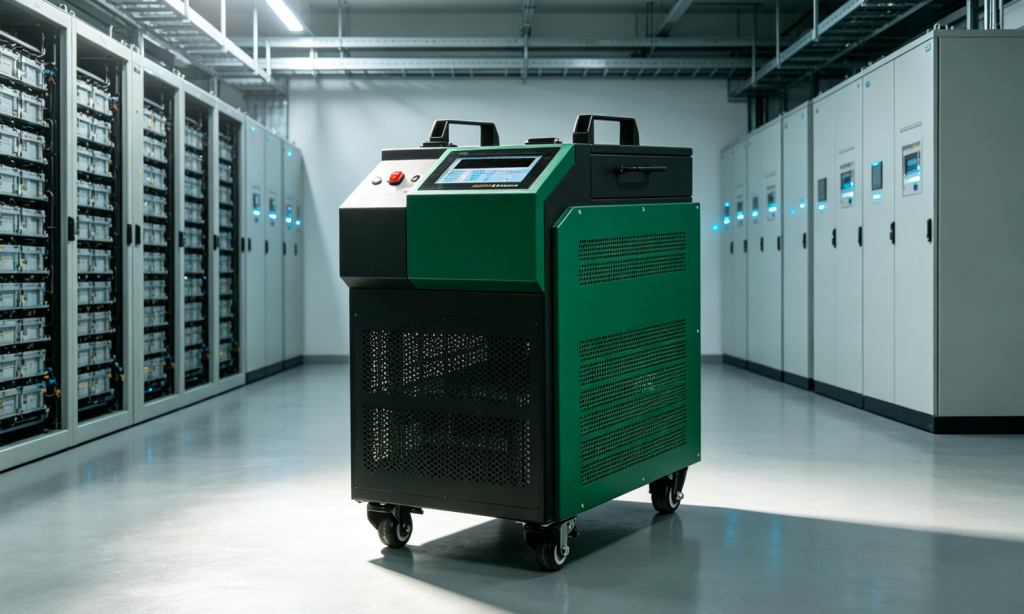
For maintenance teams, portability can also be valuable. A portable industrial charger can be moved between battery rooms or maintenance locations when batteries require supplementary charging, activation, or service.
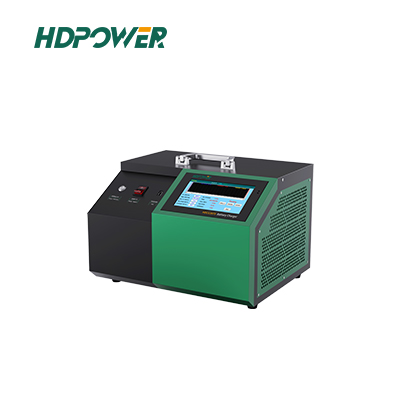
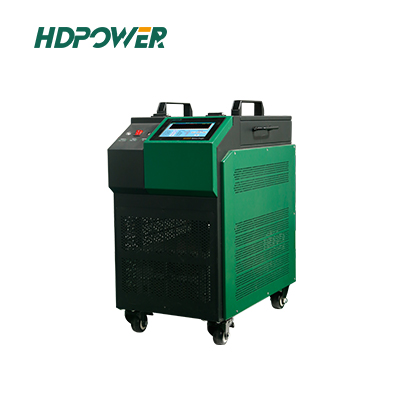
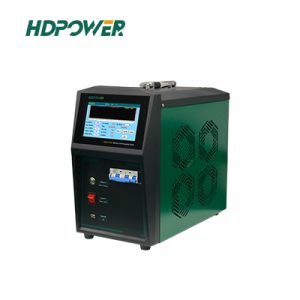
HDPOWER’s HDGC3970 is designed for industrial battery maintenance and supports constant-current, constant-voltage, and trickle charging modes. Its high-frequency charging technology is intended to provide controlled charging and high-current activation for applicable battery systems.
UPS and Data Center Battery Charging
UPS batteries are another important application for backup charging.
A UPS battery bank may remain on standby for long periods but must respond immediately when utility power is interrupted. Poor battery maintenance can therefore create a hidden reliability risk even when the UPS itself appears to be operating normally.
A suitable UPS Battery Charging System should maintain the battery according to its specified charging requirements and support recovery after a discharge event.
For data centers, charging should be considered together with battery inspection, capacity verification, temperature monitoring, and preventive maintenance. Combining these activities helps maintenance teams identify battery deterioration before it becomes a critical power problem.
The same principle applies to telecom infrastructure. Base stations may be distributed across many locations, making portable maintenance equipment particularly useful for field service teams.
Telecom and Industrial Backup Power
Telecommunication systems depend on backup batteries to maintain communication services when the primary power source is interrupted.
A reliable DC Backup Battery Charging solution should support the battery configuration used at the site while allowing technicians to perform routine maintenance efficiently.
In addition to normal charging, some industrial maintenance procedures may require controlled high-current activation when battery condition and manufacturer specifications permit it.
The objective is not simply to recharge a battery as quickly as possible. The goal is to maintain the battery in a condition where it can deliver the required backup power when an unexpected outage occurs.
This approach is particularly valuable for telecom base stations, industrial control systems, railway infrastructure, and other distributed facilities.
What to Consider When Selecting a Backup Battery Charging System
Choosing charging equipment for an industrial battery installation requires more than matching the nominal voltage.
Voltage Compatibility
The charger must be compatible with the complete battery configuration, including the number of cells or batteries connected in series.
Current Requirements
Charging current should match the battery capacity and manufacturer’s recommendations. The required current may also depend on whether the equipment is being used for normal charging, recovery, maintenance, or activation.
Charging Modes
Different maintenance tasks may require different charging modes. Constant current, constant voltage, and float or trickle charging provide different functions throughout the charging process.
Protection Functions
Industrial environments require appropriate protection against abnormal operating conditions. Depending on the equipment design, useful protection functions can include overcurrent, overtemperature, reverse-polarity, short-circuit, and alarm functions.
Portability
For organizations responsible for multiple sites, a mobile charging device can reduce the need to install dedicated charging equipment at every location. Portable equipment can be transported between substations, telecom facilities, battery rooms, and maintenance areas.
Data and Maintenance Records
Battery maintenance is more effective when technicians can record charging parameters and operating conditions. For larger maintenance programs, charging data can be combined with battery test results to create a more complete service history.
Combining Charging With Battery Maintenance
Charging alone cannot determine whether a battery is healthy.
A battery can reach the expected charging voltage while still having reduced capacity or increased internal resistance. Therefore, industrial maintenance teams should consider charging as one part of a broader battery maintenance program.
A typical workflow may include:
- Inspect the battery and connection points.
- Verify battery voltage and configuration.
- Check the manufacturer’s charging requirements.
- Select suitable charging parameters.
- Perform controlled charging.
- Monitor temperature and abnormal conditions.
- Conduct capacity or discharge testing when required.
- Record maintenance results for future comparison.
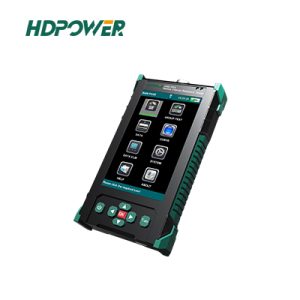
For organizations maintaining large battery fleets, combining charging equipment with Battery Discharge Testing Equipment and Battery Internal Resistance Testing can provide a more complete picture of battery condition.
This approach helps distinguish a battery that simply needs charging from one that has experienced significant performance degradation.
HDPOWER Backup Battery Charging Solution
HDPOWER develops battery testing and maintenance equipment for industrial power applications. Its product range covers battery charging, charge-discharge testing, capacity testing, activation, internal resistance measurement, and online monitoring.
The HDGC3970 industrial battery charger is designed for battery maintenance applications and supports constant-current, constant-voltage, and trickle charging. The equipment uses high-frequency PWM technology and is intended for applications including UPS battery systems, telecom base stations, substations, and other industrial battery systems.
Its high-current activation function can also support applicable battery maintenance procedures where activation is required. The equipment is designed as a mobile solution, making it suitable for maintenance teams that need to move between different battery systems.
For customers that require both charging and testing, HDPOWER can also provide complementary battery maintenance equipment. This allows charging, discharge testing, capacity verification, and other maintenance tasks to be incorporated into a more complete battery service workflow.
Conclusion
A reliable Backup Battery Charging System is an important part of industrial backup power maintenance. UPS systems, substations, telecom facilities, data centers, railway systems, and power plants all depend on batteries that can perform when the primary power supply is unavailable.
Effective charging requires more than simply supplying electrical energy. Voltage, current, charging stages, battery configuration, temperature, maintenance requirements, and operating conditions should all be considered.
Constant-current, constant-voltage, and float or trickle charging can provide controlled charging throughout different stages of battery operation. When combined with regular capacity testing, discharge testing, internal resistance measurement, and appropriate activation procedures, charging becomes part of a more comprehensive battery reliability strategy.
For industrial organizations looking for a portable and configurable solution, HDPOWER’s HDGC3970 provides controlled charging and battery maintenance functions for a range of industrial backup power applications.
To select suitable charging and battery maintenance equipment, evaluate the battery type, voltage, capacity, required charging current, application environment, and maintenance objectives before choosing the equipment configuration.