Introduction
A lead acid battery can show a normal voltage reading and still fail when a backup power system actually needs it. This is especially important for UPS systems, telecommunications sites, substations, data centers, and other critical infrastructure where battery failure can result in unexpected downtime.
For this reason, battery maintenance should go beyond checking open-circuit voltage or internal resistance. A controlled discharge test provides a more direct way to determine how much energy a battery can actually deliver under a defined load.
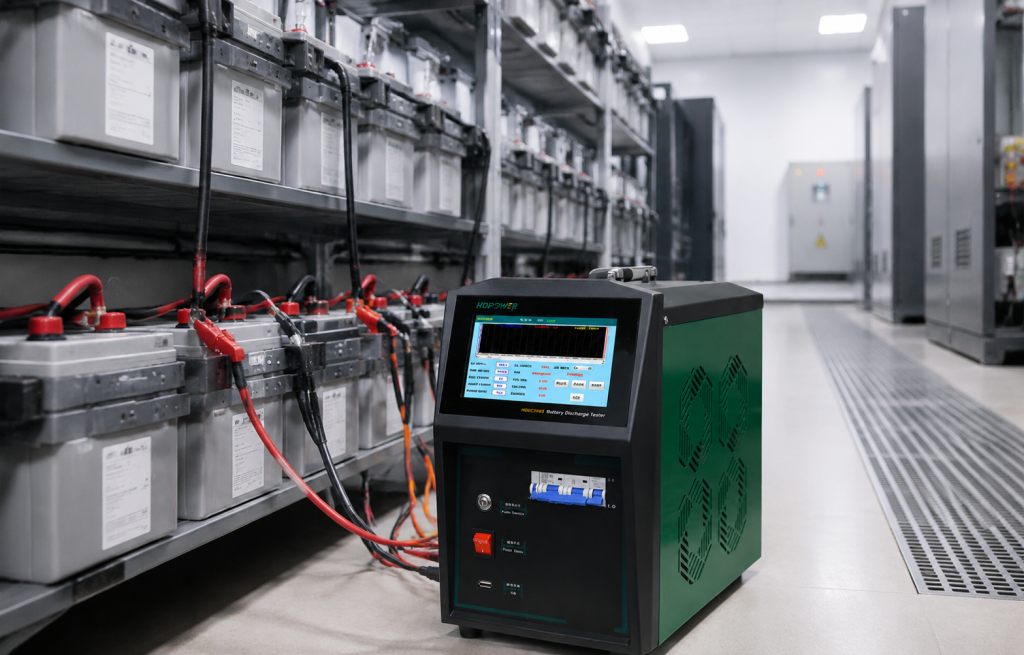
A Battery Discharge Analyzer is designed for this purpose. By controlling the discharge process and monitoring parameters such as voltage, current, discharge time, and delivered capacity, engineers can evaluate the real performance of lead acid batteries and identify batteries that may no longer meet their expected backup requirements.
What Is a Battery Discharge Analyzer?
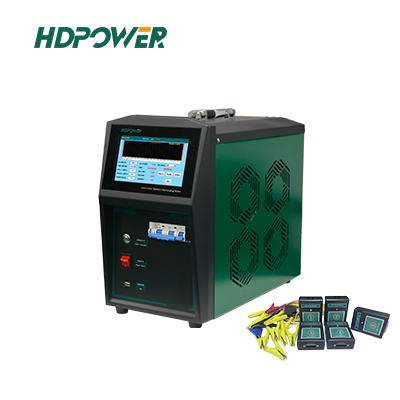
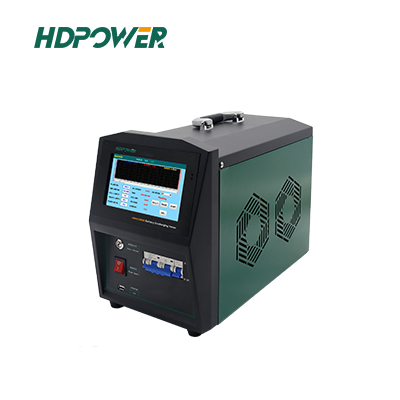
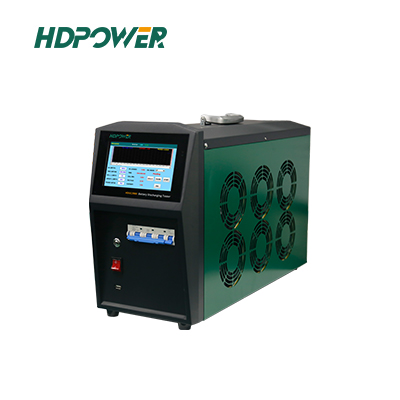
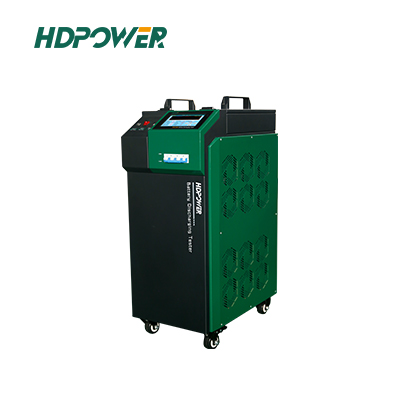
A Battery Discharge Analyzer is a professional test instrument used to evaluate battery performance through a controlled discharge process.
Unlike a simple voltage tester, a discharge analyzer places the battery under a defined electrical load and continuously monitors its performance during the test. The resulting data can be used to determine whether the battery is capable of delivering its expected capacity.
For lead acid batteries, this type of testing is particularly useful because aging does not always produce an obvious voltage abnormality. Factors such as sulfation, repeated cycling, high operating temperature, poor charging conditions, and long periods of float operation can gradually reduce available capacity.
A professional discharge test can reveal this degradation before a battery fails during an actual power outage.
In practical applications, a Battery Discharge Tester can be used to monitor:
- Battery voltage during discharge
- Discharge current
- Discharge time
- Delivered ampere-hours
- Voltage changes throughout the test
- Battery or battery-string performance
- Test curves and historical data
The exact parameters and test procedures should be selected according to the battery manufacturer’s requirements and the applicable maintenance or testing standard.
Why Voltage Testing Alone Is Not Enough
Voltage is an important battery parameter, but it does not directly represent the amount of usable capacity remaining in a stationary lead acid battery.
A battery may show an acceptable voltage at rest while having significantly reduced capacity under load. This is why capacity testing is widely used as a more meaningful way to assess the actual performance of stationary battery systems.
During a discharge test, the battery is subjected to a controlled load while its voltage and other test parameters are recorded. The test continues according to the defined discharge profile until the specified endpoint or another preset stopping condition is reached.
The resulting discharge data provides a much clearer picture of the battery’s ability to supply power.
For example, a 100 Ah battery may still show a normal voltage during a routine inspection, but if it can only deliver substantially less than its expected capacity during a controlled discharge test, maintenance personnel have objective evidence that the battery is deteriorating.
This makes discharge testing valuable for both preventive maintenance and acceptance testing.
How Does Lead Acid Battery Discharge Testing Work?
A typical lead acid battery capacity test follows a controlled process rather than simply connecting an arbitrary load to the battery.
- Inspect the battery before testing
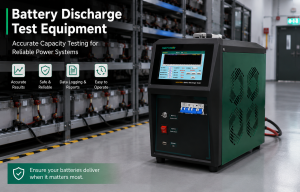
Before connecting a Battery Discharge Test Equipment system, technicians should inspect the battery and its installation condition.
The inspection may include:
- Battery appearance
- Terminal and interconnection condition
- Signs of leakage or swelling
- Connection tightness
- Battery voltage
- Ambient and battery temperature
- Charger and UPS operating condition
- Battery string configuration
The battery should be in a suitable condition for testing, and the test procedure should follow the manufacturer’s recommendations and site safety requirements.
- Define the discharge parameters
The test current, duration, endpoint voltage, and other parameters should be established before starting the test.
For stationary lead acid batteries, the correct test profile depends on the battery type, rated capacity, manufacturer specifications, and the purpose of the test.
A constant-current discharge is commonly used for capacity testing because it provides a controlled and repeatable load.
- Start controlled discharge
The analyzer applies the defined load and continuously monitors the battery.
As the battery discharges, its voltage gradually decreases. The tester records the relevant parameters throughout the process, allowing engineers to analyze the discharge curve rather than relying on a single measurement.
- Stop the test at the defined endpoint
A discharge test should not simply continue until the battery is completely exhausted.
The stopping condition should be defined in advance according to the test procedure. Once the endpoint is reached, the analyzer stops the discharge process and records the final test data.
- Analyze the results
The recorded data can then be used to determine the battery’s actual discharge performance and capacity.
This provides maintenance personnel with objective evidence for decisions such as:
- Continue using the battery
- Increase monitoring frequency
- Investigate individual weak batteries
- Replace deteriorated batteries
- Retest the battery after maintenance
Battery Capacity Testing and Discharge Testing
The terms “capacity testing” and “discharge testing” are closely related, but they are not always used in exactly the same context.
A Battery Capacity Tester uses controlled discharge to determine how much capacity a battery or battery string can actually deliver under a defined test condition.
The basic concept is straightforward: the battery is discharged at a specified load while current and time are monitored. The delivered ampere-hours can then be evaluated against the expected or rated performance.
Capacity testing is particularly valuable for stationary lead acid batteries because these batteries may spend most of their service life on float charge and only need to provide significant current during a power interruption.
A regular discharge test can therefore answer an important maintenance question:
Can this battery still provide the required backup power when the main power source fails?
Where Are Battery Discharge Analyzers Used?
UPS Battery Systems
UPS systems depend heavily on their battery banks. During normal operation, batteries may remain on float charge for long periods and may only be heavily loaded during a power failure.
A weak battery can therefore remain unnoticed until an outage occurs.
Regular discharge testing helps maintenance teams evaluate the condition of the UPS battery bank and identify deteriorating batteries before they create a backup-power risk.
For larger UPS installations, battery capacity testing is an important part of preventive maintenance.
Telecommunications
Telecom base stations and communication facilities commonly rely on stationary battery banks for backup power.
A telecom battery bank may contain many individual batteries connected in series and parallel. A weak unit can affect the performance of the complete battery system.
Using a Lead Acid Battery Tester allows maintenance personnel to perform systematic testing of lead acid batteries and battery strings while creating records for future comparison.
Substations and Power Utilities
Substations require dependable DC battery systems for protection, control, switching, and emergency operation.
A battery failure in this environment can have consequences beyond the battery itself.
Discharge testing provides a practical method for evaluating whether the installed battery system can continue to support critical loads when AC power is unavailable.
Data Centers
Data centers require reliable backup power because even a short interruption can affect servers, networking equipment, storage systems, and other critical infrastructure.
Battery capacity testing can be incorporated into preventive maintenance programs to verify that UPS battery banks remain capable of supporting the required backup load.
Industrial Facilities
Factories, process plants, transportation facilities, and other industrial installations may use lead acid batteries for emergency power, control systems, protection equipment, and standby applications.
In these environments, a controlled discharge test can help establish a more complete picture of battery condition than routine voltage measurements alone.
What Can a Battery Discharge Analyzer Tell You?
One of the biggest advantages of discharge testing is that it generates a complete set of test data instead of a single pass/fail measurement.
Depending on the equipment and test configuration, engineers can evaluate:
Discharge voltage curve:
Shows how battery voltage changes throughout the discharge process.
Discharge current:
Confirms whether the required test load is maintained.
Discharge time:
Shows how long the battery can sustain the defined load before reaching the test endpoint.
Delivered capacity:
Provides an important indicator of the battery’s actual usable capacity under the selected test conditions.
Battery string behavior:
Helps identify abnormal performance within a larger battery bank when individual battery or cell measurements are available.
Historical records are also valuable. Comparing results from different test periods can help maintenance teams identify gradual capacity deterioration rather than waiting for a sudden failure.
How to Choose the Right Battery Discharge Analyzer
Not every battery discharge application has the same requirements. Before purchasing a tester, consider the following factors.
Battery Voltage Range
Make sure the analyzer supports the voltage of the battery or battery string being tested.
A device intended for small 12 V batteries may not be appropriate for a large 48 V telecom system or a higher-voltage industrial battery bank.
Discharge Current
The maximum discharge current determines the types of batteries and test profiles the equipment can handle.
For larger battery banks, a higher-capacity discharge system may be necessary to achieve the required test conditions within a practical testing time.
Discharge Modes
Depending on the application, users may require constant-current, constant-power, or other discharge modes.
For a lead acid capacity test, the selected mode should match the defined test procedure and battery manufacturer’s requirements.
Data Recording and Reporting
For professional maintenance, data management is almost as important as the discharge process itself.
Look for equipment that can record test data and generate reports or exportable files. This makes it easier to compare historical results, document maintenance activities, and provide evidence of battery performance.
Protection Functions
Battery discharge equipment should include appropriate protection functions for the intended application.
Protection against conditions such as over-temperature, over-current, abnormal voltage, or incorrect connection can help reduce operational risk during testing.
Application Compatibility
The best tester is not necessarily the one with the highest current rating. It should match the actual battery systems you need to test.
For example, a telecom maintenance team may prioritize portability and battery-bank compatibility, while a power utility may require higher discharge capacity, extensive data recording, and support for large battery strings.
Battery Discharge Analyzer vs. Battery Load Tester
A Battery Load Tester is another common tool used to evaluate battery performance under load.
The basic principle is similar: instead of evaluating a battery only at rest, the battery is subjected to an electrical load and its response is observed.
However, professional battery discharge analyzers are generally intended for more structured and comprehensive discharge testing, particularly when capacity measurement, long-duration testing, data recording, and detailed reporting are required.
For a quick diagnostic check, a basic load test may be sufficient.
For a formal capacity evaluation of a stationary lead acid battery bank, a dedicated discharge testing system is generally more appropriate.
Why Regular Discharge Testing Matters
Battery deterioration is not always linear or immediately visible.
A battery may continue to show acceptable voltage during routine inspection while its actual capacity is declining. By performing discharge tests at appropriate intervals, maintenance teams can establish a performance history and identify deterioration trends.
This is especially important for critical battery systems where the cost of an unexpected failure is much higher than the cost of preventive testing.
Regular testing can support:
- Preventive battery maintenance
- Battery acceptance testing
- Capacity verification
- Battery replacement planning
- UPS maintenance
- Telecom battery maintenance
- Substation battery maintenance
- Battery bank performance analysis
The testing interval should always be determined according to the battery manufacturer’s recommendations, applicable standards, site requirements, and the criticality of the installation.
A Better Approach to Lead Acid Battery Maintenance
A reliable battery maintenance program should not depend on a single measurement.
Voltage testing, internal resistance measurements, visual inspection, charging checks, and controlled discharge testing each provide different information about battery condition.
Among these methods, controlled discharge testing is particularly valuable when the goal is to determine whether a battery can actually deliver the required capacity under load.
For facilities using large numbers of lead acid batteries, combining routine inspections with periodic capacity testing provides a more complete approach to battery reliability.
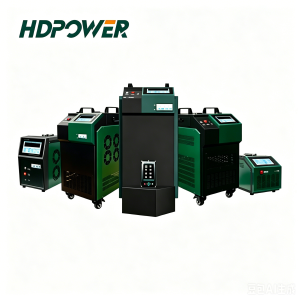
HDPOWER provides professional Lead Acid Battery Tester solutions covering battery analysis, discharge testing, capacity testing, charging, and battery maintenance. The product range includes dedicated battery discharge testers and other equipment designed for telecom, UPS, substations, data centers, and industrial battery applications.
Conclusion
A Battery Discharge Analyzer provides a practical way to move beyond simple voltage checks and evaluate the actual discharge performance of lead acid batteries.
By applying a controlled load and recording voltage, current, time, and capacity throughout the test, maintenance teams can obtain objective information about battery condition. This is particularly important for UPS systems, telecommunications infrastructure, substations, data centers, and other applications where battery reliability directly affects system availability.
When selecting a discharge analyzer, consider the battery voltage range, required discharge current, test modes, data recording capabilities, protection functions, and application requirements.
For organizations responsible for critical standby power systems, professional discharge testing is not simply a way to collect battery data—it is a practical tool for identifying deterioration, planning maintenance, and reducing the risk of unexpected battery failure.