Introduction
In industrial UPS environments, battery reliability determines whether critical infrastructure remains operational during power disturbances. From substations and data centers to telecommunications hubs and manufacturing facilities, battery banks must deliver immediate and sustained DC output when grid power fails.
However, most UPS battery systems operate continuously under float charge conditions and rarely experience full discharge. Over time, this operating mode leads to capacity decline, internal resistance growth, and electrochemical imbalance. Standard monitoring systems cannot accurately measure true discharge capability under load.
A battery pack cycler is specifically designed to address this limitation. By performing controlled charge–discharge cycling, it validates actual battery capacity, restores electrochemical activity, and supports preventive maintenance strategies for industrial UPS systems.
What Is a Battery Pack Cycler
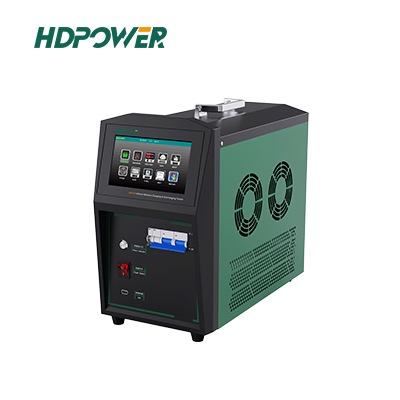
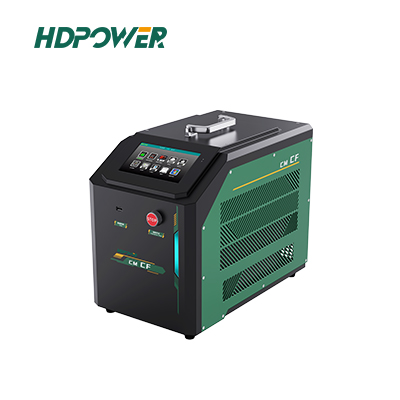
A battery pack cycler is a programmable charge–discharge testing system engineered to simulate real operating conditions in battery banks. Unlike simple load testers, a cycler integrates controlled discharge, intelligent recharge, and data acquisition into a unified platform.
In industrial UPS applications, a battery pack cycler typically supports:
● High-voltage DC systems (110V, 220V, and above)
● Adjustable constant current discharge
● Automated cutoff voltage control
● Programmable recharge profiles
● Real-time voltage and current monitoring
● Data logging and trend analysis
Its purpose is not only to test but also to maintain and restore performance through structured cycling.

Why UPS Battery Banks Require Cycling
UPS battery systems often remain idle under float charge for extended periods. While float charging maintains nominal voltage, it does not prevent gradual degradation.
In lead-acid systems, sulfation gradually forms when lead sulfate crystals stabilize on plate surfaces. In lithium-based UPS systems, impedance rise and cell imbalance reduce effective capacity.
Common degradation mechanisms include:
● Increased polarization resistance
● Electrolyte stratification
● Active material isolation
● Internal resistance growth
● Uneven state-of-charge distribution
Because UPS batteries are rarely deeply discharged during normal operation, inactive regions develop within the plates. Over time, usable capacity declines despite acceptable float voltage readings.
A battery pack cycler introduces controlled stress testing to reveal and correct these issues.
Core Functions of a Battery Pack Cycler
Capacity Verification
The primary function of a battery pack cycler is to determine actual discharge capacity. By applying constant current discharge to a predefined cutoff voltage, the system calculates ampere-hour (Ah) output and validates runtime performance.
This ensures that the UPS battery bank can sustain required backup duration during grid outages.
Electrochemical Reactivation
In lead-acid systems, structured discharge followed by regulated recharge can partially reduce soft sulfation. Cycling improves electrolyte distribution and reactivates underutilized plate areas.
In lithium UPS systems, cycling identifies weak modules, reveals internal resistance rise, verifies actual energy delivery, and improves state-of-charge calibration. In many lithium-based installations, the cycling platform integrates the functionality of a professional
lithium battery charger discharger to enable programmable charge–discharge sequences, accurate capacity measurement, and stable current control within a single system architecture.
Performance Trend Analysis
A professional battery pack cycler records voltage curves and discharge time across multiple cycles. Comparing trend data allows predictive maintenance rather than reactive replacement.
Industrial Voltage Platforms and Power Matching
Industrial UPS battery banks commonly operate at:
● 110V DC systems
● 220V DC systems
Effective battery pack cyclers must maintain stable discharge current across these voltage levels.
For example:
At 110V and 50A, discharge power equals 5.5kW.
At 220V and 50A, discharge power equals 11kW.
Proper power scaling ensures realistic load simulation while maintaining safe thermal operation.
Discharge current selection should align with rated capacity (e.g., C10 or C20 discharge rate) to produce standardized results without overstressing the battery.
Preventive Maintenance Through Structured Cycling
Battery pack cycling supports preventive maintenance in three ways:
- Validation – Confirms that the battery bank meets rated capacity.
- Restoration – Reactivates inactive electrochemical material where possible.
- Prediction – Identifies degradation trends before failure occurs.
Without structured cycling, maintenance decisions are often based on calendar age rather than performance data. This can result in premature capital expenditure or unexpected downtime.
A battery pack cycler enables data-driven lifecycle management.
Safety Considerations in UPS Battery Cycling
Industrial UPS battery banks store significant energy. Controlled cycling must include:
● Overcurrent protection
● Overvoltage and undervoltage safeguards
● Temperature monitoring
● Automatic discharge cutoff
● Isolation and grounding safeguards
Professional battery pack cyclers incorporate these protection layers to ensure safe and repeatable testing.
Battery Pack Cycler vs Load Bank
While a load bank applies discharge current, it does not typically integrate structured recharge and multi-cycle analysis.
A battery pack cycler provides:
● Programmable cycling sequences
● Automated charge–discharge transitions
● Multi-cycle durability testing
● Data recording for lifecycle evaluation
For industrial UPS environments requiring ongoing maintenance programs, cycling systems provide more comprehensive functionality than simple discharge tools.
Long-Term Benefits of Implementing a Battery Pack Cycler
Integrating a battery pack cycler into UPS maintenance programs offers:
● Verified backup reliability
● Extended service life
● Reduced unexpected failures
● Optimized replacement timing
● Improved operational confidence
● Lower total lifecycle cost
In high-reliability infrastructure, proactive cycling significantly reduces risk exposure.
Conclusion
A battery pack cycler is a critical tool for capacity testing, electrochemical reactivation, and preventive maintenance in industrial UPS systems. By performing controlled charge–discharge cycles under monitored conditions, it ensures that battery banks deliver reliable power when needed.
In mission-critical environments where downtime is unacceptable, structured battery pack cycling transforms maintenance from reactive replacement to strategic lifecycle management.