Introduction
Lead-acid batteries remain widely used in UPS systems, telecommunications, substations, data centers, railway systems, and other critical backup-power applications. In these environments, a reliable Lead Acid Battery Charger is not simply a device used to restore battery energy. It is an important part of the overall battery maintenance strategy, helping keep battery banks ready for emergency operation while supporting long-term battery reliability.
Choosing the right charger requires more than matching the nominal battery voltage. Battery chemistry, capacity, charging current, charging mode, operating environment, protection functions, monitoring requirements, and maintenance procedures should all be considered before selecting equipment.
For industrial users, the charger should also work together with battery testing and maintenance equipment. A battery may appear to charge normally while its actual capacity or internal condition has already deteriorated. Combining charging with testing provides a more reliable approach to battery maintenance.
What Is a Lead Acid Battery Charger?
A Lead Acid Battery Charger is an electrical device designed to provide controlled charging power to lead-acid batteries or battery banks. Depending on the application, the charger may support different charging stages, including constant-current charging, constant-voltage charging, float charging, trickle charging, or equalized charging.
Lead-acid batteries are available in several configurations, including flooded, AGM, and gel batteries. Their charging requirements are not necessarily identical. Therefore, the charger should always be selected according to the battery manufacturer’s specifications and the requirements of the complete battery system.
For industrial applications, charging equipment may also need to provide voltage and current monitoring, automatic charging control, alarm functions, data recording, and multiple protection mechanisms.
The objective is not simply to charge the battery faster. The objective is to provide the appropriate charging conditions while maintaining battery availability and minimizing unnecessary maintenance or premature replacement.
Why Industrial Battery Charging Requires Specialized Equipment
Consumer battery chargers are generally designed for relatively small batteries and simple charging tasks. Industrial battery banks are different.
A backup battery system may contain multiple batteries connected in series or parallel, operate continuously in standby conditions, and be required to provide power immediately when the main electrical supply fails.
This makes industrial battery charger selection particularly important for critical infrastructure.
An industrial charger should be evaluated according to:
- Battery chemistry and type
- Nominal and maximum battery voltage
- Battery capacity
- Number of cells
- Required charging current
- Charging mode
- Recharge time
- Operating environment
- Protection requirements
- Monitoring and communication requirements
- Long-term maintenance strategy
For example, a telecom battery bank may have very different operating requirements from a railway signaling battery system or a substation DC battery bank.
How to Choose Lead Acid Battery Charging Equipment
Selecting suitable lead acid battery charging equipment starts with understanding the battery and its application.
- Match the Battery Voltage
The charger output must be compatible with the complete battery bank.
Industrial battery systems may use different voltage levels depending on the application. A charger may therefore need to support 48V, 110V, 220V, 380V, 480V, or other customized voltage ranges.
For battery banks containing multiple series-connected batteries, the charging voltage should be suitable for the entire system rather than being selected according to a single battery.
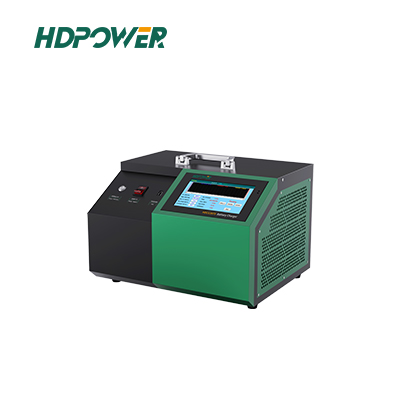
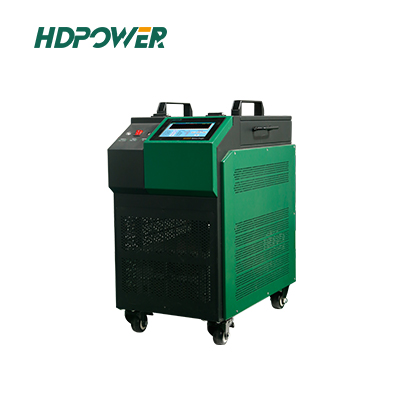
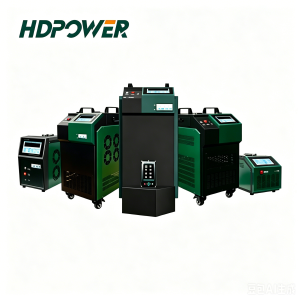
HDPOWER’s Battery Charger Series includes different voltage configurations, including 48V, 110V/144V, 480V, 2–300V, and 2–600V models, providing options for different industrial battery systems.
- Consider Battery Capacity and Charging Current
Charging current directly affects recharge time and battery operating conditions.
A higher charging current may reduce the time required to recover a discharged battery, but the battery must be designed to accept the selected charging rate. Excessive charging current can create undesirable operating conditions and may shorten battery service life.
For backup-power systems, engineers should determine how quickly the battery needs to recover after a power interruption and select an appropriate charging current based on the battery manufacturer’s recommendations.
- Select the Appropriate Charging Mode
Different stages of lead-acid battery maintenance may require different charging modes.
Constant-current charging can be used during certain charging stages, while constant-voltage charging helps control the battery voltage as it approaches a higher state of charge. Float charging is commonly used for standby battery systems that need to remain ready for emergency operation.
Some industrial chargers also support equalized charging or activation charging for specific maintenance requirements.
HDPOWER’s charger series uses high-frequency PWM charging technology and supports constant-current, constant-voltage, and trickle charging modes. The equipment is designed for battery bank charging, activation charging, and maintenance charging.
Lead Acid Battery Charger Applications
UPS Battery Systems
UPS systems depend on batteries to provide backup power when the main electrical supply is interrupted.
A suitable battery charger for UPS systems should maintain the battery bank in a ready state while providing appropriate charging performance after a discharge event.
However, charging alone does not guarantee battery reliability. Periodic capacity testing, load testing, and internal resistance measurement can help identify batteries that may no longer provide sufficient backup power.
For large UPS installations, charging and testing should therefore be treated as complementary parts of battery maintenance.
Telecommunications
Telecommunications infrastructure often depends on battery banks to maintain service during power interruptions.
At remote telecom sites, battery maintenance can be particularly challenging because frequent inspection visits increase operating costs.
Reliable telecom battery charging equipment combined with periodic battery testing can help maintenance teams monitor battery condition and identify abnormal batteries before they cause backup-power problems.
A suitable charging solution should be selected according to the battery voltage, capacity, site conditions, and required maintenance strategy.
Power Substations
Substations use stationary batteries for protection, control, switching, communication, and emergency functions.
In these applications, the battery charger must support stable long-term operation and provide suitable charging performance for the battery bank.
The charger should also be considered together with monitoring and testing equipment. A battery that accepts charging current may still have insufficient capacity to support the required load during an emergency.
Data Centers and Rail Transit
Data centers require dependable backup power to protect servers, networking equipment, storage systems, and other critical infrastructure.
Railway systems may also use lead-acid battery banks for signaling, communication, control, and emergency lighting.
In both applications, charging should be integrated into a broader battery maintenance process that includes testing, monitoring, preventive maintenance, and replacement decisions.
Charging Alone Is Not Enough for Battery Maintenance
One of the most important points in industrial battery management is that a battery can charge normally while its actual performance has deteriorated.
For this reason, battery maintenance equipment should not be limited to charging equipment.
A practical maintenance process can include:
Charge → Monitor → Test → Analyze → Maintain → Retest
A lead acid battery tester can help maintenance teams evaluate the electrical condition of individual batteries or battery banks.
Capacity testing is particularly important when determining whether a battery can still deliver its rated performance. A battery capacity tester can evaluate battery capacity under controlled discharge conditions and provide useful data for maintenance decisions.
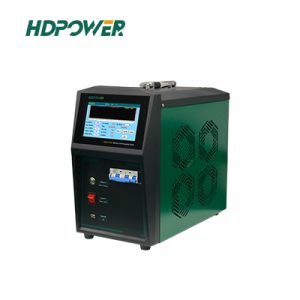
Load testing provides another method for evaluating battery behavior under a defined load. For applications requiring controlled charging and discharging, a battery charge discharge tester can provide a more comprehensive test cycle.
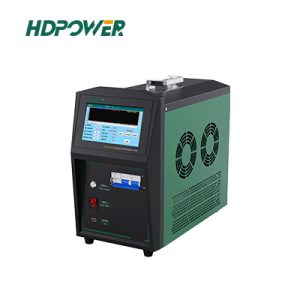
This approach helps maintenance teams avoid replacing batteries based only on age. Instead, replacement decisions can be supported by measured battery performance.
When Should a Lead Acid Battery Be Tested?
Regular testing is especially important when batteries are used in critical backup-power systems.
Maintenance teams should consider testing when:
- Battery voltage becomes abnormal
- Charging time changes significantly
- Battery temperature increases unexpectedly
- Backup runtime decreases
- Individual cells show abnormal readings
- Battery capacity appears to decline
- A battery has been exposed to deep discharge
- The battery approaches the end of its expected service life
- The system experiences an unexpected power event
Combining charging records with capacity, load, and internal resistance data can provide a more complete picture of battery condition.
For aging lead-acid batteries, an appropriate battery activation process may also be considered after testing. The battery should first be evaluated, then maintained according to its condition, recharged according to the manufacturer’s requirements, and tested again.
Important Protection Functions
Industrial charging equipment should provide appropriate protection functions because battery systems may operate continuously and unattended.
Depending on the charger design and application, useful protection functions may include:
- Over-current protection
- Over-voltage protection
- Over-temperature protection
- Reverse-polarity protection
- Short-circuit protection
- Abnormal-voltage alarms
- Charging status monitoring
- Automatic charging control
These functions can reduce operational risks and help maintenance teams respond more quickly to abnormal conditions.
Battery charging areas should also follow the battery manufacturer’s safety requirements and applicable local regulations. Lead-acid battery charging can involve hydrogen gas and corrosive electrolyte hazards, so appropriate ventilation, trained personnel, suitable PPE, and ignition-source control may be required.
Why Choose HDPOWER for Industrial Lead Acid Battery Charging?
HDPOWER develops and manufactures battery testing and maintenance equipment for industrial applications. Its product range includes battery chargers, battery discharge testers, capacity testers, battery analyzers, battery activators, and charge-discharge testing equipment.
The HDPOWER Lead Acid Battery Charger Series is designed for battery bank charging, activation charging, and maintenance charging. It supports multiple charging modes and includes functions such as intelligent charging management, data recording, protection, voltage and current calibration, and wide voltage compatibility.
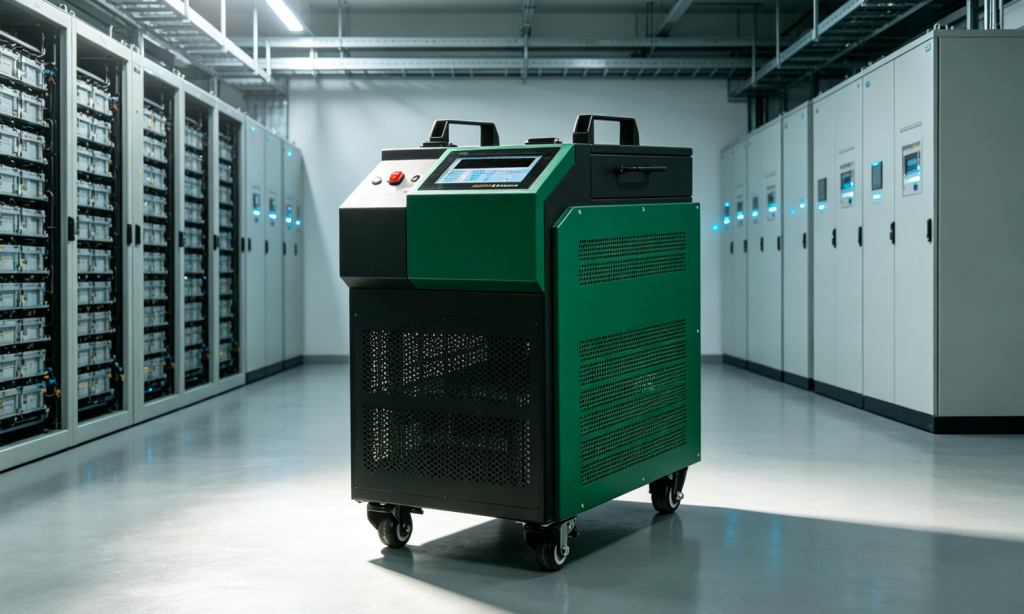
The equipment is used in applications including DC power systems, UPS backup power systems, railway transportation, data centers, and telecom base stations.
For customers that need more than a standalone charger, HDPOWER can provide a broader battery testing and maintenance solution. Charging can be combined with capacity testing, load testing, internal resistance testing, charge-discharge testing, and battery activation.
This integrated approach allows maintenance teams to move from reactive battery replacement toward condition-based battery maintenance.
How to Select the Right Charger for Your Battery System
Before purchasing a professional lead-acid battery charger, confirm the following:
- Battery chemistry and type
- Battery bank voltage
- Battery capacity
- Required charging current
- Charging modes
- Required recharge time
- Protection functions
- Monitoring and data recording requirements
- Installation environment
- Compatibility with existing battery testing equipment
The right solution should be selected according to the complete battery system rather than simply the charger price or nominal voltage.
Conclusion
A reliable Lead Acid Battery Charger is an essential part of industrial backup-power maintenance. The right charger should match the battery type, voltage, capacity, charging current, and application while providing appropriate charging modes, protection, and monitoring functions.
For UPS systems, telecommunications, substations, data centers, railway systems, and other critical infrastructure, charging should also be combined with regular battery testing. Capacity testing, load testing, internal resistance measurement, and appropriate battery activation can help maintenance teams identify declining batteries before they become a source of unexpected power failure.
HDPOWER provides professional battery charging and testing solutions for industrial battery systems. If you are looking for a suitable charger for a lead-acid battery bank, contact HDPOWER with your battery voltage, capacity, application, and charging requirements to discuss the appropriate solution.