Introduction
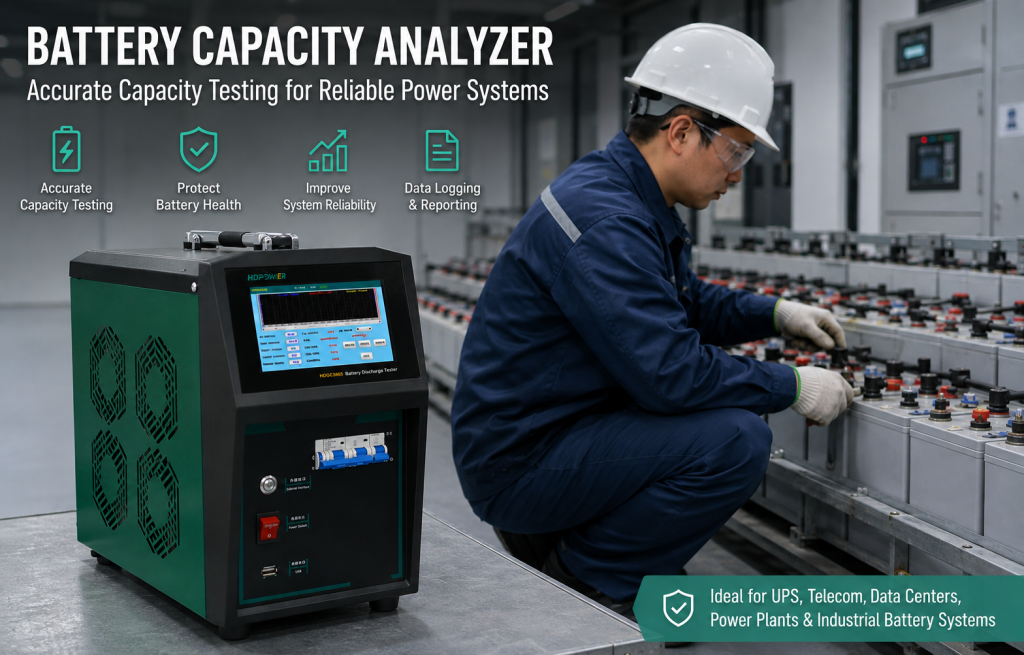
Battery capacity is one of the most important indicators of whether a battery can reliably perform its intended function. A battery may show normal voltage during a routine inspection while its actual usable capacity has already declined because of aging, sulfation, corrosion, repeated cycling, high temperature, or long-term standby operation. For this reason, professional battery capacity testing is essential for UPS systems, telecom backup power, data centers, substations, energy storage systems, battery maintenance companies, and other applications where battery failure can result in costly downtime.
A Battery Capacity Testing Machine provides a controlled way to evaluate how much usable energy a battery can actually deliver. Depending on the battery chemistry and testing objective, the equipment may perform rapid screening, controlled discharge testing, or more comprehensive charge-discharge evaluation.
For industrial applications, choosing the right Battery Capacity Tester means considering battery chemistry, voltage range, discharge current, test method, data recording, safety protection, and the specific requirements of the battery manufacturer.
What Is a Battery Capacity Testing Machine?
A Battery Capacity Testing Machine is professional equipment designed to determine the available capacity and discharge performance of a battery or battery bank under controlled conditions.
Battery capacity is commonly expressed in ampere-hours (Ah). During a conventional capacity test, the battery is discharged at a specified current until it reaches a defined end voltage. The delivered capacity can then be evaluated from the discharge current and duration.
The basic relationship is:
Battery Capacity (Ah) = Discharge Current (A) × Discharge Time (h)
For example, if a battery delivers 10 A for 8 hours before reaching the specified cutoff voltage, its measured capacity is approximately 80 Ah.
Unlike a simple voltage measurement, capacity testing evaluates how the battery actually performs under load. This makes it particularly valuable for batteries used as backup power, where the ability to deliver energy during an outage is more important than the open-circuit voltage alone.
A professional battery capacity testing system can monitor voltage, current, discharge time, capacity and other parameters throughout the test, while software can generate discharge curves and test reports for maintenance records.
How Does Battery Capacity Testing Work?
The most common method for accurate capacity verification is controlled discharge testing.
The general process includes:
- Check the battery condition and confirm the rated voltage and capacity.
- Select the appropriate discharge current or power.
- Set the required end-of-discharge voltage.
- Connect the testing equipment according to the battery configuration.
- Start the controlled discharge process.
- Monitor voltage, current, temperature and elapsed time.
- Stop the test when the specified cutoff condition is reached.
- Calculate the delivered capacity and analyze the discharge curve.
- Generate and save the test report.
The discharge current, end voltage and test duration should be selected according to the battery manufacturer’s specifications and the required duty cycle. Different battery chemistries and applications can have very different testing requirements.
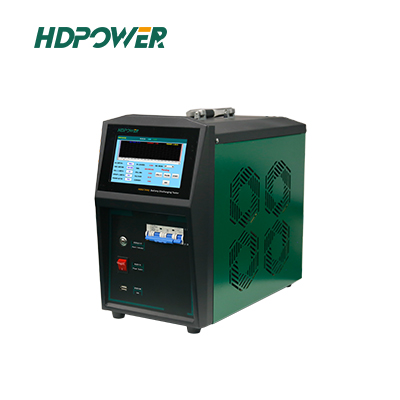
For accurate capacity verification of industrial battery banks, a dedicated Battery Discharge Tester can provide controlled discharge while recording key parameters throughout the test.
Rapid Screening vs. Accurate Capacity Testing
Not every battery inspection requires a long-duration discharge test. In large battery installations, technicians may first need to identify weak batteries before deciding which batteries require a complete capacity test.
This creates two complementary testing approaches.
Rapid Battery Screening
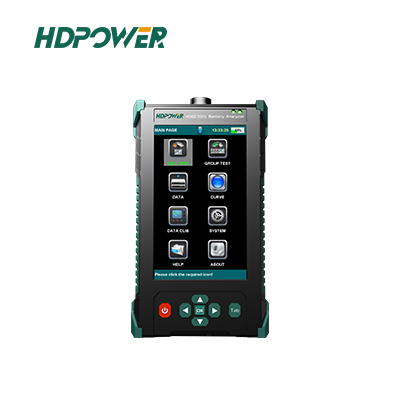
A Battery Analyzer can measure parameters such as battery voltage and internal resistance to quickly identify batteries that may have deteriorated.
Rapid screening is useful when technicians need to inspect a large number of batteries without performing a complete discharge test on every unit. It can help prioritize batteries for further investigation and reduce unnecessary testing time.
However, rapid screening and capacity verification should not be considered exactly the same. Internal resistance and conductance measurements provide valuable information about battery condition, but they do not directly replace a controlled discharge capacity test.
Accurate Capacity Verification
When the objective is to determine how much capacity a battery can actually deliver, controlled discharge testing is generally the more direct approach.
A professional Battery Capacity Test Equipment solution can apply a defined load and continuously record voltage, current and discharge time. The resulting data provides a more reliable basis for evaluating actual available capacity.
This is particularly important when batteries are approaching the end of their service life or when maintenance teams need documented evidence before making replacement decisions.
Battery Capacity Testing for Lead-Acid Batteries
Lead-acid batteries remain widely used in UPS systems, telecom base stations, substations, industrial backup systems and other stationary power applications.
One challenge with standby lead-acid batteries is that they may remain on float charge for long periods and only be required to provide significant power during an emergency. A battery can therefore appear normal during routine voltage checks while having significantly reduced capacity.
Regular capacity testing can help maintenance teams determine whether a battery bank can still provide the required backup runtime.
For lead-acid battery maintenance, different instruments can serve different purposes:
- A battery analyzer can provide rapid condition screening.
- A battery discharging tester can perform controlled capacity testing.
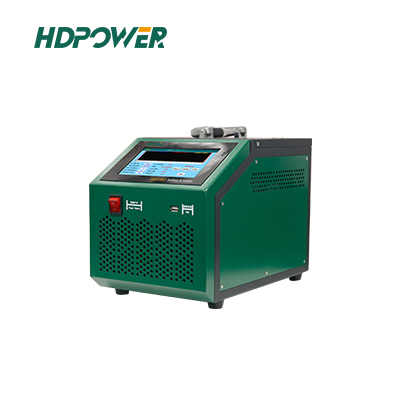
- A battery activator can support maintenance and residual-capacity evaluation for suitable lead-acid batteries.
- A charge-discharge system can evaluate battery performance over a broader operating cycle.
For batteries affected by aging or sulfation, testing should come before maintenance decisions. A Battery Activator may be used as part of a maintenance process where appropriate, but activation is not a substitute for capacity verification.
After maintenance, repeating the capacity test can help determine whether the battery’s performance has actually improved.
Lithium Battery Capacity Testing
Lithium-ion batteries require a different approach because battery packs can contain multiple cells connected in series and parallel.
Lithium battery capacity testing is increasingly important for:
- Electric vehicle battery packs
- Energy storage systems
- Battery recycling
- Battery repair and maintenance
- Battery manufacturing and quality control
- Industrial lithium battery systems
For high-voltage lithium battery packs, controlled discharge is often used to evaluate usable capacity and safely release stored energy under controlled conditions.
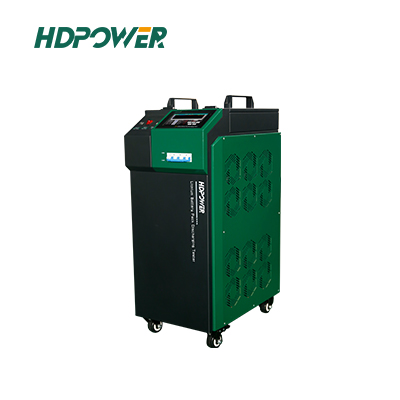
A Lithium Battery Discharger can be used for controlled pack discharge while monitoring the relevant electrical parameters.
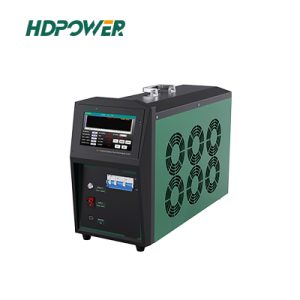
For example, HDPOWER’s CP-F series is designed for high-voltage lithium battery pack discharge applications, with models supporting different voltage ranges for EV, ESS and recycling workflows. The current product range includes solutions covering DC 10–600 V and higher-voltage pack testing requirements.
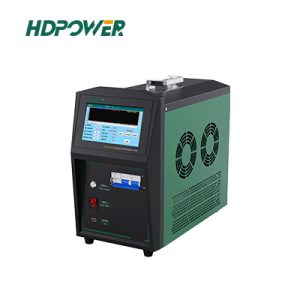
For applications requiring both charging and discharging, a Battery Charge Discharge Tester can provide a more complete test cycle and help evaluate battery performance during different operating stages.
Key Features to Consider When Choosing a Battery Capacity Testing Machine
Not every capacity tester is suitable for every battery system. Before purchasing equipment, engineers should evaluate several important factors.
- Battery Voltage Range
The equipment should cover the actual voltage of the battery or battery bank.
Industrial systems may include 12 V, 24 V, 48 V, 110 V, 220 V and higher-voltage battery systems, while lithium battery packs can operate at substantially higher voltages.
HDPOWER’s capacity testing solutions cover multiple battery voltage systems and include high-voltage lithium pack discharge equipment.
- Discharge Current and Power
The tester must be capable of providing the required discharge current or power for the intended battery.
A tester designed for small batteries may not be suitable for a large UPS battery bank or high-energy lithium battery pack. Engineers should compare the equipment’s current, power and continuous operating capabilities with the battery specifications.
- Constant Current or Constant Power Testing
Different applications may require different discharge modes.
Constant-current discharge maintains a defined current throughout the test, while constant-power discharge can be useful for applications where the load requirement is expressed in watts.
The appropriate method should be selected according to the battery manufacturer’s specifications and the purpose of the test.
- Data Logging and Reporting
For industrial maintenance, test results should be traceable and easy to review.
Useful functions include real-time voltage and current monitoring, discharge curves, capacity calculations, data storage and report generation.
HDPOWER’s battery capacity testing solutions support real-time monitoring and report generation, helping maintenance teams keep documented records of battery performance.
- Safety Protection
Capacity testing involves significant electrical energy, especially when testing large battery banks or high-voltage lithium packs.
Important protection functions can include over-current protection, over-temperature protection, reverse-polarity protection, abnormal-condition alarms and emergency stop functions.
Safety features should always be evaluated together with the battery voltage, current and energy level involved in the application.
Applications of Battery Capacity Testing Machines
Professional battery capacity testing equipment can be used across a wide range of industrial applications.
UPS Battery Testing
UPS batteries must provide reliable backup power when the main supply fails. Capacity testing helps maintenance teams evaluate whether the battery bank can still meet its required backup performance.
Telecom Battery Maintenance
Telecom base stations often rely on standby battery systems. Capacity testing can identify degradation and help maintenance teams determine which batteries require further inspection or replacement.
Data Centers
Data centers depend on UPS battery banks to maintain power continuity. Documented capacity testing provides useful information for preventive maintenance and battery lifecycle management.
Power Utilities and Substations
Battery systems used in substations and power facilities may need periodic performance verification to ensure reliable operation during power interruptions.
EV and Energy Storage Systems
High-voltage lithium battery packs used in EVs and ESS applications require controlled testing to evaluate capacity, discharge performance and remaining usable energy.
Battery Recycling
Before dismantling, transporting or processing high-energy battery packs, controlled discharge equipment can be used to release stored energy under defined conditions. This makes discharge testing equipment valuable in battery recycling workflows.
How to Choose the Right Battery Capacity Testing Machine
The best equipment depends on what you need to measure.
For rapid inspection of large numbers of batteries, a battery analyzer may be the most efficient starting point.
For accurate capacity verification, a dedicated discharge tester is generally more appropriate.
For lead-acid batteries requiring maintenance and residual-capacity evaluation, a battery activation solution may complement the testing process.
For high-voltage lithium battery packs, specialized lithium discharge equipment should be selected based on the pack’s voltage, current, energy level and discharge requirements.
For comprehensive testing involving both charging and discharging, an integrated charge-discharge system may provide greater flexibility.
In other words, the right solution is not necessarily the machine with the highest current or the widest voltage range. It is the equipment that matches the battery chemistry, test objective, electrical specifications and operating environment.
Why Choose HDPOWER for Battery Capacity Testing?
HDPOWER provides professional battery testing and maintenance equipment for lead-acid and lithium battery applications.
Its Battery Capacity Tester Series covers different testing requirements, from rapid battery screening to accurate discharge capacity testing and high-voltage lithium battery pack discharge. The product lineup includes the HDGC-3915 Battery Analyzer, HDGC3932 Battery Activator, HDGC3980 Battery Discharging Tester, and CP-F series lithium battery pack dischargers.
The equipment is designed for applications including telecom base stations, data centers, power systems, battery recycling, EVs and energy storage systems. Features such as real-time monitoring, data logging, discharge curve analysis and safety protection help engineers improve testing efficiency and maintenance traceability.
As a manufacturer of professional battery testing equipment, HDPOWER can also provide technical support and OEM services for customers with specific testing requirements.
Conclusion
A Battery Capacity Testing Machine is more than a simple battery voltage tester. For professional battery maintenance, it should provide controlled testing, reliable measurements, meaningful data and appropriate safety protection.
Rapid analyzers can help identify weak batteries quickly, while controlled discharge equipment provides a more direct method for verifying actual battery capacity. For lead-acid systems, capacity testing can be combined with maintenance and activation procedures. For lithium battery packs, specialized discharge equipment can provide controlled capacity testing and energy release.
By selecting equipment according to battery chemistry, voltage, discharge requirements and testing objectives, maintenance teams can obtain more reliable battery performance data and make better decisions about maintenance, replacement and lifecycle management.
For industrial battery testing requirements, explore HDPOWER’s Battery Capacity Tester solutions or contact the technical team to select equipment for your battery system.