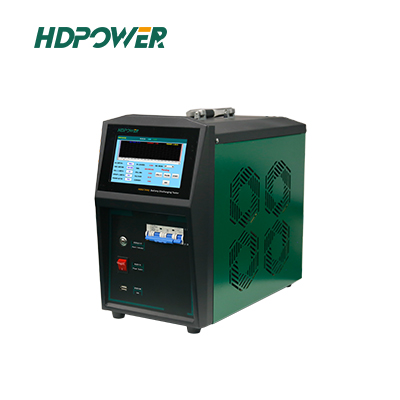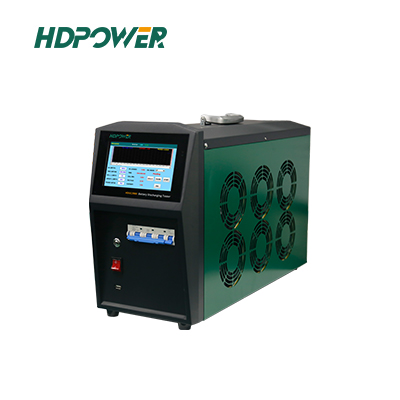
Energy Storage Systems (ESS) are transforming how utilities, microgrids, and large commercial facilities manage power. From smoothing renewable energy output to providing peak shaving and frequency regulation, ESS installations play a critical role in modern power infrastructure. At the heart of any ESS installation are battery arrays composed of large numbers of cells or modules connected in series and parallel configurations. To maximize reliability and lifecycle performance, it is essential to understand not just the nominal voltage of these batteries but their true usable capacity and performance under load conditions. A battery load unit provides the most reliable and engineering-grade method for performing such tests.
Unlike simple voltage checks or floating-state diagnostics, which can mask underlying deterioration, a battery load unit applies a controlled DC load to an ESS battery bank and measures how the system responds in real time. This includes capturing voltage sag, discharge duration, internal resistance trends, and thermal behavior. Because ESS systems often consist of high-energy lithium-ion packs or advanced lead-acid modules, accurate capacity and performance testing are indispensable for maintenance planning, warranty validation, and long-term operational safety.
Why ESS Requires Load-Based Capacity and Performance Testing
Energy Storage Systems are inherently dynamic. They charge and discharge frequently, often in response to variable generation from solar or wind resources, or to provide grid services like peak shaving or demand response. Over time, batteries degrade due to chemical aging, thermal cycling, and imbalance across cells or modules. These degradation mechanisms do not always present as obvious symptoms under no-load or static measurements, such as open-circuit voltage.
A battery load unit places the battery under realistic stress by applying a controlled discharge current. The resulting capacity measurement (in ampere-hours or watt-hours) reflects the battery’s ability to supply power over time. In practical terms, this reveals the actual usable energy that the ESS can deliver—critical for evaluating reserve margin, runtime expectations, and service-level guarantees.
The use of a battery load tester for capacity testing helps ESS operators:
● Validate battery state-of-health and usable capacity
● Detect early signs of performance fade that static checks miss
● Plan maintenance before outages occur
● Optimize deployment of string configurations
● Support performance benchmarking across battery types
Without load testing, an ESS may appear healthy until a critical event exposes its failing capacity, potentially leading to unplanned downtime and costly energy shortages.
How a Battery Load Unit Works in ESS Testing
A professional battery load unit is an electronically controlled DC load that connects to the battery terminals and draws current according to a preset test profile. In ESS applications, the tester is configured to simulate typical discharge events the storage system might encounter, such as a sustained draw during peak demand or fluctuating loads during grid services.
Once connected, the load unit applies a constant current (CC) or constant power (CP) discharge, while onboard sensors continuously monitor:
● Terminal voltage
● Discharge current
● Battery temperature
● Discharge duration
● Voltage recovery after test completion
These measurements are used to compute the effective capacity of the battery string as well as to generate voltage and thermal profiles over the course of the discharge. The resulting data is a far more accurate reflection of system performance than static metrics alone.
Advanced battery load tester also offer programmable load profiles, enabling engineers to model real-world scenarios, such as rapid load changes or step load profiles, thereby revealing nuanced battery behaviors that are critical for ESS applications.

ESS Performance Pain Points Addressed by Battery Load Units
Energy Storage System operators face several challenges when it comes to battery health and performance testing:
1. Overestimation of Capacity:
Static voltage measurements can remain deceptively high even when usable capacity has degraded. A battery load unit reveals how the battery performs under load, preventing overestimation of system capability.
2. Hidden Degradation:
Chemical aging and cell imbalance often do not show in rest-voltage tests, especially for lithium-ion systems. Load testing uncovers these hidden conditions by stressing the pack in a controlled manner.
3. Inconsistent Results:
Manual or improvised load testing methods lack precision and repeatability. Professional battery load units provide stable, accurate load application with repeatable measurement conditions, ensuring consistent test data over time.
4. Safety Hazards:
ESS batteries often operate at high voltages. Basic load banks or resistor-based testers can present safety risks due to overheating or lack of proper protection circuits. Modern load units incorporate advanced safety protections that significantly reduce test risk.
5. Lack of Traceability:
Without detailed logging and reporting, ESS operators cannot track performance trends or comply with internal or external audit requirements. Load units generate detailed capacity reports that support maintenance documentation and lifecycle analysis.
Modern battery load units are engineered to directly address these pain points, providing ESS operators with actionable data and safer, more efficient testing workflows.
Typical Use Cases for Battery Load Units in ESS
Battery load units are widely used across various ESS scenarios:
Preventive Maintenance Programs
Regular load testing helps determine when battery modules begin to lose effective capacity. Rather than waiting for a failure, ESS operators can schedule maintenance or replacement when load test results indicate performance degradation.
Post-Failure Analysis
After an unplanned outage or system trip, a load unit can help diagnose whether a battery or a set of strings contributed to the failure, enabling targeted remediation.
Performance Benchmarking
When commissioning a new ESS installation, load units validate that battery performance meets design specifications and warranty conditions before the system enters service.
Capacity Equalization Verification
Battery load units assist in verifying that balancing and equalization measures have successfully aligned cell or module performance, which is crucial when multiple strings are operated in parallel.
Warranty and Compliance Reporting
Load-tested capacity data provides robust, empirical evidence that can support warranty claims or compliance with performance standards and service-level agreements.
Technical Advantages of Professional Battery Load Units
Professional battery load units offer several distinct advantages that make them especially suitable for ESS environments:
● Precise Load Control:
The ability to maintain constant current or power throughout the test ensures accurate capacity measurements that reflect real-world demands.
● Integrated Safety Protections:
High-voltage ESS testing requires safeguards against overcurrent, overvoltage, thermal runaway, and reverse polarity. Professional units integrate these protections into their hardware and software logic.
● Data Logging and Reporting:
Continuous data acquisition enables detailed reporting and trend analysis, essential for maintenance programs and historical comparisons.
● Programmable Test Profiles:
Users can define discharge profiles that simulate specific grid events, peak shaving loads, or step changes in power draw, providing crucial insights into ESS behavior under varied load conditions.
● Scalable Testing:
Designed to handle small to large battery banks, professional load units can be applied to single modules, multi-string configurations, or megawatt-scale systems.
● Repeatable Results:
Automated test sequences and controlled load application result in repeatable and reliable outcomes, reducing variability introduced by manual testing methods.
These advantages directly address the primary challenges faced by ESS operators and reinforce the value of battery load-based capacity testing.
Best Practices for Load Testing in ESS
To ensure meaningful and reliable results when using a battery load unit in ESS environments, the following best practices should be observed:
1. Pre-Test Stabilization
Allow batteries to rest and reach thermal equilibrium after charging to avoid voltage recovery effects that can skew results.
2. Use Appropriate Load Rates
Select a discharge current that reflects real use cases—typically between 0.1C and 0.3C for long-duration capacity tests, or higher for stress-testing scenarios.
3. Monitor Temperature Closely
Thermal behavior can influence capacity measurements. Avoid conducting tests when the environment is outside recommended temperature ranges.
4. Follow Manufacturer Voltage Limits
Do not discharge below manufacturer-recommended cutoff voltages to prevent battery damage.
5. Document and Archive Results
Record test conditions and results for future trend analysis and maintenance decision-making.
By following these practices, ESS operators can maximize the accuracy and utility of load-based testing results.
Conclusion
In the realm of energy storage systems, accurate capacity and performance testing is not a luxury but a necessity. A battery load unit provides ESS operators with the engineering-grade tools required to assess real usable capacity, detect early degradation, support preventive maintenance, and validate performance against design specifications. By applying controlled loads and capturing detailed performance data, load units deliver insights that other testing methods cannot, directly contributing to more reliable, safer, and better-performing ESS installations.
As energy storage proliferates globally—from large grid-scale installations to commercial microgrids and critical backup systems—the value of professional capacity testing with load units becomes increasingly evident. For ESS decision-makers, investing in robust load testing capabilities is a strategic choice that enhances system availability, reduces risk, and supports long-term operational excellence.