Introduction
Lithium iron phosphate (LFP) battery packs are widely used in electric vehicles, energy storage systems, industrial equipment, forklifts, and backup power applications. Their reputation for thermal stability, long cycle life, and high safety margins makes them particularly attractive for high-reliability and high-duty-cycle use cases. However, despite these advantages, accurately evaluating the performance of an LFP battery pack is not straightforward.
Unlike small consumer batteries, LFP packs operate at higher voltages, contain many cells connected in series and parallel, and are often subjected to continuous or heavy load conditions. To understand how these systems perform in real-world operation, engineers rely on a specialized tool known as an LFP pack discharge tester. This article explains what an LFP pack discharge tester is, how it works, and why it plays a critical role in assessing battery performance throughout the lifecycle of an LFP battery system.
Understanding the Characteristics of LFP Battery Packs
LFP batteries differ from other lithium-ion chemistries in several important ways. They typically operate at a lower nominal cell voltage than NMC or NCA batteries, but they compensate with excellent thermal stability and resistance to thermal runaway. This makes LFP chemistry well suited for applications where safety, longevity, and predictable behavior are priorities.
From a performance evaluation perspective, one defining characteristic of LFP batteries is their flat voltage discharge curve. Over a large portion of the state-of-charge range, voltage changes very little, even as capacity is being consumed. While this is beneficial for stable power delivery, it also makes it difficult to estimate remaining capacity or battery health based on voltage alone. As a result, capacity and degradation cannot be accurately assessed without controlled discharge testing.
Additionally, LFP battery packs often consist of dozens or hundreds of cells arranged into modules and packs. Over time, variations in internal resistance, temperature exposure, and usage patterns cause cells to age at different rates. These differences can reduce usable pack capacity and affect overall system reliability if not properly monitored.
What Is an LFP Pack Discharge Tester?
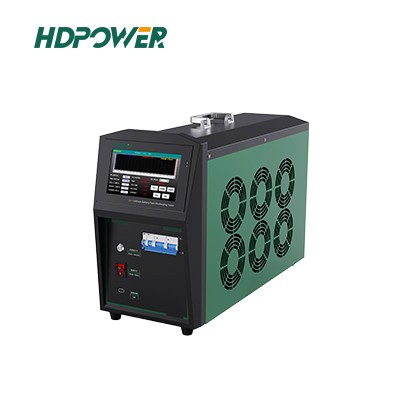
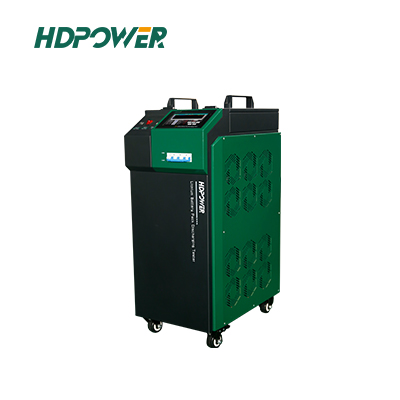
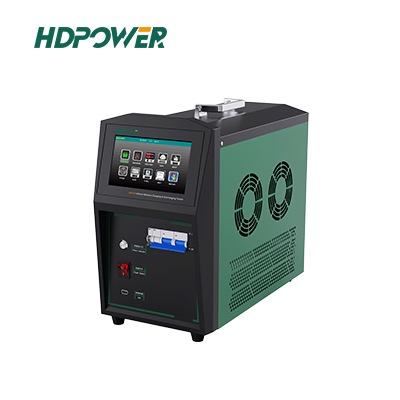
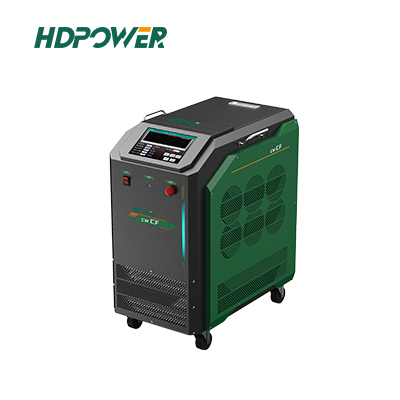
An LFP pack discharge tester is a programmable electronic load system designed specifically to discharge lithium iron phosphate battery packs under controlled and repeatable conditions. Its primary purpose is to evaluate how an LFP battery pack behaves when delivering energy to a load, while precisely measuring electrical and thermal parameters.
Unlike simple resistive loads, an LFP pack discharge tester actively regulates discharge current or power using electronic control. This ensures that the battery is tested according to predefined conditions rather than being influenced by voltage fluctuations or environmental factors. During the test, the system records key performance data such as voltage, current, temperature, discharge time, and delivered capacity.
By applying standardized discharge profiles, the tester enables accurate comparison between different battery packs, different test cycles, or the same pack at different points in its service life.

Why Discharge Testing Is Essential for LFP Battery Packs
Accurate Capacity Measurement
Because of the flat voltage profile of LFP chemistry, voltage readings provide limited insight into how much usable energy remains in a battery pack. Discharge testing allows engineers to determine actual delivered capacity, typically expressed in ampere-hours (Ah) or watt-hours (Wh), by measuring current over time until a defined cutoff voltage is reached.
This information is essential for verifying whether a battery pack meets its rated specifications and whether capacity has declined due to aging or operational stress.
Detection of Degradation and Aging
Although LFP batteries are known for long cycle life, they are not immune to degradation. Over many charge–discharge cycles, internal resistance gradually increases, which leads to greater voltage drop under load and increased heat generation. These changes may not be apparent during light use but become visible during controlled discharge testing.
An LFP pack discharge tester reveals these effects by monitoring voltage behavior and temperature rise at defined load levels. Comparing discharge curves over time allows engineers to track degradation trends and predict remaining useful life.
Identification of Cell and Module Imbalance
In a large LFP battery pack, small inconsistencies between cells can have a significant impact on overall performance. During discharge, weaker cells may reach cutoff voltage earlier than others, limiting usable pack capacity and triggering protective shutdowns.
Discharge testing helps identify such imbalances by highlighting irregular voltage behavior or unexpected capacity loss. This information supports maintenance actions such as cell balancing, module replacement, or system reconfiguration.
How an LFP Pack Discharge Tester Works
Controlled Load Regulation
At the core of an LFP pack discharge tester is an electronic load capable of maintaining stable discharge conditions. The tester typically operates in constant current or constant power mode, depending on the evaluation objective. Closed-loop control algorithms continuously adjust the load to ensure that the battery experiences the intended discharge profile, even as voltage declines during the test.
This level of control is essential for generating repeatable and comparable results.
High-Precision Measurement and Data Acquisition
Accurate performance evaluation depends on precise measurement of voltage, current, and time. An LFP pack discharge tester uses calibrated sensors and high-resolution data acquisition to record these parameters throughout the discharge process. Temperature sensors are often included to monitor thermal behavior, which is closely linked to internal resistance and efficiency.
The resulting data enables detailed analysis of discharge curves, capacity delivery, and thermal response under load.
Intelligent Cutoff and Safety Control
LFP batteries have defined lower voltage limits that must not be exceeded. Over-discharge can cause irreversible damage and reduce cycle life. An LFP pack discharge tester incorporates programmable cutoff thresholds and multiple safety protections to terminate the test automatically when limits are reached.
Additional safeguards typically include overcurrent protection, overtemperature shutdown, and fault detection, ensuring safe operation during high-capacity or high-voltage testing.
In practical battery evaluation and maintenance workflows, discharge testing is often combined with controlled charging to form a complete performance assessment cycle. A lithium battery charger discharger integrates both functions, allowing engineers to analyze how an LFP battery pack behaves during charging, rest, and discharge phases under standardized conditions. By observing voltage recovery, charge efficiency, and subsequent discharge performance, this combined approach provides deeper insight into capacity retention, internal resistance trends, and overall battery health across repeated operating cycles.
How Discharge Testing Evaluates LFP Battery Performance
An LFP pack discharge tester evaluates battery performance by transforming raw electrical behavior into actionable insights. Delivered capacity reveals how much energy the pack can actually supply under defined conditions. Voltage stability indicates how well the battery maintains output under load. Temperature trends expose inefficiencies or emerging issues related to internal resistance.
Together, these metrics provide a comprehensive picture of battery health that cannot be obtained through static measurements or basic monitoring systems alone.
Applications of LFP Pack Discharge Testing
LFP pack discharge testers are widely used across multiple industries. In energy storage systems, they support commissioning, acceptance testing, and periodic performance verification. In electric vehicles and industrial mobility, they are used for pack validation, maintenance diagnostics, and lifecycle evaluation. In backup power and telecom infrastructure, discharge testing ensures that LFP battery banks can deliver the required runtime during outages.
Research laboratories and manufacturers also rely on discharge testing to characterize new designs, validate production consistency, and conduct long-term aging studies.
Best Practices for LFP Pack Discharge Testing
To obtain reliable results, discharge testing should be conducted under controlled conditions. Batteries should be fully charged and allowed to rest before testing to stabilize internal chemistry. Test parameters such as discharge current, cutoff voltage, and ambient temperature should be selected according to battery specifications.
Data should be analyzed over multiple test cycles rather than in isolation, allowing trends to be identified and interpreted correctly. Following these practices ensures that discharge testing provides meaningful insights into battery performance.
Conclusion
An LFP pack discharge tester is an essential tool for evaluating the real-world performance of lithium iron phosphate battery packs. By applying controlled discharge conditions and capturing detailed electrical and thermal data, it enables accurate measurement of capacity, identification of degradation, and assessment of system reliability.
Given the flat voltage profile and long service life of LFP batteries, discharge testing plays a particularly important role in understanding true battery health. Whether used for commissioning, maintenance, or research, an LFP pack discharge tester provides the insights necessary to ensure safe, stable, and efficient operation of modern LFP-based energy systems.