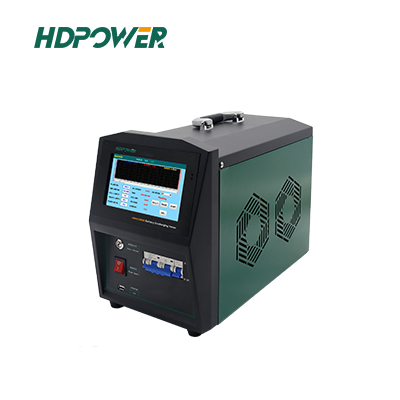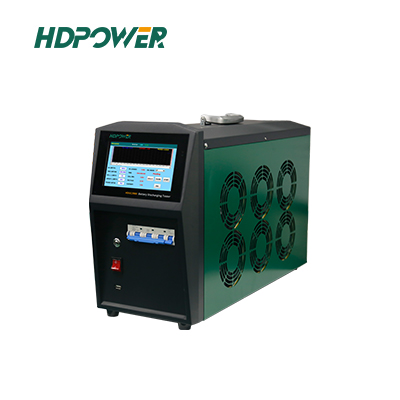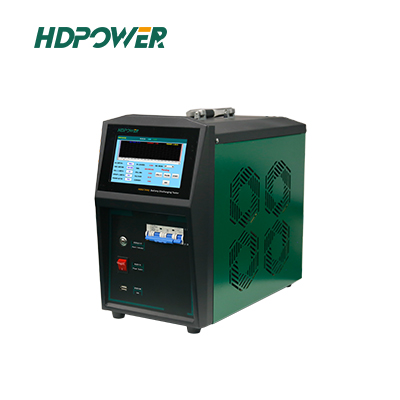
Ensuring that batteries operate safely, efficiently, and consistently has become an essential requirement across modern energy systems. From data centers and UPS installations to telecommunications networks and industrial equipment, the performance of the battery directly determines the reliability of the entire system. A battery tester with load provides the most accurate and objective assessment of battery health because it evaluates how a battery behaves under realistic electrical stress rather than relying on static open-circuit voltage readings. By applying a controlled load and measuring voltage drop, current response, temperature rise, capacity, and internal resistance, a high-precision tester reveals any degradation that may compromise long-term performance. In an era when lithium-ion and advanced lead-acid technologies power critical infrastructure, load testing has become an indispensable engineering practice.
Why Load Testing Is Essential for Battery Performance Evaluation
A battery’s open-circuit voltage alone cannot reveal its true condition. Many aged or degraded batteries display normal voltage until they are placed under stress, at which point voltage quickly collapses due to elevated internal resistance or chemical imbalances. This is why engineers rely on a battery tester with load to measure how the battery behaves when subjected to real-world current demand. A load test exposes hidden issues such as weakened electrodes, sulfation in lead-acid batteries, capacity loss due to aging, electrolyte dry-out, or thermal instability under high current discharge. When a battery is unable to maintain stable voltage under load, it signals a loss of effective capacity and an impending risk of failure. Load testing is not only a diagnostic method; it is a predictive maintenance practice that helps organizations identify failing batteries early, schedule timely replacements, and avoid downtime in mission-critical infrastructure.
In applications such as energy storage, EV modules, industrial power systems, and UPS installations, batteries are expected to maintain performance across thousands of cycles. Even small degradation trends—such as a 10% increase in internal resistance or a slight reduction in discharge runtime—can indicate the beginning of a failure trajectory. Conducting regular load tests enables technicians to build long-term battery performance profiles, identify abnormal patterns, and assess whether the battery can still support operational demands. Ultimately, load testing ensures reliability, safety, and compliance with internal performance standards.
How a High-Precision Battery Tester with Load Works
A high-precision battery tester with load integrates resistive load modules, high-resolution measurement circuits, and intelligent control logic capable of simulating a wide range of real operating scenarios. These devices typically offer constant current (CC), constant power (CP), and dynamic load profiles that allow the operator to replicate realistic working conditions. During testing, the battery is connected to the load terminal, and the tester applies a predefined current level while continuously capturing voltage, current, temperature, capacity, and internal resistance at high sampling frequency.
The battery load tester records every important parameter throughout the discharge cycle. A stable and well-designed tester maintains accurate current control, usually within a tolerance such as ±10 mA, while voltage measurements are often precise to ±1 mV. This level of accuracy is essential for evaluating modern lithium-ion batteries, where minute variations in voltage behavior can reveal deeper chemical or structural issues. The tester’s internal microprocessor generates real-time trend curves and stores the results to memory or external software, enabling engineers to analyze discharge curves, voltage sag characteristics, and long-term capacity degradation trends. By combining precise electronic load control with robust data acquisition, a high-precision battery tester with load becomes a powerful engineering tool for both laboratory analysis and large-scale maintenance operations.
Engineering-Level Testing Workflow
When performing a load test, a structured and consistent workflow is essential to ensure repeatability and accuracy. Testing typically begins with environmental preparation and battery stabilization. Most professionals recommend allowing the battery to rest for at least two hours before testing so that surface charge dissipates and voltage stabilizes. The testing environment should remain within a controlled temperature range—ideally 20°C to 25°C—to minimize thermal drift and ensure accurate data interpretation.
After preparation, the battery is connected to the tester using low-resistance cables. The technician configures the test parameters, including discharge current, cutoff voltage, duration, and sampling frequency. The load profile should match the battery’s specifications and real operating conditions. During the test, the tester applies a constant or dynamic load, and the battery’s response is continuously monitored. The test automatically ends once the battery reaches the programmed cutoff voltage. Engineers then evaluate voltage stability, discharge time, temperature rise, capacity calculation, and internal resistance variations. By comparing results to reference values or historical data, technicians can determine whether the battery is healthy, aging, or approaching end-of-life.
Key Technical Features of High-Precision Load Testers
Modern high-precision load testers are designed to meet professional engineering requirements across multiple industries. They typically support a wide voltage range—from single-cell systems up to multi-string industrial packs—and offer adjustable discharge currents suitable for both small and large capacity batteries. Advanced testers integrate high-resolution ADCs for precise measurement, allowing engineers to detect subtle performance deviations. The user interface often includes real-time graphing, numerical trend analysis, and report generation tools.
Additionally, these testers incorporate multi-level protection systems, including overvoltage protection, overcurrent protection, thermal shutdown, reverse polarity prevention, and short-circuit safeguards. Such protections are essential for ensuring safe operation, especially when testing high-energy lithium-ion batteries that require careful handling. Many testers also provide external communication options such as USB, RS-485, CAN, or Ethernet, allowing integration into automated test lines or remote monitoring platforms. The combination of programmability, high accuracy, and robust safety design makes a battery tester with load suitable for research laboratories, manufacturing facilities, and field maintenance operations.
Applications of Battery Load Testing Across Industries
A high-precision battery tester with load finds widespread use in diverse sectors where batteries serve as the core of reliability. In uninterruptible power supply (UPS) systems, load testing determines whether backup batteries can sustain critical loads during outages. In telecommunications, testing ensures stable power for remote base stations, minimizing service disruptions. In energy storage systems (BESS), load tests validate module consistency and prevent performance bottlenecks across racks. The automotive and EV industries rely heavily on load testing to evaluate 12V auxiliary batteries, traction cells, and post-maintenance battery modules. Manufacturing facilities use load testing as part of end-of-line quality assurance to verify that every battery meets rated capacity before shipment. Across all these fields, load testing enhances sustainability, operational safety, and long-term performance.
Best Practices for Accurate Battery Load Testing
Achieving accurate and consistent results requires strict adherence to professional testing principles. Engineers must ensure that cables and connectors are in optimal condition to avoid resistance-related measurement errors. Maintaining stable ambient temperature minimizes performance distortions caused by heat. The use of Kelvin (four-wire) connections is recommended when measuring small cells or low-voltage modules, as this method eliminates voltage drop across test leads. Regular tester calibration ensures long-term measurement reliability, particularly when using the device for commercial certification or research applications. Recording historical data is equally important because trend analysis provides deeper insights into degradation patterns than a single test can reveal.
The Importance of Safety When Using Load Testers
Because load testing applies controlled electrical stress, strict safety measures must be followed. Operators should avoid testing damaged, swollen, or leaking batteries. When handling high-voltage systems, insulated gloves, protective eyewear, and proper insulated tools should always be used. The testing area must remain free from flammable materials, and high-current tests should be supervised at all times. While electrical protection mechanisms in the tester provide an important safety layer, proper human oversight remains essential for preventing accidents. Prioritizing safety ensures that load testing delivers value without introducing unnecessary risk.
Conclusion
A high-precision battery tester with load is one of the most valuable tools for engineers and maintenance professionals who require reliable, accurate, and repeatable battery diagnostics. By applying a realistic discharge load, the tester uncovers performance characteristics that static voltage checks cannot reveal—such as true capacity, voltage sag, thermal behavior, and resistance changes. Whether used in energy storage, telecommunications, automotive engineering, industrial power systems, or manufacturing environments, load testing provides essential insights that support safe operation, long-term reliability, and superior battery lifecycle management. As battery technologies continue to evolve and power more critical systems, the importance of precise load-based performance evaluation will only continue to grow.