Introduction
48V battery systems are widely adopted across telecom infrastructure, energy storage, industrial equipment, and electric mobility applications due to their favorable balance between safety, efficiency, and power capability. Compared with higher-voltage architectures, 48V systems reduce insulation complexity and electrical risk while still supporting meaningful power output. However, as battery packs increase in capacity and operational complexity, maintaining consistent performance across all cells becomes a critical challenge.
One of the most common and underestimated issues in 48V battery systems is cell voltage imbalance. Even small differences between cells can gradually reduce usable capacity, accelerate aging, and compromise system stability. A 48V battery equalizer is specifically designed to address this problem by actively maintaining voltage consistency within the battery pack. This article explains what a 48V battery equalizer is, how it works, and—most importantly—which 48V application scenarios truly require equalization.
Understanding Cell Imbalance in 48V Battery Packs
A typical 48V battery pack is constructed from multiple cells or modules connected in series to achieve the required system voltage. In lithium systems, this often involves 13 to 16 cells in series depending on chemistry and nominal voltage. While these cells may be identical at the time of manufacture, they inevitably diverge over time due to variations in internal resistance, thermal exposure, load distribution, and charge–discharge history.
As the battery operates, these small differences accumulate, leading to voltage imbalance. During charging, higher-voltage cells reach their upper limits earlier, forcing the system to stop charging before lower-voltage cells are fully charged. During discharging, weaker cells reach the cutoff voltage sooner, limiting usable capacity for the entire pack. Over time, imbalance also increases thermal stress on certain cells, accelerating degradation and raising safety concerns.
In 48V systems designed for long service life or continuous operation, unmanaged imbalance becomes a major factor limiting performance and reliability.
What Is a 48V Battery Equalizer?
A 48V battery equalizer is a device that monitors and corrects voltage differences among cells or modules within a 48V battery pack. Its purpose is to keep all cells operating within a narrow voltage range so that the battery pack behaves as a unified and stable energy source.
Unlike basic monitoring functions found in many battery management systems (BMS), a battery equalizer actively intervenes when imbalance occurs. By redistributing energy from higher-voltage cells to lower-voltage ones, it reduces voltage deviation and maintains uniform state of charge across the pack. This process helps preserve usable capacity, stabilize system output, and slow long-term degradation.
48V battery equalizers are commonly used in lithium-ion systems, including lithium iron phosphate (LFP) packs, as well as in large lead-acid battery banks where balance over long standby periods is critical.
Why a 48V Battery Equalizer Is Important
Maintaining balance in a 48V battery system directly affects performance, safety, and operating cost. When cells are balanced, the pack can utilize more of its nominal capacity and deliver more consistent voltage under load. This improves overall system efficiency and reduces the likelihood of unexpected shutdowns.
Balanced operation also extends battery lifespan. Cells that repeatedly experience overvoltage or deep discharge degrade faster than the rest of the pack, eventually becoming limiting factors. Equalization minimizes these extremes, allowing all cells to age more uniformly.
From a safety perspective, voltage imbalance increases the risk of overheating, overcharge, or over-discharge at the cell level. By maintaining voltage consistency, a 48V battery equalizer reduces abnormal operating conditions and enhances system safety, particularly in unattended or mission-critical installations.
How a 48V Battery Equalizer Works
A 48V battery equalizer continuously monitors the voltage of each cell or module within the battery pack. When it detects that the voltage difference exceeds a predefined threshold, it initiates the equalization process.
There are two main approaches to equalization. Passive equalization dissipates excess energy from higher-voltage cells as heat through resistors. While simple, this method is inefficient and less suitable for high-capacity or continuously operating systems.
Active equalization, which is more common in modern 48V lithium systems, transfers energy from higher-voltage cells to lower-voltage ones using inductive or capacitive circuits or DC–DC converters. This approach conserves energy, reduces heat generation, and enables faster and more effective balancing.
Equalization may occur during charging, discharging, or idle states, depending on system design. By addressing imbalance under all operating conditions, the equalizer helps maintain long-term stability.
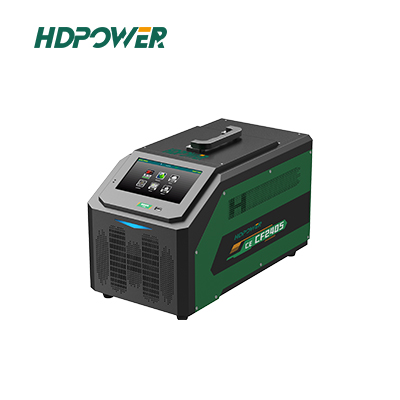
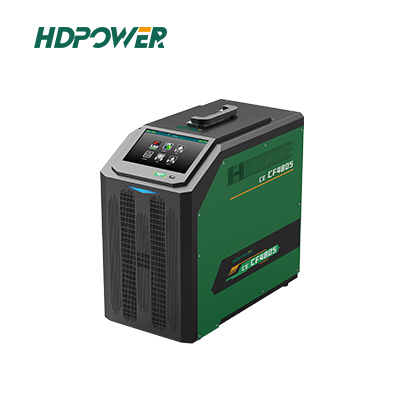
In practical maintenance and lifecycle management of multi-cell battery systems, equalization is often implemented as a dedicated and repeatable process rather than a background function. A battery equalization machine is used to actively correct voltage deviations among cells or modules by redistributing energy under controlled conditions. This approach is especially valuable in 48V lithium battery systems where long-term operation, standby use, or partial cycling can gradually amplify imbalance. By restoring voltage consistency before imbalance becomes critical, equalization machines help recover usable capacity, stabilize system output, and reduce the risk of premature battery degradation across industrial and energy storage applications.

When and Where a 48V Battery Equalizer Is Required
Not all 48V battery systems require active equalization. However, in many real-world applications, imbalance is unavoidable due to operating conditions and system architecture. Below are the most common 48V scenarios where a battery equalizer is strongly recommended or essential.
48V Lithium Battery Packs with Series-Connected Cells
Any 48V lithium battery pack built from cells connected in series will gradually develop voltage differences over time. Manufacturing tolerances, uneven cooling, and load variations all contribute to this effect. In such systems, a 48V battery equalizer is essential for maintaining uniform state of charge, preventing early cutoff caused by weaker cells, and preserving usable pack capacity.
This applies to rack-mounted battery modules, custom-built packs, and modular energy storage units.
Telecom Backup Power and Data Center 48V DC Systems
Telecom base stations and data centers commonly rely on 48V DC battery systems operating in standby or float mode. In these environments, batteries may remain idle for long periods, during which small self-discharge differences accumulate unnoticed. When a power outage occurs, imbalance can suddenly limit available runtime.
A 48V battery equalizer helps maintain long-term voltage consistency, ensuring reliable backup performance when power is needed most.
Energy Storage Systems (ESS) Based on 48V Battery Banks
Residential and commercial energy storage systems often use 48V battery banks for safety and modularity. These systems experience partial cycling, variable loads, and frequent interaction with inverters. Without equalization, imbalance can reduce energy utilization efficiency and trigger premature protective shutdowns.
In solar-plus-storage and hybrid energy systems, a 48V battery equalizer improves charge–discharge consistency and overall system stability.
Industrial Equipment and Mobility Platforms Using 48V Batteries
Electric forklifts, automated guided vehicles (AGVs), mobile robots, and industrial carts frequently operate on 48V lithium batteries. These applications involve high current, stop-start operation, and dynamic loads, all of which accelerate imbalance development.
A 48V battery equalizer supports stable voltage delivery, reduces the risk of sudden shutdowns during operation, and helps maintain consistent performance across multiple shifts.
48V Systems with Parallel Battery Strings
In systems where multiple 48V battery strings are connected in parallel, imbalance can occur not only between cells but also between entire strings. Differences in impedance and aging lead to uneven current sharing, increasing stress on certain strings.
Equalization helps distribute energy more evenly, improving reliability and extending system life.
How to Decide Whether a 48V Battery Equalizer Is Needed
A 48V battery equalizer should be considered if the system operates continuously, contains many series-connected cells, experiences frequent or deep cycling, or has high downtime or replacement costs. In such scenarios, equalization is best viewed as a preventive measure rather than an optional accessory.
Conclusion
A 48V battery equalizer is a critical component for maintaining the performance, safety, and longevity of modern 48V battery systems. By actively correcting voltage imbalance among cells, it ensures that the battery pack operates as a cohesive and reliable energy source.
As 48V architectures continue to expand across telecom, energy storage, and industrial applications, effective equalization becomes increasingly important. Understanding when and how to use a 48V battery equalizer enables engineers and system operators to design more robust, efficient, and durable battery-powered systems.