Introduction
Lithium batteries are widely recognized for their high energy density, long cycle life, and suitability for modern power applications. However, evaluating lithium battery performance is not limited to measuring nominal capacity alone. In real-world use, batteries are rarely discharged at a single, low, and constant current. Instead, they are subjected to varying load intensities that significantly influence efficiency, thermal behavior, aging rate, and usable capacity. This is where C-rate testing becomes essential.
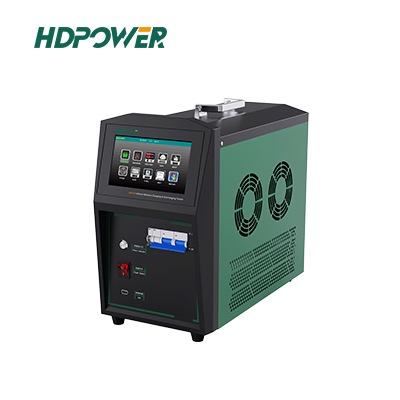
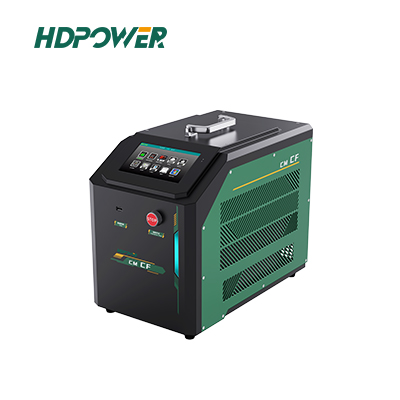
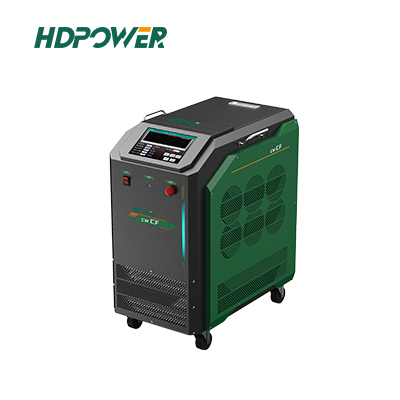
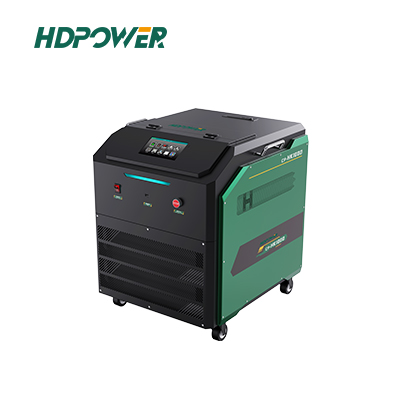
A C Rate Tester is a specialized testing instrument designed to evaluate how lithium batteries behave under different charge and discharge rates. By applying controlled loads expressed in terms of C-rate, engineers can assess a battery’s ability to deliver power, maintain voltage stability, manage heat generation, and preserve capacity under realistic operating conditions. Understanding C-rate behavior is fundamental to lithium battery performance evaluation, especially for power and traction applications.
Understanding C Rate in Lithium Batteries
The term C-rate describes the rate at which a battery is charged or discharged relative to its nominal capacity. A 1C discharge rate means the battery is discharged at a current that would theoretically empty it in one hour. Similarly, a 0.5C rate corresponds to a two-hour discharge, while a 2C rate represents a discharge completed in half an hour.
For example, a 100 Ah lithium battery discharged at:
● 1C delivers 100 A
● 0.5C delivers 50 A
● 2C delivers 200 A
C-rate is not merely a mathematical expression; it is a critical parameter that directly affects voltage behavior, temperature rise, internal resistance response, and long-term battery health. Higher C-rates impose greater electrochemical stress on lithium cells, accelerating aging mechanisms and exposing weaknesses that may remain hidden at low discharge rates.
What Is a C Rate Tester?
A C Rate Tester is a programmable battery testing system capable of applying controlled charge or discharge currents corresponding to predefined C-rates. Unlike basic capacity testers that operate at a single fixed current, a C Rate Tester allows engineers to systematically vary the load intensity and observe how battery performance changes across different operating regimes.
In practical terms, a C Rate Tester functions as a precise electronic load combined with a measurement and control system. It regulates current or power using closed-loop control, monitors voltage and temperature in real time, and records cumulative capacity and energy data throughout the test. This makes it possible to compare battery behavior at low, medium, and high C-rates under consistent and repeatable conditions.
Why C Rate Testing Matters in Lithium Battery Evaluation
Capacity Is C-Rate Dependent
One of the most important insights revealed by C-rate testing is that battery capacity is not a fixed value. Lithium batteries often deliver less usable capacity when discharged at higher C-rates due to increased internal resistance and polarization effects. A battery that meets its rated capacity at 0.2C may fall significantly short when tested at 1C or higher.
C Rate Testing allows engineers to quantify this behavior and determine the effective capacity available under real operating loads. This information is crucial for system designers who must size battery packs appropriately for power-intensive applications.
Voltage Stability Under Load
Voltage response is highly sensitive to discharge rate. At higher C-rates, lithium batteries experience more pronounced voltage drop, which can trigger early cutoffs in battery management systems (BMS) or connected equipment.
A C Rate Tester helps evaluate:
● Voltage sag magnitude
● Stability of the discharge plateau
● End-of-discharge behavior at different load levels
These characteristics directly affect system reliability, particularly in applications such as electric vehicles, energy storage systems, and industrial machinery.
Thermal Behavior and Safety Assessment
Heat generation increases rapidly with higher discharge rates. Excessive temperature rise not only accelerates aging but also poses safety risks if thermal limits are exceeded. C Rate Testing provides controlled conditions to observe how temperature evolves as discharge intensity increases.
By monitoring temperature alongside voltage and current, engineers can determine whether a battery design maintains acceptable thermal performance across its intended operating range. This is especially important for high-power lithium batteries that operate continuously at elevated C-rates.
How a C Rate Tester Works
A modern C Rate Tester integrates several key engineering components to ensure accuracy and repeatability.
At its core, the system uses an electronic load—typically based on MOSFET or IGBT technology—to regulate current precisely. Closed-loop control algorithms continuously adjust the load to maintain the target C-rate, even as battery voltage changes during discharge.
High-precision voltage and current sensors feed real-time data to the control unit, which calculates capacity (Ah), energy (Wh), and instantaneous power. Temperature sensors are often included to capture thermal response, providing a more complete picture of battery behavior.
The tester also incorporates programmable test profiles, allowing users to define multi-step sequences such as:
● Low C-rate baseline testing
● Medium C-rate operational testing
● High C-rate stress testing
This structured approach enables systematic performance evaluation rather than isolated measurements.
Relationship Between C Rate Testing and Battery Degradation
C Rate Testing plays a crucial role in understanding battery aging mechanisms. Repeated exposure to high C-rates accelerates degradation processes such as:
● Growth of internal resistance
● Loss of active lithium
● Structural changes in electrode materials
By performing C-rate tests at different stages of a battery’s life, engineers can track how performance deteriorates under load and predict remaining useful life more accurately. This is particularly valuable for fleet operators, energy storage providers, and industrial users who rely on predictive maintenance strategies.
Applications of C Rate Testing
Electric Vehicles and Mobility Systems
In EVs, forklifts, AGVs, and other traction systems, batteries are frequently exposed to high C-rate discharge during acceleration and regenerative braking. C Rate Testing ensures that battery packs can handle these demands without excessive voltage drop or thermal stress.
Energy Storage Systems (ESS)
ESS batteries must respond quickly to grid fluctuations and peak demand events. C Rate Testing verifies whether batteries can deliver high power reliably when needed, not just store energy at low discharge rates.
Battery R&D and Quality Control
Manufacturers and research laboratories use C Rate Testers to characterize new cell designs, compare chemistries, and validate consistency across production batches. Variations in high-C-rate performance often reveal subtle manufacturing or material differences.
Maintenance and Diagnostics
For batteries already in service, C Rate Testing helps identify declining performance that may not be apparent during low-load operation. This supports informed decisions about replacement, reconfiguration, or continued use.
Best Practices for C Rate Testing
To obtain meaningful and reliable results, C Rate Testing should be conducted under controlled and well-defined conditions. Batteries should be fully charged and allowed to rest before testing to ensure stable initial conditions. Test currents must be selected based on battery specifications to avoid unrealistic stress or safety risks.
Environmental factors such as ambient temperature and airflow should be monitored, as they influence both electrical and thermal behavior. Most importantly, test results should be analyzed in context, comparing performance across multiple C-rates rather than relying on a single data point.
In practical battery evaluation workflows, C-rate testing is often conducted as part of a broader charge–discharge characterization process. A Lithium ion battery charger discharger integrates both controlled charging and programmable discharging functions, allowing engineers to examine battery behavior across multiple operating states rather than in isolation. By combining precise charge control with variable C-rate discharge testing, such systems help reveal how lithium batteries respond to different load intensities after charging, how quickly voltage stabilizes, and how capacity and efficiency vary under realistic usage patterns. This holistic approach improves the reliability of performance assessment and supports more accurate interpretation of C-rate test results across laboratory, industrial, and field applications.

Conclusion
A C Rate Tester is an essential tool for understanding how lithium batteries perform under real operating conditions. By evaluating behavior across different charge and discharge rates, it reveals insights that cannot be obtained through nominal capacity testing alone. Voltage stability, thermal response, effective capacity, and degradation trends all depend strongly on C-rate.
For modern lithium battery applications—particularly those involving high power, dynamic loads, and long service life—C Rate Testing provides the data necessary to ensure reliability, safety, and optimal system design. As lithium batteries continue to power increasingly demanding applications, the role of the C Rate Tester in performance evaluation becomes not just useful, but indispensable.