Introduction
As lithium battery technologies continue to expand across electric vehicles, industrial automation, renewable energy storage, telecom infrastructure, and high-power mobility applications, the need for accurate battery evaluation has never been more critical. Power lithium batteries operate in environments where reliability is essential and failure is costly. These high-energy systems undergo deep cycling, rapid charge and discharge events, dynamic load conditions, and temperature fluctuations that contribute to gradual performance decline. Understanding how these batteries behave under real operating stress is crucial for ensuring long-term stability and safety.
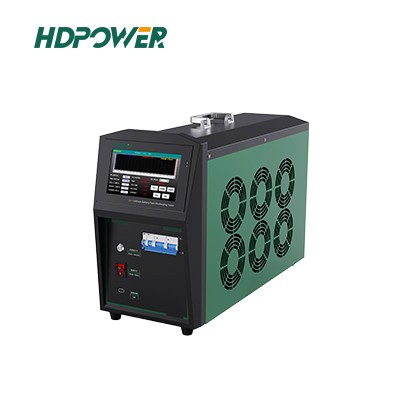
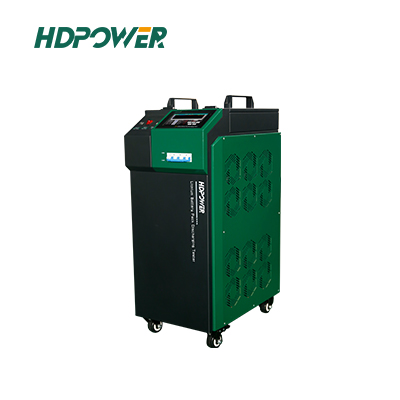
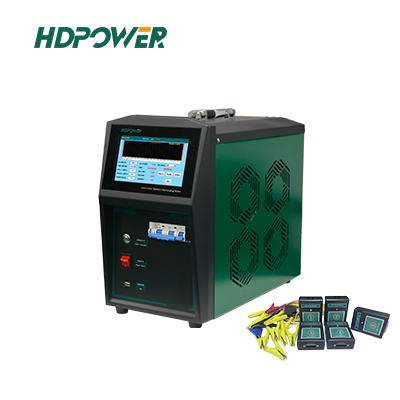
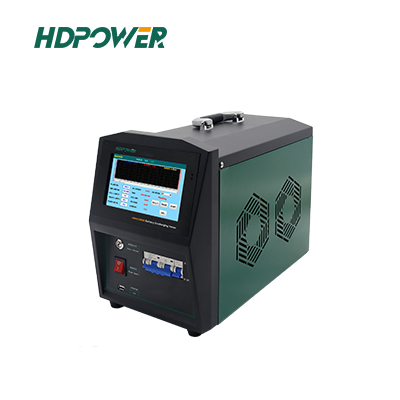
A power lithium battery discharger is the primary tool used by engineers, researchers, and maintenance professionals to determine a battery’s actual capacity, analyze its internal characteristics, and assess its readiness for deployment. Unlike simple resistive load banks that provide only approximate results, a professional discharger offers a controlled, intelligent, and highly repeatable discharge environment. By applying precisely regulated load conditions and continuously recording voltage, current, temperature, and cumulative energy, it provides a scientific foundation for evaluating lithium battery health.
Understanding Power Lithium Batteries
Power lithium batteries, often referred to as traction or high-power lithium batteries, are designed for applications that demand both high energy and high power. These systems must sustain heavy loads, respond to rapid power fluctuations, and maintain operational safety even under demanding thermal and mechanical conditions. Unlike consumer electronics batteries, which experience relatively predictable and moderate loads, power lithium batteries operate in scenarios such as EV acceleration, AGV start-stop cycles, ESS peak shaving, and industrial lift operations. Each of these places unique stresses on the battery and accelerates aging mechanisms.
The internal structure of a power lithium battery is composed of large numbers of individual cells arranged in series-parallel groups to meet voltage and capacity requirements. As these cells age, slight variations in internal resistance, chemical stability, and charge acceptance can create significant imbalances. Moreover, because power lithium batteries are routinely subjected to high C-rate charging and discharging, heat generation and thermal management become critical factors influencing longevity. This complexity makes casual or superficial testing methods insufficient. A structured, controlled discharge test is required to uncover the true condition of the battery and guide maintenance decisions.
What Is a Power Lithium Battery Discharger?
A power lithium battery discharger is a programmable, electronic load instrument capable of drawing controlled current or power from a battery while continuously monitoring its behavior. Rather than relying on passive resistors or improvised loads, which are influenced by voltage changes and external factors, a discharger uses closed-loop electronic control to ensure that the discharge profile remains perfectly stable throughout the test.
These devices typically support several operating modes, each addressing a specific analytical need. Constant Current (CC) mode is widely recognized as the industry standard for capacity testing because it ensures that the battery is evaluated under a fixed and repeatable current load. Constant Power (CP) mode, on the other hand, simulates real-world applications where equipment demands a stable power output, making it highly valuable for evaluating batteries used in systems such as inverters, traction drives, and telecom power modules. Some dischargers also offer Constant Resistance (CR) mode for simpler resistive simulations and pulse or dynamic discharge modes for stress-testing performance under fluctuating loads.
Regardless of mode, the underlying goal remains the same: to measure how a lithium battery responds to controlled energy output and to record this data with high accuracy.

Why Power Lithium Batteries Require Professional Discharge Testing
Because power lithium batteries are subjected to much harsher conditions than typical consumer batteries, professional discharge testing becomes essential for several reasons. First, voltage alone is a poor indicator of battery health. The voltage curve of a lithium battery remains relatively flat over most of its discharge cycle, which makes it impossible to accurately determine capacity or degradation through voltage readings alone.
Second, degradation mechanisms such as internal resistance growth, lithium plating, and SEI layer thickening occur gradually and often without external signs. A battery may appear functional under light loads but show severe voltage sag and thermal instability when placed under realistic stress. A controlled discharge test allows engineers to expose these underlying conditions.
Third, power lithium battery packs consist of numerous cells in series. Even small differences among cells become amplified in high-voltage systems. Cell imbalance, for example, can reduce usable capacity, cause premature cutoffs, or trigger safety mechanisms in the BMS. A discharge test helps identify whether the pack behaves uniformly or whether certain cells are becoming weak links.
Finally, safety considerations demand professional tools. High-capacity lithium batteries can release dangerous amounts of energy if mishandled. Over-discharge, excessive currents, improper thermal control, or insufficient cutoff protection can cause rapid degradation or, in severe cases, safety incidents. A professional battery discharger incorporates intelligent safeguards that ensure testing remains safe for both the operator and the battery.
Engineering Principles Behind a Power Lithium Battery Discharger
A modern power lithium battery discharger integrates sophisticated electronics and control systems to guarantee precision and reproducibility. At the heart of the device is an electronic load module, typically based on MOSFET or IGBT power components. These enable fine control of load current and stable operation across wide voltage ranges. They also allow the discharger to remain accurate even as the battery’s voltage declines during the test.
Closed-loop control is another critical aspect. Using real-time sensing of voltage and current, the discharger continuously adjusts the electronic load to maintain the programmed discharge conditions. This feedback mechanism ensures that the test remains valid from start to finish, even in dynamic situations.
High measurement accuracy is equally important. A proper lithium battery discharger employs high-resolution ADCs, precise current shunts, and calibrated voltage sensing circuits to collect data that engineers can trust. Temperature sensors are frequently incorporated to observe thermal behavior, as temperature fluctuations often correlate strongly with internal resistance changes or chemical imbalance.
The device also includes an extensive safety architecture. Over-current detection, over-temperature shutdown, under-voltage protection, and reverse-polarity safeguards work together to prevent misuse or accidental damage. In high-energy systems, this level of protection is not optional—it is essential.
Finally, professional dischargers include comprehensive data logging and visualization tools. Engineers can review discharge curves, observe capacity retention trends over time, analyze internal resistance changes, and store structured test records for predictive maintenance or compliance documentation.
How a Power Lithium Battery Discharger Ensures Accurate Capacity Testing
Accurate capacity testing depends on more than simply draining a battery. A power lithium battery discharger ensures that every step of the test aligns with standardized, scientifically accepted methodologies.
First, the discharger provides stable and repeatable load conditions, eliminating the variations that occur with passive loads. Whether the test uses constant current or constant power, the device maintains precise control from the beginning to the cutoff point.
Second, the discharger employs precise voltage cutoff logic to protect the battery from over-discharge. Every lithium chemistry has defined lower voltage limits that must not be exceeded. Automated cutoffs ensure consistency and prevent irreversible battery damage.
Third, accurate computation of Ah and Wh values depends on highly accurate measurements of voltage and current over time. A professional discharger integrates these measurements continuously and stores the results, making capacity comparisons reliable across multiple tests.
Fourth, the ability to observe internal resistance and thermal behavior during discharge allows engineers to diagnose early-stage degradation long before the battery fails. This predictive capability is invaluable for fleet operators, energy storage systems, and heavy-duty industrial applications where unexpected downtime is unacceptable.
Finally, environmentally consistent testing conditions—achieved through thermal monitoring and stable airflow—help eliminate external influences on test outcomes, ensuring that results reflect the true condition of the battery.
Applications Across Industry
Because of their precision and robustness, power lithium battery dischargers play a vital role in numerous industries. In electric vehicles, they are used to validate module and pack performance, support battery maintenance programs, and verify battery capacity during warranty evaluations. In energy storage systems, discharge testing ensures that installed capacity matches design expectations and identifies degradation patterns after repeated cycling. In telecom and UPS applications, periodic discharge tests confirm that backup systems will perform reliably during outages.
Industrial mobility systems such as forklifts, AGVs, and warehouse robots rely heavily on power lithium batteries, and discharge testing helps maintain operational consistency. Meanwhile, battery R&D laboratories use dischargers for cycle life studies, chemistry analysis, prototype validation, and quality control across production batches.
Conclusion
A power lithium battery discharger is far more than a simple load device—it is a scientific instrument designed to reveal the actual performance characteristics of modern lithium energy systems. Through programmable load control, high-precision measurement, robust safety mechanisms, and comprehensive data logging, it enables accurate and reliable capacity testing for a wide variety of applications.
Given the demanding operating environments of power lithium batteries, professional discharge testing is essential not only for identifying degradation but also for ensuring system safety, maximizing lifespan, optimizing maintenance strategies, and supporting informed engineering decisions. As global reliance on high-power lithium systems grows, the role of an accurate, intelligent battery discharger becomes increasingly central to maintaining safe, stable, and predictable energy performance.