Introduction
Conventional battery chargers deliver power in a fixed pattern, often ignoring the battery’s temperature, health condition, or charging stage. This approach may work for simple applications, but it inevitably leads to energy waste, overheating, and premature aging of the battery.
A Battery Intelligent Charger represents a modern, data-driven alternative. Equipped with real-time sensing, multi-stage charging algorithms, and safety protections, it optimizes every second of the charging process. The result is higher efficiency, reduced heat generation, and significantly longer battery life.
What Is a Battery Intelligent Charger?
A battery intelligent charger is an advanced charging device that automatically monitors and adapts the charging process based on the battery’s real-time condition. Unlike a traditional charger that outputs a fixed current or voltage, an intelligent charger uses:
● Voltage and current monitoring
● Temperature sensing
● State of Charge (SOC) estimation
● Fully automatic shutdown
● Multiple expansion communication interfaces
These features allow the charger to precisely deliver the optimal charging power at each stage, ensuring maximum safety and efficiency.

How Intelligent Charging Differs From Traditional Charging
| Feature | Traditional Charger | Battery Intelligent Charger |
|---|---|---|
| Charging Mode | Fixed CC or CV | Multi-stage adaptive charging |
| Battery Monitoring | Minimal or none | Real-time digital monitoring |
| Heat Management | Poor | Low-heat charging strategy |
| Efficiency | Moderate | High (optimized power use) |
| Safety | Basic protection |
Comprehensive protection suite |
| Battery Life | Shorter |
Significantly extended |
Intelligent chargers “listen” to the battery during the entire process, while traditional chargers simply push power.
Key Technologies Inside a Battery Intelligent Charger
1. Multi-Stage Smart Charging Algorithm
Modern intelligent chargers typically use a combination of:
● Constant Current (CC) charging
● Constant Voltage (CV) charging
● Trickle or float charging
● Soft-start and current-limiting functions
These stages ensure smooth energy delivery, prevent voltage spikes, and minimize stress on battery chemistry.
2. Real-Time Battery Data Acquisition
The charger continuously measures:
● Terminal voltage
● Input current
● Temperature rise
● SOC characteristics
● Cell imbalance (in multi-cell packs)
This data allows the charger to adjust output in milliseconds, optimizing efficiency and preventing anomalies.
3. Intelligent Thermal Management
Overheating is one of the largest contributors to battery degradation.
An intelligent charger manages heat by:
● Reducing current automatically when temperature rises
● Preventing thermal runaway
● Maintaining charging within the ideal thermal window
Lower heat equals higher efficiency and longer battery life.
4. Safety Protection System
A high-quality intelligent charger includes protections such as:
● Over-voltage
● Over-current
● Reverse polarity
● Short circuit
● High temperature cut-off
● Timer and capacity limit shutdown
These protections eliminate common risks in industrial or high-power charging environments.
How a Battery Intelligent Charger Improves Charging Efficiency
1. Optimizes Power Delivery at Every Stage
By adapting current and voltage to the battery’s condition, the charger eliminates unnecessary power loss, ensuring faster and more efficient charging.
2. Reduces Energy Wasted as Heat
Heat is wasted energy.
Intelligent chargers reduce thermal loss through:
● Current regulation
● Temperature compensation
● PWM-controlled power modules
This improves energy conversion efficiency—meaning more of the input power becomes usable charge.
3. Prevents Overcharging and Recharging Loops
When charging is terminated precisely at the optimal cutoff point:
● Batteries do not oscillate between charge–discharge micro-cycles
● Chemical degradation is minimized
● Energy is not wasted maintaining full charge unnecessarily
4. Enhances Battery Capacity Retention
Balanced and carefully controlled charging cycles maintain the battery’s internal chemical integrity.
This leads to:
● Higher retained capacity
● Better long-term performance
● Longer usable cycle life
Charging efficiency and lifespan are directly connected.
5. Improves Overall System Efficiency
In industrial, telecom, EV, and UPS applications, even a 5–10% increase in charging efficiency translates into:
● Lower operational costs
● Reduced heat load
● Stable system performance
● Longer service intervals
This makes intelligent chargers ideal for mission-critical environments.
Applications of Battery Intelligent Chargers
Intelligent charging technology is widely used in:
● Lithium battery modules and packs
● Electric vehicles (EV/HEV/PHEV)
● Telecom base stations and UPS rooms
● DC power systems
● Material-handling equipment such as forklifts
● Energy storage systems (ESS)
Any application that prioritizes safety, efficiency, and longevity benefits from intelligent charging.
Conclusion
A Battery Intelligent Charger is more than a charging device—it is a smart energy management system. By monitoring voltage, current, temperature, and battery health in real time, it optimizes the charging process to improve energy efficiency and extend battery cycle life.
This technology is essential for modern lithium and lead-acid battery applications, especially as power systems grow larger, more complex, and more sensitive to imbalance and aging.
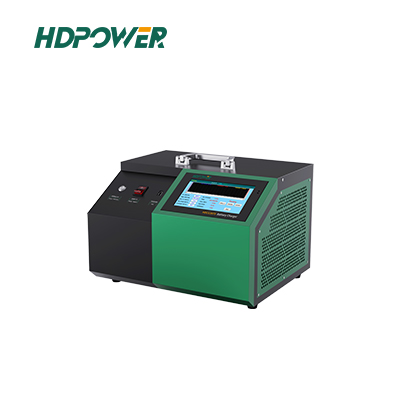
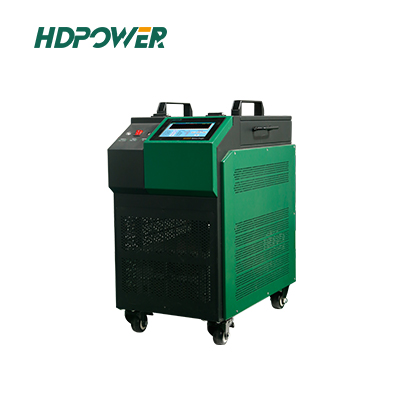
To optimize battery performance throughout its entire lifecycle, an intelligent charger is often used together with diagnostic tools such as a battery charge tester, which provides accurate data on capacity, internal resistance, and overall health before and after charging. In industrial environments—especially those involving high-duty equipment like AGVs or electric forklifts—the intelligent charging process is further supported by a dedicated forklift charger, ensuring stable power delivery, reduced thermal stress, and improved charging efficiency during frequent daily cycles.