Introduction
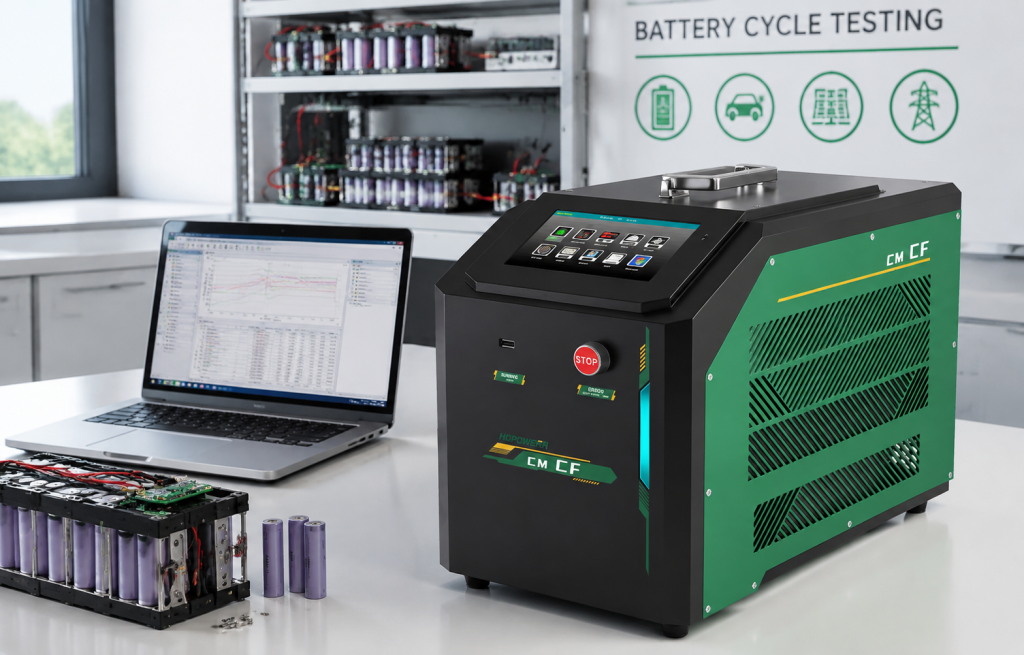
Lithium battery packs are widely used in electric vehicles, energy storage systems, industrial equipment, and battery-powered applications. As these systems become more sophisticated, manufacturers and service providers need reliable methods to prepare batteries for testing, verify performance, and evaluate their condition under controlled operating conditions.
Lithium battery pack conditioning is a term used in battery testing and engineering to describe procedures that establish or adjust a battery pack’s state before a specific test or application. Depending on the test objective, these procedures may involve controlled charging, discharging, resting, monitoring, and verification against defined criteria.
However, conditioning should not be confused with a universal battery repair method. Modern lithium-ion batteries do not require routine deep discharge to eliminate a memory effect. Unnecessary cycling can increase wear, while inappropriate voltage or temperature limits may create safety risks. The correct procedure must follow the battery manufacturer’s requirements and the intended test standard.
This article explains how conditioning-related procedures are used in professional battery workflows, what parameters engineers should monitor, and how to select suitable equipment for repeatable lithium battery pack evaluation.
-
What Is Lithium Battery Pack Conditioning?
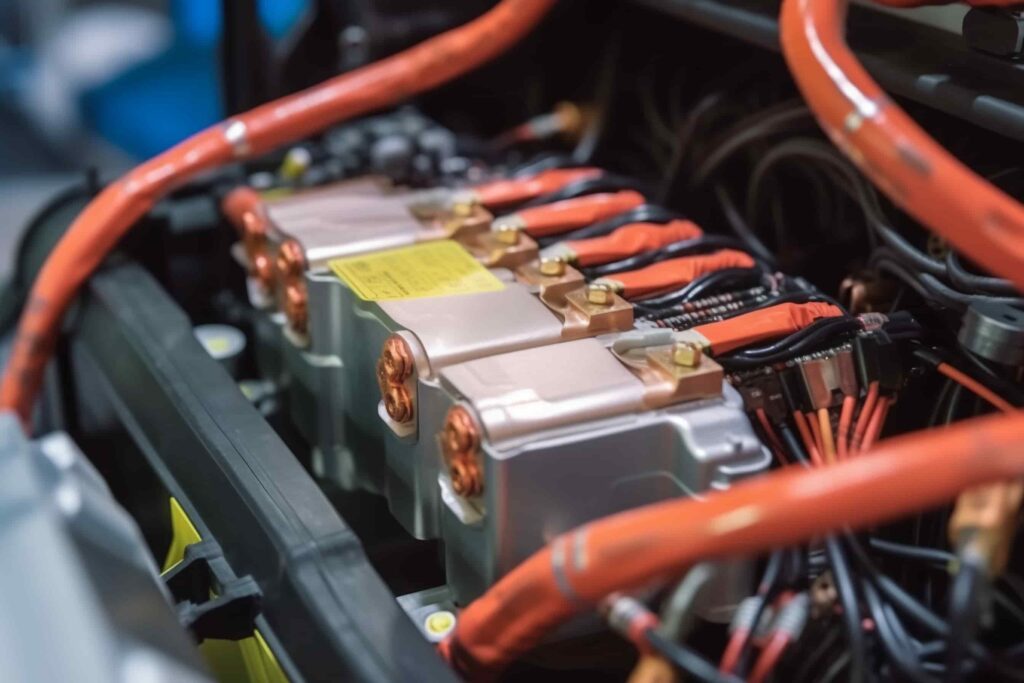
Lithium battery pack conditioning refers to controlled procedures used to prepare a battery pack for testing, commissioning, maintenance evaluation, or other defined engineering tasks.
A battery’s measured performance can depend on its initial state of charge, temperature, recent operating history, rest period, and test conditions. If these variables are not controlled, two tests performed on the same battery may produce results that are difficult to compare.
A conditioning procedure helps establish a defined starting condition. For example, an engineer may charge a battery pack to a specified state of charge, allow it to rest for a defined period, and then perform a discharge test under controlled current or power conditions.
In battery research and production, preconditioning may also involve a prescribed number of charge-discharge cycles before performance measurements begin. The number of cycles and the acceptance criteria depend on the applicable test method.
For service applications, controlled charge-discharge processing may help technicians evaluate a battery pack after module replacement or investigate differences in voltage and state of charge.
The purpose is not automatically to restore lost capacity. Instead, it is to establish repeatable test conditions and obtain useful performance data.
-
Why Is Controlled Conditioning Important?
Establishing Repeatable Test Conditions
Battery performance measurements are meaningful only when the test conditions are clearly defined. Initial state of charge, ambient temperature, charging current, discharge rate, and cutoff voltage can all affect the results.
A documented procedure helps engineers compare measurements across different tests, production batches, or maintenance visits. It also reduces uncertainty caused by inconsistent manual operation.
Evaluating Charge and Discharge Behavior
Controlled charging and discharging allow engineers to observe how a battery pack responds under specified electrical conditions.
Recorded voltage, current, elapsed time, and discharged capacity can help identify abnormal behavior or differences between test runs. Where supported by the equipment and instrumentation, individual cell voltage and temperature data provide additional information.
These measurements support engineering decisions, but they do not independently identify every internal battery fault.
Supporting Module Replacement and Service Verification
When a battery module is replaced, differences in state of charge or voltage may complicate system integration. A suitable procedure can help technicians assess the new module and the surrounding battery system before returning the equipment to service.
The appropriate adjustment method depends on battery chemistry, battery management system requirements, module specifications, and the manufacturer’s instructions. A charge-discharge tester can support controlled processing, but it should not replace required BMS checks or electrical safety inspections.
Improving Test Traceability
Recorded test profiles and results make it easier to compare performance over time. Traceable data can support quality control, troubleshooting, service documentation, and maintenance decisions.
-
Common Lithium Battery Pack Conditioning Procedures
The appropriate procedure depends on whether the battery is being prepared for laboratory testing, production inspection, service verification, or a specific commissioning task.
Step 1: Inspect the Battery Pack
Before connecting any equipment, confirm the battery pack’s identification, chemistry, rated voltage, operating limits, and physical condition.
Check connectors, cables, insulation, and accessible terminals for damage. Review any available BMS alarms and confirm that the pack is suitable for the planned test.
A swollen, leaking, mechanically damaged, overheated, or otherwise suspect battery should not be subjected to routine charge-discharge processing. It must be handled according to the relevant safety procedures.
Step 2: Define the Test Profile
Determine the required initial state of charge, charging mode, discharge mode, current or power limits, cutoff voltage, rest periods, and stopping conditions.
Constant-current charging and constant-voltage charging are common methods used in lithium battery applications. During discharge, constant-current or constant-power operation may be appropriate depending on the test objective and equipment capabilities.
The selected profile must remain within the limits specified for the battery pack. There is no single conditioning profile suitable for every lithium-ion chemistry or application.
Step 3: Perform Controlled Charging
Charge the battery using the approved profile and appropriate equipment. Monitor pack voltage, charging current, elapsed time, and temperature where measurement is available.
If the BMS or test equipment reports an abnormal condition, follow the prescribed shutdown and investigation procedure rather than continuing automatically.
Step 4: Apply the Defined Discharge Procedure
When required by the test plan, discharge the battery using the specified current or power level. Record voltage response, discharged capacity, elapsed time, and other available parameters.
The discharge cutoff must follow the battery manufacturer’s limits and the test specification. Discharging to an unnecessarily low voltage does not automatically improve battery performance.
Step 5: Rest, Review, and Verify
Some test methods require a rest period after charging or discharging so that the battery can approach a defined condition before the next measurement.
After the procedure, compare the recorded results with the applicable acceptance criteria. Repeat a cycle only when the test plan requires it.
This approach helps separate genuine battery performance changes from differences caused by inconsistent test conditions.
-
Key Parameters to Monitor During Conditioning
A reliable battery conditioning workflow depends on more than simply switching between charging and discharging.
Voltage: Pack voltage helps confirm that the battery remains within its operating limits. Individual cell voltage measurements, when available, can help reveal imbalance or abnormal cell behavior.
Current: Actual charging and discharging current should be monitored against the programmed profile. Unexpected current behavior may indicate a connection issue, equipment limitation, or battery protection response.
Capacity: Discharged ampere-hours can be calculated from current over time. Capacity results are meaningful when the test conditions and endpoint are defined consistently.
Temperature: Temperature monitoring helps identify abnormal heating and supports compliance with the battery manufacturer’s operating limits. Cell-level temperature monitoring may be required for particular applications.
State of charge: SOC estimates can help establish a target starting condition. However, SOC accuracy depends on the BMS, measurement method, and battery operating history.
Time and test records: Charging duration, discharge duration, rest periods, alarms, and test settings should be recorded where required. These records make repeated tests easier to compare.
Together, these parameters help engineers evaluate battery behavior more systematically than voltage checks alone.
-
How to Choose Lithium Battery Pack Conditioning Equipment
Selecting suitable equipment begins with the battery and the intended application, rather than a product name alone.
Voltage and Current Range
Confirm the battery pack’s nominal and maximum operating voltage, required charging current, and required discharge current. The equipment must support the intended operating range without exceeding the battery’s limits.
For service workshops handling different battery platforms, configurable test profiles may be useful. For production environments, the required throughput and repeatability may be more important.
Charging and Discharging Modes
Check whether the equipment supports the charging and discharging modes required by the test plan.
Depending on the model, these may include constant-current and constant-voltage charging, as well as constant-current or constant-power discharging. Programmable charge-discharge cycles can help automate repeated procedures.
Do not assume every model supports every mode. Confirm the technical specification for the selected configuration.
Monitoring and Data Management
Real-time monitoring helps operators follow the test process and identify abnormal behavior. Data logging, curve display, historical records, and report export can improve traceability.
For battery packs requiring cell-level supervision, verify whether individual cell voltage and temperature acquisition is included or available as an option.
Safety Protection
Evaluate protection functions such as overvoltage, overcurrent, overtemperature, short-circuit, and reverse-polarity protection, according to the equipment design.
Protection features do not eliminate the need for correct wiring, suitable ventilation, trained operators, emergency procedures, and compliance with battery-specific safety requirements.
Configuration and Application Fit
Battery manufacturers, EV service centers, energy storage operators, and second-life battery facilities may have different requirements. A suitable solution should match the battery voltage range, current demand, workflow, monitoring requirements, and intended test standard.
For broader application requirements, explore Lithium Battery Charging and Discharging Testers to review the available equipment range and operating capabilities.
-
Applications Across the Battery Lifecycle
Battery Manufacturing and Quality Control
Manufacturers may use defined charge-discharge procedures to prepare samples, verify performance, and compare battery packs against acceptance criteria. Consistent test profiles and traceable records help improve process control.
Conditioning-related procedures should follow the production test plan rather than an arbitrary number of cycles.
EV Battery Service and Repair
Service centers may need to verify a battery pack after module replacement, investigate performance differences, or document the results of a maintenance procedure.
Programmable charging and discharging can support these tasks when the procedure is compatible with the battery design and BMS requirements.
Energy Storage Systems
Energy storage integrators and maintenance teams need reliable information about battery behavior before installation, after service work, or during scheduled evaluations.
Controlled testing can help verify selected operating parameters. However, a conditioning procedure alone cannot certify the safety, remaining life, or suitability of an entire energy storage system.
Battery Reuse and Second-Life Assessment
Used battery packs may require inspection and performance evaluation before being considered for a second-life application. Controlled discharge measurements can contribute to capacity assessment and comparison.
Additional checks may be necessary to evaluate insulation, cell consistency, thermal behavior, mechanical condition, and BMS functionality. A battery should not be accepted for reuse based solely on one charge-discharge result.
-
Using a Programmable Charge-Discharge Tester in the Workflow
For applications that require controlled charging, discharging, and repeated test procedures, a programmable tester can reduce manual intervention and improve consistency.
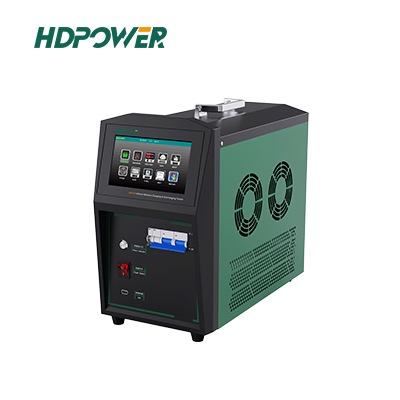
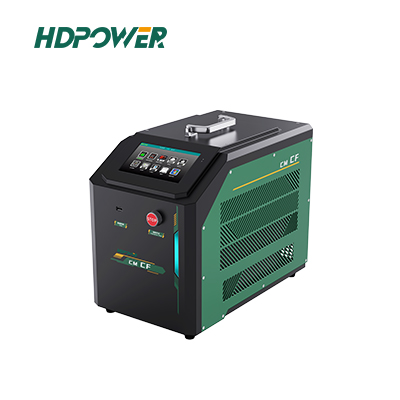
The CM-CF series from HDPOWER supports integrated charge-discharge control and configurable test profiles, with operating modes depending on the model. It is designed for applications including battery pack service, voltage or SOC adjustment, and controlled battery evaluation.
Depending on the configuration, relevant functions may include constant-current and constant-voltage charging, controlled discharge, cycle operation, parameter monitoring, and test data management.
Before selecting a unit, confirm the required voltage and current range, measurement accuracy, available cell monitoring, communication interfaces, and protection functions against the product specification.
Learn more about the CM-CF Lithium Battery Charging and Discharging Tester to assess whether its configuration fits your application.
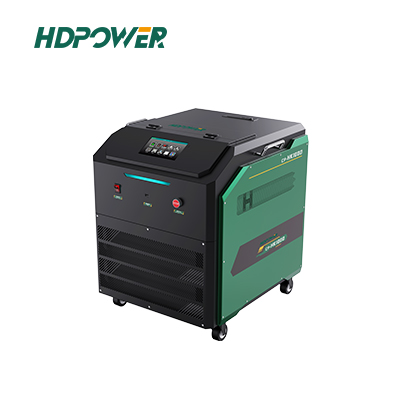
For projects that require different test functions, HDPOWER also provides a broader Lithium Battery Tester Series covering several battery testing and maintenance requirements.
-
Best Practices for Safe and Repeatable Results
To obtain useful results from lithium battery pack conditioning procedures, establish a written test plan before operation.
Use battery-specific voltage and temperature limits, verify connections before starting, and confirm that the selected equipment matches the battery’s electrical requirements.
Keep test conditions consistent when comparing results. Record the profile, starting state, rest periods, measured capacity, relevant alarms, and final observations.
Avoid unnecessary deep discharges or repeated cycles intended to restore capacity without a validated procedure. Lithium-ion batteries do not generally require conditioning to eliminate a memory effect, and cycling cannot reverse all forms of chemical aging or physical damage.
Finally, distinguish between preparing a battery for a test and repairing a battery. Conditioning may help establish repeatable test conditions, but it cannot guarantee improved capacity, extended service life, or the removal of internal defects.
Conclusion
Lithium battery pack conditioning is best understood as a controlled, application-specific process for preparing battery packs and obtaining repeatable measurements. Its value comes from defined test profiles, appropriate operating limits, reliable monitoring, and consistent documentation—not from cycling batteries indiscriminately.
By selecting equipment that matches the battery’s voltage and current requirements, charging and discharging modes, monitoring needs, and safety procedures, engineers can improve the consistency of battery evaluation across manufacturing, service, energy storage, and second-life applications.
HDPOWER’s programmable charge-discharge testing solutions can support these workflows when the selected configuration matches the battery and test requirements. Review the available specifications and discuss your application with the technical team to identify a suitable solution.