Introduction: The Science of Battery Capacity Validation
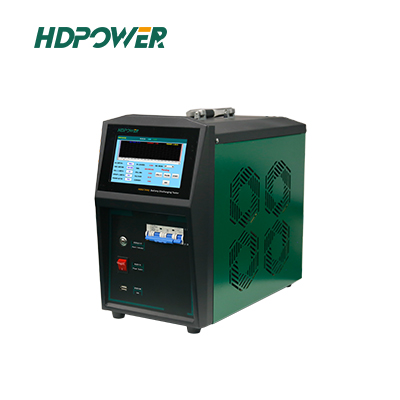
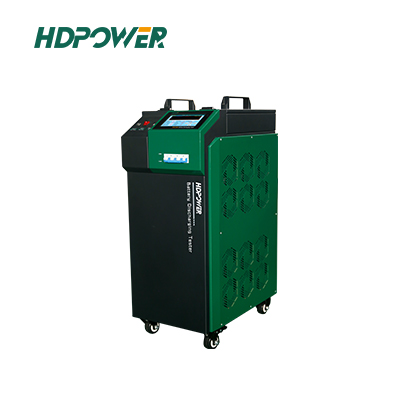
In the critical power industry, the reliability of a backup system is only as strong as its weakest battery cell. While voltage monitoring and internal resistance checks provide valuable snapshots of battery health, the only definitive method to verify the actual runtime and health of a stationary battery system is through a controlled discharge test. This process requires a sophisticated battery load bank tester, a device engineered to simulate real-world demands with scientific precision.
To master the art of battery maintenance, one must understand the two primary methodologies of discharge analysis: Constant Current (CC) and Constant Power (CP). A professional battery load bank tester allows engineers to switch between these modes to replicate different operational environments, ensuring that the energy storage system—whether in a data center, telecommunications hub, or utility substation—is fully prepared for a grid failure. In many field applications, this essential tool is also referred to as a battery load tester, as its primary mission is to validate the discharge performance of the energy storage bank.
Fundamentals of Discharge Methodologies
At its core, a battery load bank tester functions by converting stored chemical energy into heat through a resistive circuit. However, the way this energy is extracted determines the accuracy of the test relative to the battery’s intended application.
Constant Current (CC) Discharge Analysis
Constant Current is the traditional “gold standard” for determining the Ampere-hour (Ah) capacity of a battery. In this mode, the battery load bank tester maintains a steady flow of Amperes throughout the entire duration of the test, regardless of the falling battery voltage.
● Scientific Basis: CC testing is based on the Peukert’s Law, which describes how the capacity of a lead-acid battery changes according to the rate of discharge.
● Primary Use Case: It is used for baseline capacity verification and to compare actual performance against the manufacturer’s published discharge tables, which are typically provided in Amperes.
Constant Power (CP) Discharge Analysis
Constant Power discharge is a more modern approach, specifically designed for Uninterruptible Power Supply (UPS) applications. In this mode, as the battery voltage drops, the battery load bank tester automatically increases the current (Amperes) to keep the total wattage (Voltage x Current) constant.
● Scientific Basis: This replicates the behavior of a UPS inverter. As the DC bus voltage declines during a discharge, the inverter must draw more current to maintain a steady AC output to the critical load.
● Primary Use Case: CP testing is essential for “stress testing” the UPS system and its battery string under conditions that mirror a real-world power outage in a data center.
Comparative Analysis: CC vs. CP in Battery Load Bank Testing
Understanding when to use each mode is a hallmark of technical proficiency. The following table highlights the key distinctions between these two critical functions of a battery load bank tester.
| Feature | Constant Current (CC) | Constant Power (CP) |
|---|---|---|
| Controlled Variable | Amperes (A) | Watts (W) or Kilowatts (kW) |
| Current Behavior | Remains steady | Increases as voltage decreases |
| Primary Metric | Ampere-hours (Ah) | Runtime at specific load (Minutes/Hours) |
| Standard Reference | IEEE 450 / IEEE 1188 | UPS Manufacturer Specifications |
| Best Application | Battery health trending & Ah validation | UPS system runtime & inverter stress testing |
Adherence to Industry Standards and Compliance
A high-quality maintenance program must be grounded in recognized engineering standards. Utilizing a battery load bank tester is a requirement for compliance with several global safety and performance codes.
IEEE 450 and IEEE 1188 Compliance
The Institute of Electrical and Electronics Engineers (IEEE) provides the most recognized guidelines for battery maintenance. IEEE 450 (for vented lead-acid) and IEEE 1188 (for VRLA) specify that a capacity test should be performed using a battery load bank tester to ensure the battery can deliver its rated discharge current. For those looking for a reliable battery load tester to meet these standards, precision and data logging capabilities are paramount.
NFPA 110 and the Emergency Power Supply System (EPSS)
The National Fire Protection Association (NFPA) mandates that emergency power systems be tested under load. A battery load bank tester ensures that the “energy” component of the EPSS is capable of supporting the life-safety load for the legally required duration.
The Shift to NFPA 70B
With the recent transition of NFPA 70B from a “recommended practice” to a “standard,” the legal weight of regular load testing has increased. Facilities are now required to maintain documented proof of battery capacity, which can only be accurately obtained through a professional battery load bank tester.
Step-by-Step Guide: Executing a Precision Discharge Test
Operating a battery load bank tester requires a disciplined approach to data collection and safety.
Pre-Test Setup and Safety
Before initiating the discharge, a comprehensive safety audit is required. This includes verifying the ventilation of the battery room (to prevent hydrogen buildup) and ensuring the battery load bank tester is connected with appropriately sized, high-current cables.
Baseline Data Collection
Record the “float” voltage of each cell. This data serves as a reference point. A professional battery load bank tester often includes an integrated wireless cell monitoring system to automate this process.
The Discharge Sequence
1.Select Mode: Choose between CC or CP based on the test objective.
2.Set End-of-Discharge Voltage (EODV): This is the “cutoff” voltage. For a standard 12V battery, this is often set between 10.02V and 10.5V, depending on the discharge rate.
3.Monitor the “Coup de Fouet”: At the very beginning of the discharge, observe the initial voltage drop. A sharp, deep drop followed by a slight recovery is normal, but an excessive drop indicates high internal resistance.
4.Track the Plateau: During the middle of the test, the voltage should remain relatively stable. This is the “plateau” where the bulk of the energy is delivered.
Post-Test Analysis
Once the battery load bank tester reaches the EODV, the test terminates. The resulting discharge curve is analyzed to determine the battery’s “Percent of Rated Capacity.” If the battery delivers less than 80% of its rated capacity, it is considered failed and must be replaced according to IEEE standards.
Advanced Troubleshooting: Identifying Hidden Defects
A battery load bank tester is a diagnostic tool that reveals what visual inspections cannot.
● Intercell Connection Resistance: If a specific connection is loose or corroded, it will generate excessive heat during a high-current discharge. Thermal imaging during a battery load bank tester run is an excellent way to identify these fire hazards.
● Cell Divergence: As the discharge nears its end, “weak” cells will drop in voltage much faster than healthy ones. Identifying these “outliers” allows for targeted replacement rather than replacing an entire expensive string prematurely.

FAQ: Mastering the Battery Load Bank Tester
Q1: Why is Constant Power (CP) testing harder on a battery than Constant Current (CC)?
A: In CP mode, the battery load bank tester increases the current as the battery weakens. This creates a “death spiral” effect where the battery is pushed harder exactly when it is at its most vulnerable, providing a true “worst-case scenario” test.
Q2: Can I use a UPS load bank to test individual batteries?
A: While a large battery load bank tester is designed for full strings, many units can be configured to test smaller groups or even individual high-capacity cells, provided the voltage and current ranges are compatible.
Q3: How does temperature affect the results of a battery load bank test?
A: Temperature has a massive impact. Most manufacturers rate capacity at 25°C (77°F). If the room is colder, the battery will appear to have less capacity. A professional battery load bank tester will include temperature correction factors to normalize the data.
Q4: What is the risk of “over-discharging” during a test?
A: Over-discharging can lead to cell reversal and permanent damage. This is why using a battery load bank tester with an automatic low-voltage cutout is critical for protecting the asset.
Conclusion: The Path to Power Certainty
The use of a battery load bank tester is the difference between guessing and knowing. By utilizing both Constant Current and Constant Power discharge analysis, facility managers can ensure their backup systems are not just “present,” but “performant.”
By adhering to IEEE standards and executing rigorous testing protocols, you ensure that your critical infrastructure remains resilient, compliant, and ready for any challenge. The empirical data provided by a professional battery load bank tester is the ultimate proof of system readiness.