Introduction
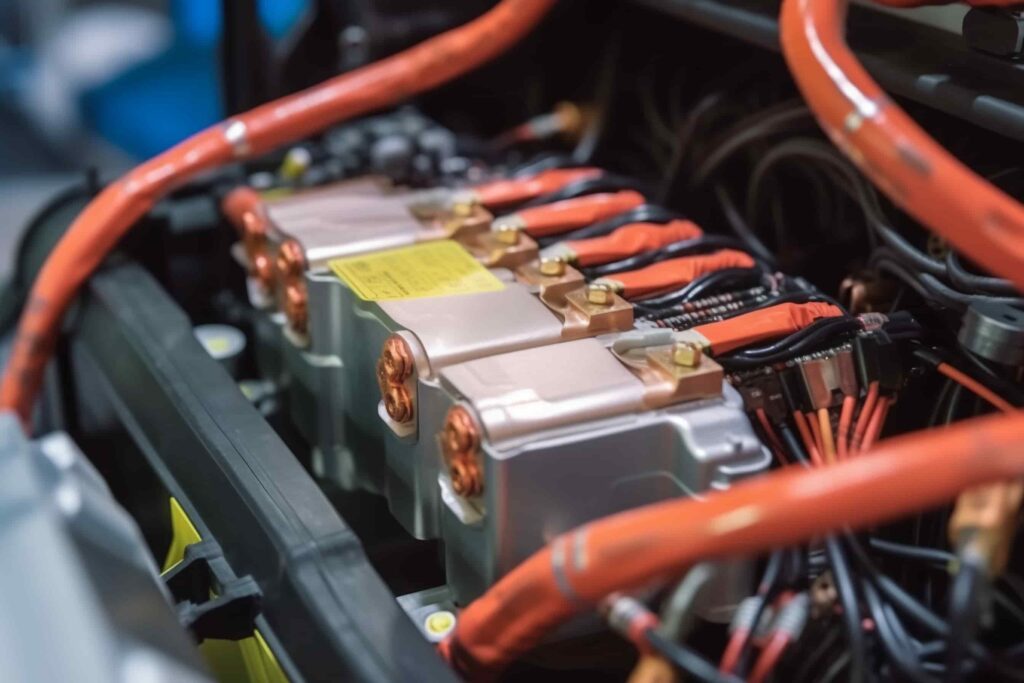
Lithium batteries are widely used in electric vehicles, energy storage systems, backup power supplies, telecommunications, industrial equipment, and portable applications. As battery systems become more powerful and complex, simply measuring voltage is no longer enough to determine whether a battery is operating properly.
Professional lithium battery diagnostics equipment helps engineers, battery manufacturers, maintenance teams, and service providers evaluate battery condition through controlled testing and measurable performance data. Depending on the application, battery diagnostics may include voltage measurement, capacity testing, internal resistance analysis, charge and discharge testing, cycle testing, and battery pack performance evaluation.
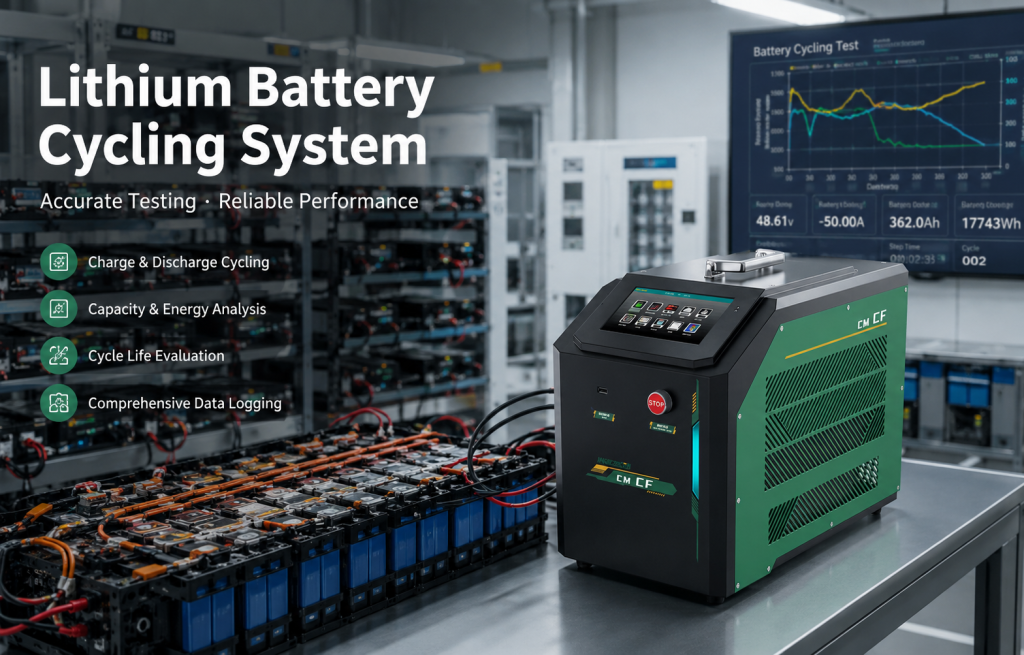
For applications that require a more comprehensive assessment, lithium battery tester can provide controlled operating conditions and repeatable test results. Among these solutions, charge and discharge testing is particularly important because it allows users to evaluate how a battery actually performs under defined operating conditions.
What Is Lithium Battery Diagnostics Equipment?
Lithium battery diagnostics equipment refers to professional testing instruments and systems used to evaluate the electrical performance and condition of lithium-ion batteries.
Unlike a basic battery voltage tester, a diagnostic system can combine multiple measurements and testing processes to provide a more complete picture of battery performance.
Depending on the equipment and application, lithium battery diagnostics may involve:
- Battery voltage measurement
- Charging current and voltage monitoring
- Discharge current measurement
- Battery capacity testing
- Internal resistance testing
- Charge and discharge cycle testing
- Cell voltage monitoring
- Battery pack performance evaluation
- Temperature monitoring
- Test data recording and reporting
These measurements help identify performance degradation, capacity loss, cell inconsistency, abnormal charging or discharging behavior, and other issues that may affect battery reliability.
For manufacturers and professional maintenance companies, diagnostics are especially valuable because testing can be performed under controlled conditions rather than relying only on the battery’s displayed state of charge.
Why Is Lithium Battery Diagnostics Important?
A lithium battery can show a normal voltage while still experiencing significant capacity degradation or cell imbalance. This is why voltage alone cannot always provide enough information about the actual condition of a battery.
Professional lithium battery diagnostics can help users answer several important questions:
Does the battery still have its rated capacity?
Capacity testing can determine how much usable energy the battery can actually deliver under a defined test condition.
Is the battery performing consistently during charging and discharging?
Controlled charge and discharge testing can reveal abnormal voltage or current behavior that may not be visible during normal operation.
Are individual cells or modules showing inconsistent performance?
Monitoring cell voltage and temperature during testing can help identify differences within a battery pack.
Has the battery experienced performance degradation?
Repeated testing and historical data can be used to compare battery performance over time.
This makes battery diagnostics useful not only for troubleshooting but also for preventive maintenance, quality control, battery grading, and lifecycle management.
What Can Lithium Battery Diagnostic Equipment Test?
Different battery applications require different diagnostic methods. A professional testing setup may combine several types of measurements.
- Battery Voltage
Voltage is one of the most basic battery parameters. Measuring voltage helps determine whether the battery is within its expected operating range.
For battery packs containing multiple cells or modules, monitoring individual cell voltages can provide additional information about cell consistency.
However, voltage testing alone cannot determine the actual capacity or remaining useful performance of a battery.
- Battery Capacity
Capacity is one of the most important indicators of battery performance.
A battery may have a nominal capacity specified by the manufacturer, but its actual usable capacity can decrease after repeated charging and discharging cycles.
A controlled capacity test can compare the measured performance with the expected battery capacity and help determine whether the battery has experienced significant degradation.
For this type of application, a dedicated battery capacity tester can provide more meaningful results than a simple voltage measurement.
- Charge and Discharge Performance
Controlled charging and discharging are essential parts of professional lithium battery diagnostics.
During a charge test, the equipment can control the charging current and voltage according to a predefined testing profile. During discharge, the battery can be tested under constant-current or constant-power conditions.
The resulting voltage, current, capacity, and time data can then be analyzed to evaluate battery performance.
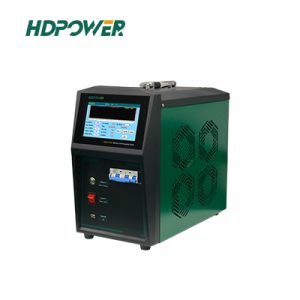
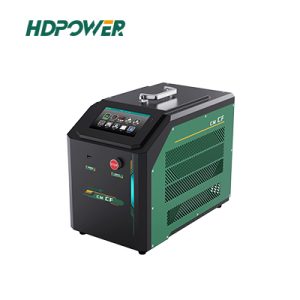
This is where a lithium battery charger discharger becomes particularly useful.
- Internal Resistance
Internal resistance affects battery efficiency, voltage stability, and heat generation.
An increase in internal resistance may indicate battery aging or other performance changes. For a comprehensive diagnostic process, internal resistance measurements can therefore complement capacity and charge/discharge testing.
- Cycle Performance
A single charge or discharge test provides a snapshot of battery performance. Cycle testing goes further by repeatedly charging and discharging the battery according to defined conditions.
Cycle testing can help engineers evaluate:
- Capacity retention
- Charging and discharging stability
- Performance changes over time
- Battery lifecycle characteristics
- Differences between battery samples
This is particularly important for battery manufacturers, laboratories, EV battery testing, and energy storage applications.
How Does a Lithium Battery Charge and Discharge Tester Support Diagnostics?
Among different types of diagnostic equipment, a charge and discharge tester can provide particularly valuable information because it evaluates battery behavior under controlled electrical conditions.
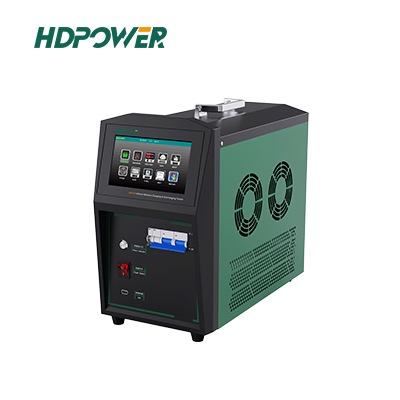
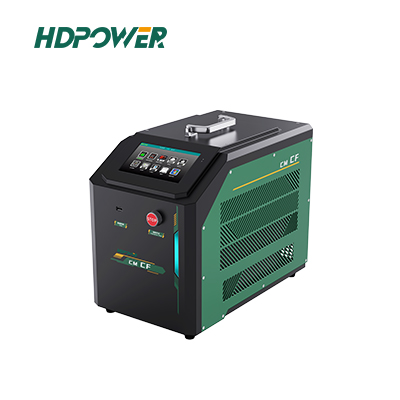
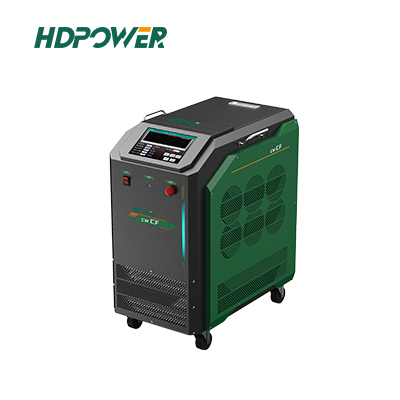
For example, the CM-CF series from HD Power Test Equipment uses integrated charge and discharge control technology and supports constant-current charging, constant-voltage charging, constant-current discharge, constant-power discharge, and cycle testing.
The CM-CF50050 model supports a DC 2–500 V charging and discharging range, up to 50 A discharge current and 50 A charging current, with RS485, CAN, and USB communication. It can also acquire cell voltage and temperature data through an external collection box.
This makes the equipment suitable for applications where users need more than a simple pass/fail battery test.
For example, engineers can establish a test profile, charge the battery under controlled conditions, discharge it at a specified current or power level, record the resulting data, and compare the results with previous tests.
The process can be summarized as:
Battery → Controlled Charge → Controlled Discharge → Data Collection → Performance Analysis
This approach provides a more repeatable method for evaluating battery condition.
Lithium Battery Diagnostics for EV Battery Packs
Electric vehicle battery packs contain multiple cells and modules connected together. Differences between cells can become increasingly important as the battery ages.
Professional EV battery diagnostics equipment can help maintenance teams evaluate battery pack performance through controlled testing and monitoring.
Typical diagnostic requirements include:
- Pack voltage measurement
- Cell voltage monitoring
- Capacity evaluation
- Charge/discharge performance testing
- Temperature monitoring
- Cycle testing
- Performance comparison
The purpose is not simply to determine whether a battery can operate, but to understand its actual performance and identify potential differences within the battery system.
For EV repair centers, battery service providers, and battery manufacturers, this information can support more informed maintenance and replacement decisions.
Lithium Battery Diagnostics for Energy Storage Systems
Energy storage systems require reliable batteries because unexpected degradation can affect system availability and operating efficiency.
Battery diagnostics can be used during manufacturing, commissioning, maintenance, and periodic inspection.
For example, a battery pack can undergo a controlled charge and discharge test to determine its actual capacity. Test data can then be compared with historical results to identify performance changes.
Professional battery performance testing equipment is therefore useful for:
- Energy storage system maintenance
- Battery acceptance testing
- Capacity verification
- Performance comparison
- Preventive maintenance
- Battery lifecycle management
The same diagnostic principles can also be applied to backup power systems, telecommunications batteries, industrial battery systems, and other applications where battery reliability is critical.
How to Choose Lithium Battery Diagnostics Equipment
Not every battery diagnostic application requires the same equipment. Before selecting a system, users should consider several important specifications.
Battery Voltage Range
The equipment should match the voltage range of the battery or battery pack being tested.
For applications involving different battery configurations, a wider voltage range can provide greater flexibility.
Charging and Discharging Current
The required current depends on battery capacity, application, and testing objectives.
A suitable tester should provide enough current for the intended test profile while maintaining appropriate measurement accuracy.
Testing Modes
Different applications may require different operating modes.
Useful functions include:
- Constant-current charging
- Constant-voltage charging
- Constant-current discharge
- Constant-power discharge
- Charge/discharge cycling
The more flexible the testing modes, the easier it is to create application-specific test profiles.
Cell Monitoring
For multi-cell battery packs, cell-level information can provide valuable diagnostic data.
Equipment capable of collecting cell voltage and temperature data can help users identify inconsistencies during testing.
Data Communication and Reporting
Modern battery diagnostics increasingly depend on data rather than a single displayed value.
Communication interfaces such as RS485, CAN, or USB can make it easier to integrate testing equipment with other systems and manage test results.
The HD Power Test lithium battery tester series, for example, supports data storage, historical data viewing, curve display, and test report export.
Applications of Lithium Battery Diagnostics Equipment
Professional lithium battery diagnostic systems can be used throughout the battery lifecycle.
Battery Manufacturing
Manufacturers can use diagnostic equipment for capacity grading, quality inspection, performance verification, and production testing.
EV Battery Service
Battery service providers can evaluate battery packs, investigate capacity degradation, and perform controlled charge/discharge tests.
Energy Storage
ESS integrators and maintenance teams can verify battery capacity and monitor performance changes over time.
Research and Development
Laboratories can use programmable charge, discharge, and cycle testing to study battery characteristics and performance.
Battery Maintenance
Service providers can establish periodic testing procedures to identify battery performance changes before they result in unexpected system problems.
These applications demonstrate why lithium battery diagnostics should be viewed as a testing process rather than a single measurement.
Build a More Complete Lithium Battery Testing Solution
Effective battery diagnostics usually require several types of measurements rather than one standalone test.
For example, a complete testing workflow may combine voltage measurement, internal resistance testing, capacity evaluation, charge/discharge testing, cell monitoring, and cycle testing.
HD Power Test Equipment provides a range of solutions covering lithium battery cells, modules, and battery packs. Its Lithium Battery Tester Series includes lithium battery dischargers, equalizing testers, charge/discharge testers, lithium cell testers, and other battery testing equipment.
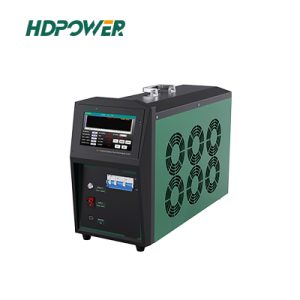
For applications where capacity and performance need to be evaluated through controlled charging and discharging, the Lithium Battery Charge Discharge Tester is a particularly suitable solution.
The CM-CF series supports multiple charging and discharging modes and can be configured for different battery testing requirements. Its protection functions include reverse connection, over-temperature, abnormal condition, and emergency-stop protection.
By combining appropriate testing equipment with a defined diagnostic procedure, users can obtain more reliable data and make better decisions about battery maintenance, grading, replacement, and lifecycle management.
Conclusion
Lithium battery diagnostics is becoming increasingly important as batteries are used in EVs, energy storage systems, telecommunications, industrial equipment, and other critical applications.
Lithium battery diagnostics equipment provides a systematic way to evaluate battery voltage, capacity, internal resistance, charging and discharging performance, cell consistency, and lifecycle characteristics.
For basic inspection, voltage and resistance measurements may be sufficient. For deeper performance evaluation, controlled charge and discharge testing provides much more useful information about the actual behavior of a battery.
A professional lithium battery charge discharge tester can therefore serve as an important part of a complete battery diagnostic solution, helping manufacturers, laboratories, EV service providers, and energy storage operators obtain repeatable performance data and improve battery maintenance decisions.
If you are selecting equipment for lithium battery cells, modules, or battery packs, the appropriate solution should be determined according to battery voltage, capacity, current, testing method, cell configuration, and required data acquisition functions.