Introduction
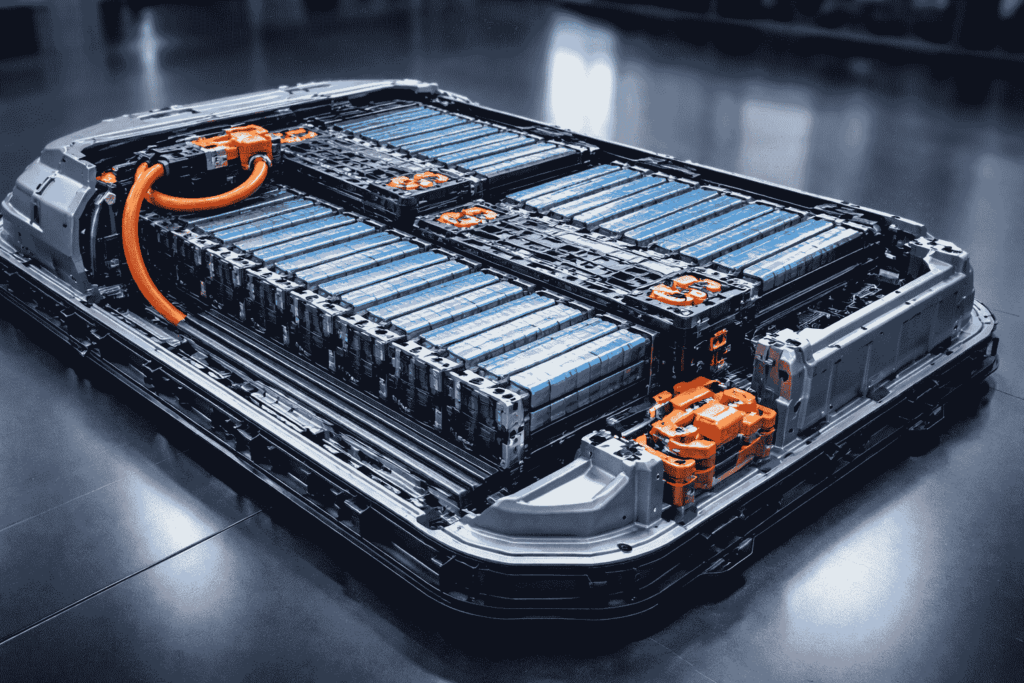
Lithium batteries are widely used in electric vehicles, energy storage systems, backup power, industrial equipment, and other high-energy applications. As battery voltage and capacity continue to increase, simply checking voltage or state of charge is no longer enough to determine whether a battery is performing as expected. Controlled discharge testing provides a more reliable way to evaluate actual capacity, discharge performance, energy output, and battery condition.
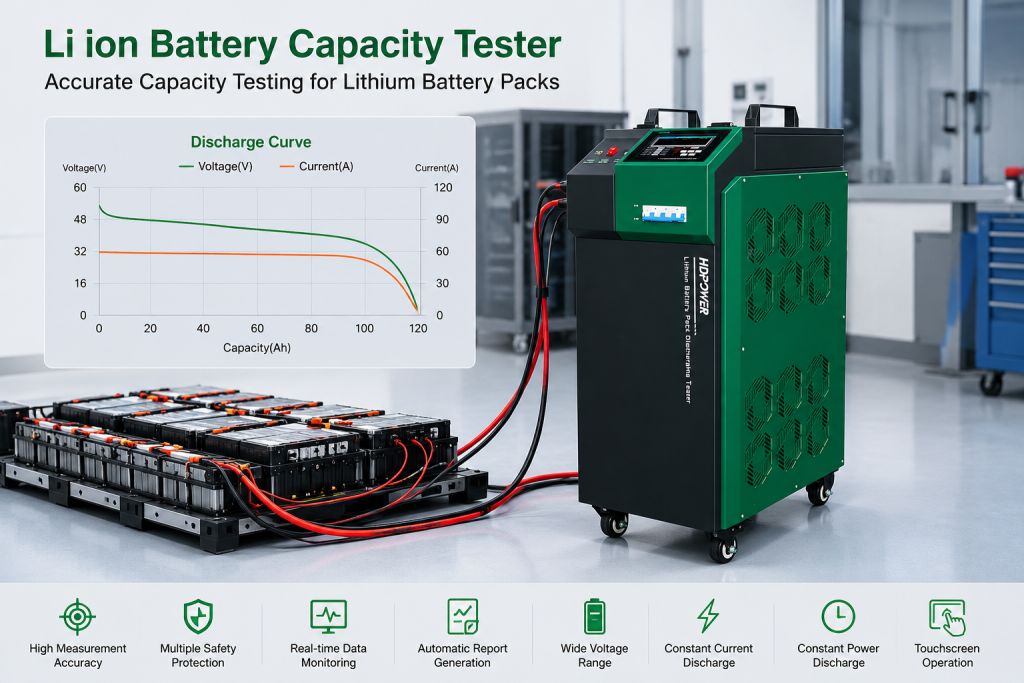
Lithium battery discharge equipment is designed to apply a controlled electrical load to a battery while continuously monitoring key parameters such as voltage, current, discharge time, and released capacity. Depending on the application, modern systems can operate in constant-current or constant-power modes and automatically stop the test when preset safety conditions are reached.
For battery manufacturers, EV service centers, energy storage operators, maintenance companies, and recycling facilities, selecting the right discharge equipment can improve testing accuracy, operational efficiency, and battery safety.
What Is Lithium Battery Discharge Equipment?
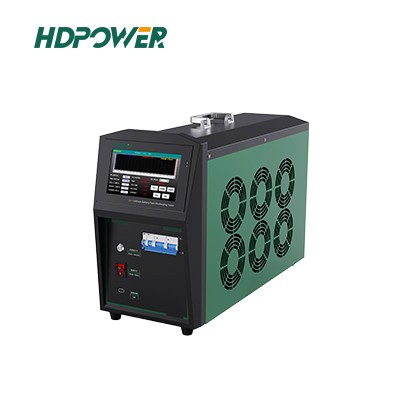
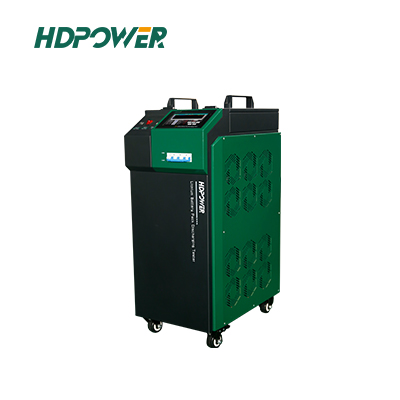
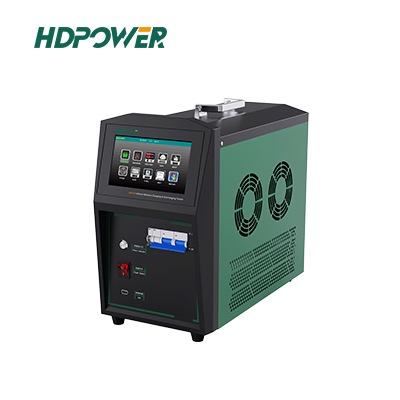
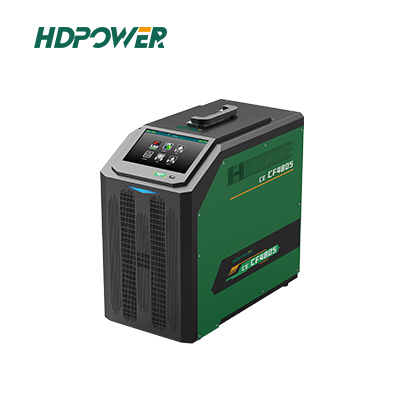
Lithium battery discharge equipment is specialized testing equipment used to safely and controllably release electrical energy from lithium cells, modules, or battery packs while recording their electrical performance.
Unlike a simple resistive load, professional discharge equipment allows engineers to define test parameters and monitor the battery throughout the entire discharge process. Depending on the equipment configuration, users can set discharge current, power, cutoff voltage, and other test conditions.
During a typical test, the equipment records:
- Battery voltage
- Discharge current
- Discharge time
- Discharged capacity
- Energy output
- Voltage variation during discharge
- Test status and protection conditions
This information can be used to determine whether a battery meets its rated specifications and whether it is suitable for continued service, maintenance, second-life applications, or recycling.
A professional Lithium Battery Discharge Tester can therefore serve as an important tool for battery performance verification and condition assessment.
How Does a Lithium Battery Discharge System Work?
The basic principle is straightforward: the equipment connects to the battery and draws electrical energy according to a predefined discharge profile.
A typical test process includes four stages.
- Battery Connection and Parameter Setup
The battery pack is connected to the discharge equipment using appropriate cables and terminals. Before starting the test, the operator sets parameters such as:
- Initial battery voltage
- Discharge current
- Constant-power setting
- Cutoff voltage
- Test duration
- Protection limits
Correct parameter selection is important because lithium batteries can have significantly different voltage ranges, capacities, and discharge characteristics.
- Controlled Discharge
The equipment begins drawing energy from the battery according to the selected operating mode.
Two commonly used modes are constant current (CC) and constant power (CP).
In constant-current discharge, the system attempts to maintain a predefined current throughout the test. This is useful when the test requires a stable current profile.
In constant-power discharge, the equipment adjusts current according to battery voltage so that the required power level remains relatively constant. This can be useful for simulating certain real-world electrical loads.
- Real-Time Monitoring
During the discharge process, the system continuously monitors electrical parameters.
If the battery voltage falls toward the preset cutoff value, or if an abnormal operating condition occurs, the system can stop the test according to its protection settings.
Accurate monitoring is especially important for high-voltage battery packs because the amount of stored energy can be substantial.
- Data Analysis and Reporting
After the test is completed, the recorded data can be analyzed to determine battery capacity, energy output, voltage behavior, and other performance characteristics.
For professional maintenance and quality-control applications, recorded test data can also provide traceability for individual battery packs.
Why Is Controlled Discharge Testing Important?
Battery voltage alone does not provide a complete picture of battery health.
Two battery packs can show similar open-circuit voltage while having significantly different available capacity or load performance. Controlled discharge testing provides a more practical assessment because the battery is evaluated while delivering electrical energy under defined conditions.
Accurate Capacity Verification
One of the most important applications is determining the actual usable capacity of a battery.
A controlled discharge test measures how much energy the battery can deliver before reaching the specified cutoff voltage. Comparing the measured result with the rated capacity can help identify capacity degradation.
Performance Evaluation
Discharge curves can reveal changes in battery behavior that may not be obvious from a simple voltage measurement.
Engineers can analyze voltage stability, discharge duration, current response, and energy output to determine whether a battery is operating within expected limits.
Battery Maintenance
For batteries used in EVs, energy storage systems, and backup power applications, periodic discharge testing can provide useful information for maintenance decisions.
The results can help identify battery packs that require further inspection, repair, replacement, or additional testing.
Second-Life and Recycling Assessment
Used lithium batteries may still retain significant usable capacity.
Before a battery is reused or recycled, controlled discharge and performance testing can help determine its remaining condition. In recycling applications, safe energy release can also reduce the amount of stored electrical energy before dismantling and further processing.
Lithium Battery Discharge Equipment for Different Applications
The requirements for discharge testing vary significantly between industries. A small laboratory battery and a high-voltage EV battery pack cannot be tested using the same equipment configuration.
Electric Vehicle Battery Testing
EV battery packs operate at relatively high voltages and contain large amounts of stored energy. Discharge equipment can be used to evaluate pack capacity, performance, and voltage behavior.
For service centers and EV maintenance facilities, controlled discharge can also help release stored energy before certain repair, transportation, or dismantling operations.
High-voltage discharge equipment is increasingly important as EV platforms move toward higher-voltage architectures.
Energy Storage Systems
Energy storage systems require reliable battery performance because battery degradation can directly affect available energy and system reliability.
Discharge testing can be used for:
- Capacity verification
- Battery performance assessment
- Aging evaluation
- Maintenance testing
- Second-life battery screening
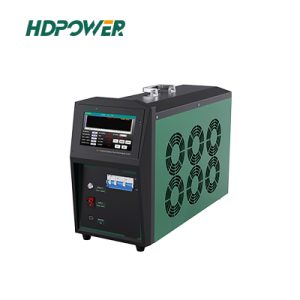
A suitable Lithium Battery Discharger can provide controlled discharge for lithium battery packs used in residential, commercial, industrial, and other energy storage applications.
Battery Manufacturing and R&D
Battery manufacturers may perform discharge testing at different stages of production and development.
Testing can be applied to cells, modules, and battery packs to verify performance and identify inconsistencies.
In R&D environments, engineers may use controlled discharge profiles to study battery behavior under different operating conditions and compare different battery designs or materials.
Battery Repair and Maintenance
Battery service companies need reliable test data before deciding whether a battery pack can remain in service.
Discharge testing can help technicians determine whether a battery has sufficient usable capacity and whether further diagnostic work is necessary.
Battery Recycling and Second-Life Applications
Battery recycling facilities need to handle batteries that may still contain substantial stored energy.
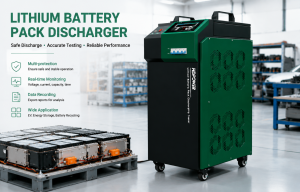
A dedicated Lithium Battery Pack Discharger can be used for controlled discharge during battery dismantling, storage, transportation, repair, and recycling operations.
For second-life applications, discharge testing also helps determine whether used battery packs have enough remaining capacity and performance to be reused.
What Parameters Should You Check When Choosing Lithium Battery Discharge Equipment?
Choosing discharge equipment based only on the battery’s nominal voltage is not enough. Several technical parameters should be evaluated before purchasing.
- Voltage Range
The equipment’s operating voltage range should cover the minimum and maximum voltage of the battery under test.
For battery packs used in EVs and energy storage systems, a wide voltage range can make the equipment more versatile.
- Discharge Current
The maximum discharge current determines the range of battery tests that can be performed.
A system designed for small battery packs may not be suitable for high-capacity EV or energy storage batteries.
- Discharge Power
For high-voltage battery packs, maximum discharge power can be just as important as current.
Constant-power discharge allows users to simulate defined load conditions while the battery voltage changes during the test.
- Cutoff Voltage
A reliable discharge system should allow users to define appropriate cutoff conditions.
The cutoff voltage should be selected according to the battery chemistry, pack configuration, and test requirements.
- Battery Chemistry Compatibility
Different lithium battery chemistries have different operating characteristics.
Depending on the application, equipment may need to support:
- Lithium-ion batteries
- LiFePO4 batteries
- Ternary lithium batteries
- Lithium polymer batteries
- EV battery packs
- Energy storage battery packs
- Protection Functions
Safety should be a major consideration when selecting equipment for high-energy battery testing.
Important protection functions may include:
- Overvoltage protection
- Overcurrent protection
- Overtemperature protection
- Short-circuit protection
- Reverse-connection protection
- Emergency stop
The exact protection configuration should be selected according to the battery voltage, current, energy level, and operating environment.
- Data Recording and Reporting
For professional testing, measurement data should be stored and easily reviewed.
Data export and reporting functions can improve traceability and make it easier to compare batteries over time.
Lithium Battery Discharge Equipment vs. Conventional Load Testing
A conventional load bank can provide a simple electrical load, but professional battery discharge equipment is designed specifically for battery testing.
A dedicated system can provide controlled discharge parameters, real-time measurement, automatic cutoff, test data recording, and battery-specific protection functions.
This makes professional discharge equipment more suitable when the objective is not simply to consume electrical energy but to measure and analyze battery performance.
For organizations performing regular battery capacity tests, maintenance programs, quality control, or battery recycling, dedicated equipment can provide much more useful data than a basic load.
How to Improve the Accuracy of Lithium Battery Discharge Testing
Accurate results depend on more than the specifications of the tester. The entire testing procedure should be controlled.
Use the Correct Test Parameters
Discharge current, cutoff voltage, and test duration should be selected according to the battery manufacturer’s specifications and the purpose of the test.
Check Connections
Loose or unsuitable connections can introduce voltage drops and measurement errors, especially during high-current discharge.
Maintain Appropriate Test Conditions
Battery temperature can influence discharge performance. Testing should therefore be performed under controlled and repeatable conditions whenever possible.
Compare Results Over Time
A single discharge test provides useful information, but repeated testing can reveal trends in battery degradation.
For maintenance programs, comparing capacity and discharge characteristics across multiple test cycles can provide a better understanding of battery condition.
When Should a Lithium Battery Be Discharge Tested?
The appropriate testing frequency depends on the application.
Battery manufacturers may test batteries during production, quality control, and R&D.
EV service centers may perform discharge testing when diagnosing degraded battery packs or evaluating used batteries.
Energy storage operators may use discharge testing as part of commissioning, maintenance, capacity verification, and battery health assessment.
Recycling and second-life companies may test batteries before dismantling, sorting, reuse, or repurposing.
In general, discharge testing becomes especially valuable when a battery’s actual capacity or performance cannot be confidently determined through routine voltage or visual checks alone.
Frequently Asked Questions
What is lithium battery discharge equipment used for?
It is used to safely and controllably discharge lithium batteries while measuring parameters such as voltage, current, time, capacity, and energy output. Typical applications include battery testing, maintenance, EV service, energy storage, manufacturing, and recycling.
Can lithium battery discharge equipment test battery capacity?
Yes. Controlled discharge is one of the common methods for determining the usable capacity of a lithium battery. The equipment measures the amount of energy delivered until the predefined cutoff condition is reached.
Can it be used for EV battery packs?
Yes, provided that the equipment’s voltage, current, power, and protection specifications match the EV battery pack. High-voltage discharge systems are particularly useful for EV battery maintenance, testing, and safe energy release.
What is the difference between a battery discharger and a battery tester?
A battery discharger primarily focuses on controlled energy release, while a battery tester may combine discharge with measurements and analysis of capacity, voltage, internal resistance, or other battery characteristics. Professional systems can integrate multiple functions.
Is constant-power discharge better than constant-current discharge?
Neither mode is universally better. Constant-current discharge is useful when a stable current profile is required, while constant-power discharge can better represent certain real-world load conditions. The appropriate mode depends on the test objective.
What should I consider before purchasing lithium battery discharge equipment?
Key factors include voltage range, maximum discharge current, maximum power, discharge modes, cutoff voltage, supported battery chemistry, protection functions, data recording, and the type of battery or application being tested.
Conclusion
Reliable battery evaluation requires more than measuring voltage at a single point. Controlled discharge testing provides valuable information about actual capacity, energy output, voltage behavior, and overall battery performance.
The right lithium battery discharge equipment should match the battery’s voltage, current, power, chemistry, and application requirements. For EV battery testing, energy storage maintenance, battery manufacturing, repair, recycling, and second-life evaluation, professional discharge systems can provide controlled operation, repeatable test conditions, and useful performance data.
For organizations looking to improve battery testing efficiency and obtain more reliable performance information, selecting a dedicated discharge solution is an important step toward more systematic battery quality control and lifecycle management.