Introduction
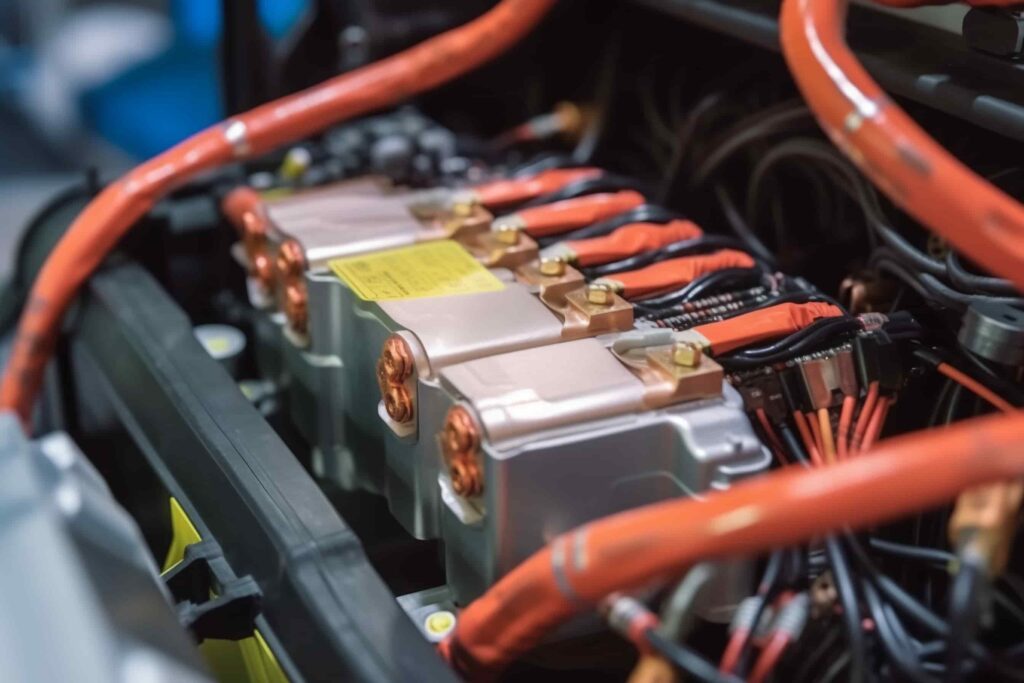
Lithium batteries are widely used in electric vehicles, energy storage systems, telecommunications, industrial equipment, and other applications that require reliable rechargeable power. As battery packs operate through repeated charging and discharging, their performance can gradually decline. Reduced capacity, voltage inconsistency, increased charging time, and shorter operating range are common signs that a battery may require professional maintenance rather than immediate replacement.
A Lithium Battery Maintenance Tester provides a controlled way to evaluate and maintain lithium battery performance. Instead of focusing only on whether a battery can charge or discharge, maintenance-oriented equipment can combine controlled charging, discharging, cycling, monitoring, and data analysis to help technicians understand battery condition and perform targeted maintenance.
For EV service centers, battery repair companies, energy storage operators, and technical maintenance teams, this approach can help reduce unnecessary battery replacement and improve the utilization of serviceable battery packs.
What Is a Lithium Battery Maintenance Tester?
A Lithium Battery Maintenance Tester is specialized equipment designed to evaluate and maintain the operating condition of lithium battery cells, modules, or packs.
Unlike a simple charger, a maintenance tester can control the battery’s electrical operating conditions during charging and discharging. Depending on the equipment configuration, maintenance procedures can include constant-current charging, constant-voltage charging, controlled discharge, cycling, voltage monitoring, temperature monitoring, and data recording.
The objective is not simply to charge the battery. The objective is to understand how the battery behaves under controlled conditions and use this information to determine an appropriate maintenance strategy.
A typical maintenance process can include:
- Initial battery condition assessment
- Controlled charging
- Controlled discharging
- Capacity and performance evaluation
- Repeated charge-discharge cycling
- Cell voltage and temperature monitoring
- Comparison of test data
- Final verification
This makes maintenance testing particularly useful when a battery still operates but no longer provides the expected performance.
Why Lithium Battery Maintenance Is Important
Lithium battery degradation does not always result in immediate failure. A battery may still show a normal voltage while its available capacity or discharge performance has already declined.
Several factors can contribute to battery performance degradation:
- Repeated charge and discharge cycles
- Long-term operation at high or low state of charge
- Cell-to-cell inconsistency
- Temperature exposure
- Aging and chemical degradation
- Improper charging conditions
- Long periods of storage
- Differences between individual battery modules
For EV batteries, degradation may appear as reduced driving range, slower charging performance, or differences between modules. For energy storage systems, declining capacity can reduce the amount of usable energy available to the system.
A maintenance tester helps technicians move from simple visual or voltage checks toward a more structured maintenance process.
What Can a Lithium Battery Maintenance Tester Do?
The exact functions depend on the model and configuration, but professional maintenance equipment generally focuses on several key operations.
- Controlled Battery Charging
Controlled charging is one of the fundamental maintenance functions.
Instead of simply connecting a battery to a conventional charger, a maintenance tester can apply predefined charging parameters. Constant-current and constant-voltage charging modes allow technicians to establish repeatable charging conditions.
This is particularly useful when batteries need to be evaluated before and after maintenance. Consistent charging conditions make it easier to compare performance data.
- Controlled Discharging
Discharging provides important information about how much usable energy the battery can actually deliver.
A maintenance tester can perform controlled discharge according to a defined current or power profile. During the process, parameters such as voltage, current, time, and capacity can be recorded.
For maintenance teams, this information helps determine whether a battery’s apparent performance problem is related to insufficient capacity, voltage behavior, cell inconsistency, or another issue.
For applications requiring more detailed discharge evaluation, users can also combine maintenance testing with a Lithium Battery Pack Discharge Tester to perform dedicated pack-level discharge analysis.
- Charge-Discharge Cycling
One of the most useful functions for battery maintenance is repeated cycling.
A single charge or discharge test provides only a snapshot of battery behavior. Cycling allows technicians to observe how the battery responds over multiple controlled charge and discharge processes.
Depending on the maintenance objective, technicians may configure:
- Charging conditions
- Discharge current or power
- End voltage
- Number of cycles
- Rest periods
- Data recording intervals
- Protection limits
The resulting data can be compared to determine whether battery performance changes after maintenance.
- Battery Condition Evaluation
A maintenance tester can help collect multiple parameters rather than relying on voltage alone.
Important indicators may include:
- Battery voltage
- Charging current
- Discharging current
- Available capacity
- Energy output
- Charging and discharging behavior
- Cell voltage differences
- Temperature
- Cycle performance
Combining these parameters provides a more complete picture of battery condition.
For applications requiring broader evaluation, a dedicated Lithium Battery Diagnostics Equipment solution can be used alongside maintenance equipment to investigate battery condition from multiple perspectives.

When Should a Lithium Battery Be Maintained?
Not every lithium battery requires maintenance. However, several conditions may indicate that further evaluation is appropriate.
Reduced Available Capacity
If a battery provides significantly less operating time than when it was new, controlled capacity testing can determine whether usable capacity has declined.
Increased Cell Voltage Difference
A battery pack consists of multiple cells or modules. If their voltage behavior becomes increasingly inconsistent, the pack may require additional evaluation and balancing.
Reduced Driving Range
For EV batteries, reduced driving range can be caused by capacity degradation, cell inconsistency, or other battery performance issues. Maintenance testing can help technicians determine whether the battery pack can still be serviced.
Abnormal Charging or Discharging
Unexpected changes in charging time, discharge behavior, or voltage response may indicate that the battery requires further inspection.
Before Battery Replacement
A complete maintenance evaluation can help determine whether replacing the entire battery pack is actually necessary.
This is especially important for expensive EV and energy storage battery systems. If a battery pack contains serviceable modules, maintenance may provide an alternative to immediate replacement.
Lithium Battery Maintenance vs. Battery Testing
Battery testing and battery maintenance are related but have different objectives.
A conventional battery test primarily answers questions such as:
- How much capacity remains?
- What is the battery voltage?
- How does the battery perform under load?
- Are there abnormal cells?
Battery maintenance goes one step further. It uses controlled electrical operations to evaluate and potentially improve the usable condition of the battery.
For example:
Testing:
Battery → Measurement → Data Analysis → Condition Assessment
Maintenance:
Battery → Assessment → Controlled Charge → Controlled Discharge → Cycling → Reassessment
This distinction is important when selecting equipment.
If the primary requirement is measurement and diagnosis, a dedicated battery tester may be sufficient. If the objective is both evaluation and maintenance, a multifunctional maintenance tester can provide greater flexibility.
How to Choose a Lithium Battery Maintenance Tester
Selecting the right equipment requires more than looking at maximum current or voltage.
Voltage Range
The equipment should match the voltage range of the batteries being serviced. Different applications may require equipment for low-voltage modules, EV battery packs, or higher-voltage energy storage systems.
Charging and Discharging Capability
Check whether the equipment supports the required charging and discharging modes. Constant-current, constant-voltage, and constant-power functions may be important depending on the maintenance application.
Current Capacity
The required current depends on battery capacity and the intended maintenance procedure. A system with customizable current ranges can provide greater flexibility across different battery types.
Cell-Level Monitoring
For lithium battery packs, individual cell information can be extremely valuable. Optional cell voltage and temperature acquisition can help technicians identify differences that may not be visible from pack-level measurements.
Data Management
Professional maintenance work should be traceable. Look for equipment that can store test parameters, record curves, export results, and generate reports.
Data comparison is particularly useful when evaluating battery performance before and after maintenance.
Safety Protection
Lithium battery maintenance requires controlled operation and appropriate protection.
Important protection functions may include:
- Overcurrent protection
- Overvoltage protection
- Undervoltage protection
- Reverse connection protection
- Overtemperature protection
- Short-circuit protection
- Emergency stop
The equipment should also allow technicians to define appropriate operating limits before starting a test.
CM-CF: A Practical Solution for Lithium Battery Maintenance
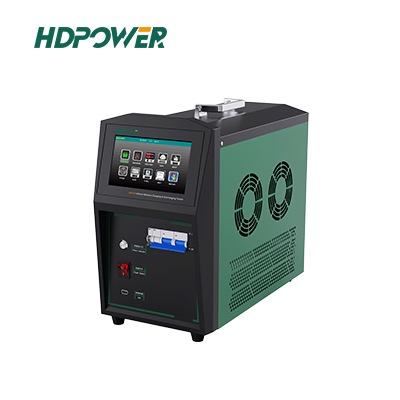
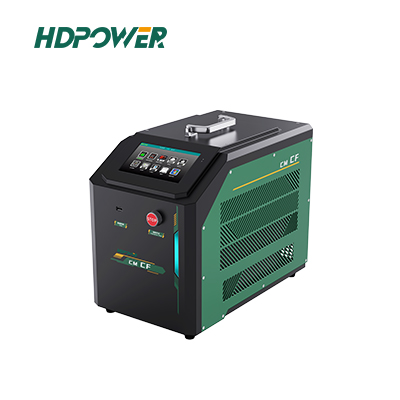
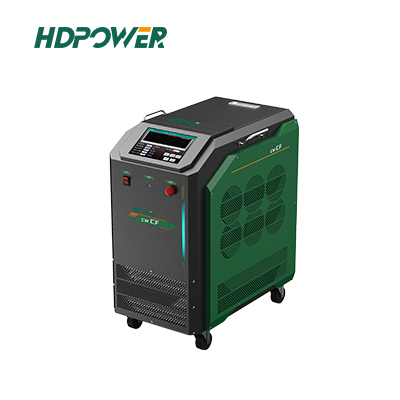
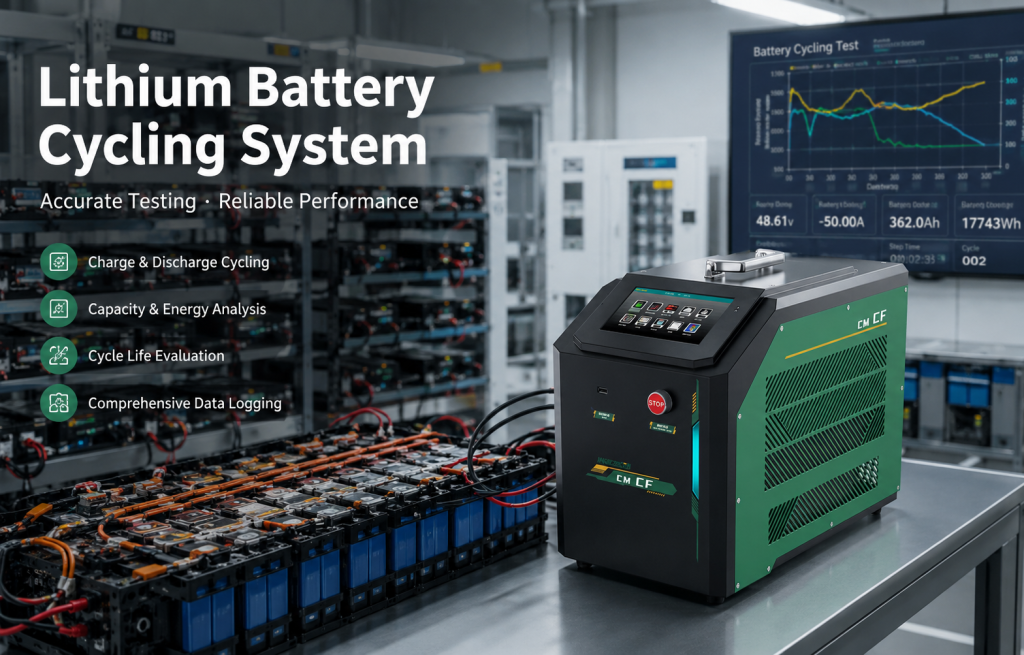
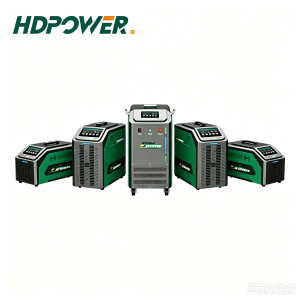
For maintenance applications involving EV batteries, energy storage systems, and other lithium battery packs, the HDPOWER CM-CF series combines controlled charging and discharging with battery maintenance functions.
The system supports constant-current and constant-voltage charging as well as constant-current and constant-power discharge modes. It can also perform cycling operations, allowing technicians to establish predefined maintenance procedures instead of manually switching between separate charging and discharging devices.
For battery service applications, the system can be used to regulate battery module voltage or SOC toward a defined range. This is useful when differences between battery modules affect pack consistency.
The equipment can also support cell voltage and temperature acquisition through an external collection system, providing additional information during maintenance operations.
For users who need a broader portfolio of battery testing solutions, the Lithium Battery Tester Series includes equipment for discharge testing, balancing, cell testing, charge-discharge testing, and other battery evaluation requirements.
Applications of Lithium Battery Maintenance Testers
Lithium battery maintenance equipment can be used across several industries.
EV Battery Service Centers
EV service centers can use maintenance testers to evaluate battery packs, perform controlled charging and discharging, conduct cycling procedures, and determine whether degraded battery modules require replacement or further service.
Energy Storage Systems
Energy storage batteries operate through repeated charge-discharge cycles. Maintenance testing can help operators monitor capacity and performance changes over time.
Battery Repair and Remanufacturing
For repair and remanufacturing businesses, maintenance equipment can support the evaluation of used battery modules before they are returned to service.
Battery Second-Life Applications
Before batteries are reused in less demanding applications, their remaining performance should be evaluated. Controlled testing and maintenance can provide useful data for grading and selecting battery modules.
Research and Engineering
Engineers can use programmable charging, discharging, and cycling profiles to investigate battery behavior under controlled conditions.
Build a More Efficient Lithium Battery Maintenance Workflow
A professional maintenance workflow should not rely on a single measurement.
A practical process can be organized as follows:
Step 1: Initial Inspection
Check battery voltage, physical condition, and available historical data.
Step 2: Condition Assessment
Perform controlled testing to determine current battery performance.
Step 3: Maintenance Operation
Apply predefined charging, discharging, cycling, or balancing procedures according to the battery condition.
Step 4: Reassessment
Repeat the relevant measurements and compare the results with the initial data.
Step 5: Service Decision
Determine whether the battery can return to service, requires additional maintenance, or should be replaced.
This process provides a more objective basis for maintenance decisions and can reduce unnecessary replacement of usable battery modules.
Conclusion
A Lithium Battery Maintenance Tester is more than a conventional battery measurement device. It provides controlled charging, discharging, cycling, monitoring, and data management functions that can help maintenance teams understand battery condition and establish repeatable service procedures.
For EV repair centers, energy storage operators, battery maintenance companies, and engineering teams, the right maintenance equipment can improve testing efficiency, support battery condition assessment, and help maximize the usable service life of lithium battery systems.
When selecting equipment, consider voltage range, charging and discharging modes, current capability, cell-level monitoring, data management, and safety protection. A multifunctional solution such as the CM-CF series can provide a practical platform for lithium battery maintenance where both performance evaluation and controlled battery conditioning are required.