Introduction: The Hidden Killer of Battery Performance
In the world of renewable energy and electric vehicles, battery health is currency. Whether you manage a fleet of electric forklifts, maintain a energy storage system, or service electric vehicles (EVs), you have likely encountered a common frustration: a battery pack that loses capacity long before its expected lifespan ends. You might see an EV that initially had a 300KM range now struggling to reach 200KM.
Often, the battery pack itself isn’t dead—it is simply unbalanced.
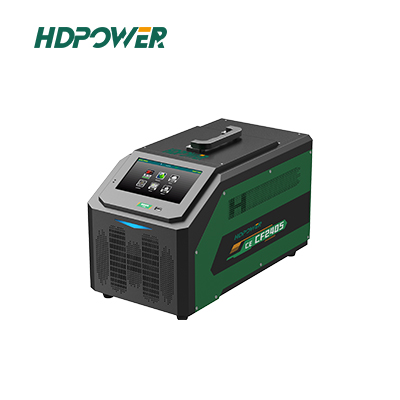
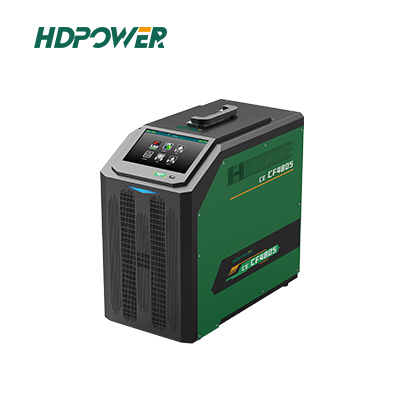
This is where a battery voltage equalizer becomes an essential tool for maintenance professionals. In this guide, we will explore what this device is, why lithium batteries drift out of balance, and how professional equalizing equipment (like the CE-CF series) can save thousands of dollars in replacement costs.
What is a Battery Voltage Equalizer?
A battery voltage equalizer is a specialized electronic device designed to correct the voltage inconsistencies between individual cells (or strings of cells) within a battery module.
In a battery pack, hundreds of individual cells work in series. Ideally, they should all have the exact same voltage and internal resistance. However, due to manufacturing variances or thermal unevenness during operation, some cells charge or discharge faster than others.
A professional equalizer performs “two-way maintenance”. It doesn’t just monitor the battery; it actively repairs it by:
- Replenishment: Charging lower-voltage cells to match the average.
- Discharging: Lowering high-voltage cells to a safe level.
- Equalizing: Ensuring all cells sit at a consistent voltage level to restore the module’s usable capacity.

Why Do You Need Cell Balancing? (The Technical Deep Dive)
Why is voltage consistency so critical? The answer lies in the “Barrel Effect” (or the weakest link theory). A battery management system (BMS) will stop the charging process as soon as the highest voltage cell is full, and it will stop discharging as soon as the lowest voltage cell is empty.
If the voltage differential among cells reaches several hundred millivolts:
● The Battery Can’t Charge Enough: The charger cuts off early because one “high” cell triggers the limit, leaving the rest undercharged.
● The Battery Discharges Too Fast: The system shuts down early because one “low” cell hits the bottom threshold.
This results in severe capacity degradation. Using a battery voltage equalizer solves this by narrowing the gap between the highest and lowest voltage cells, effectively “unlocking” the trapped capacity of the battery pack.
Key Features of Professional Battery Voltage Equalizers
Not all Battery Voltage Equalizers are created equal. For industrial applications—such as maintaining AGVs, commercial vehicles, or energy storage base stations —you need equipment that offers precision and safety.
Based on industry standards and the capabilities of the CE-CF series (e.g., CE-CF4805), here are the features that define a high-quality equalizer:
1. Independent Channel Design
Safety is paramount when dealing with high-energy lithium batteries. Top-tier equalizers utilize independent channels. This means the maintenance of one string of cells does not interfere with another, ensuring that no cell is accidentally over-charged or over-discharged during the process.
2. Multi-Type Battery Compatibility
A versatile workshop encounters various battery chemistries. Professional testers allow for template presetting to cover mainstream lithium batteries. For example, the device should support:
● LFP (Lithium Iron Phosphate): Preset typically at 3.65V.
● Li-NMC (Lithium Nickel Manganese Cobalt): Preset typically at 4.2V.
● LTO (Lithium Titanate): Preset typically at 2.5V.
3. High-Performance Equalizing with End Depolarization
Advanced equalizers go beyond simple voltage matching. They support maintenance processes that include end depolarization. This advanced technique guarantees a highly consistent effect after equalization is complete, preventing the voltage from “bouncing back” immediately after the test stops.
4. Comprehensive Data Management
In B2B service scenarios, you must prove the results to your client. Modern equalizers come with PC data management software that allows for remote control and cell monitoring. More importantly, they can automatically generate data reports (Excel/Word), visually displaying voltage curves and histograms before and after maintenance.
Practical Application: How to Use an Equalizer
Using a battery voltage equalizer requires strict adherence to safety protocols to avoid short circuits. Here is a generalized workflow based on standard operating procedures:
1. Connection Sequence: Safety dictates a specific wiring order. Typically, you must connect the acquisition wires to the battery first (checking wiring sequence), and then insert the connector into the device.
2. Verification: Before starting, use the device’s “Bar Graph” view to check the real-time voltage of every connected cell. If a voltage reading is abnormal, the connection must be checked immediately.
3. Template Selection: Select the appropriate charging/discharging parameters based on the battery type (e.g., setting a 4.000V High Limit for LFP batteries).
4. Automatic Test: Initiate the “Auto Test” mode. The device will automatically cycle through charging, discharging, or equalizing until the target capacity or voltage consistency is reached.
Conclusion: The ROI of Battery Maintenance
The cost of replacing a lithium battery pack in an electric forklift or an EV is astronomical. In contrast, a battery balancer is a one-time investment that can extend the service life of these assets significantly.
By regularly repairing voltage inconsistencies, you ensure battery safety, resolve capacity deterioration, and reduce the frequency of costly repairs. For battery warehouses, maintenance providers, and fleet managers, an equalizer is not just a tool—it is a strategy for cost efficiency.