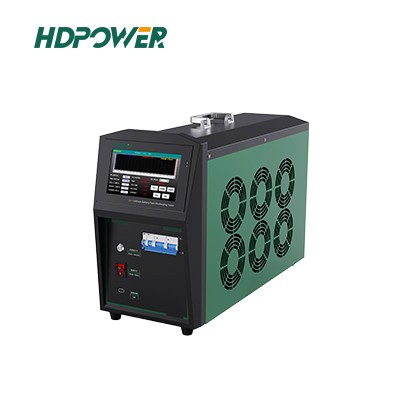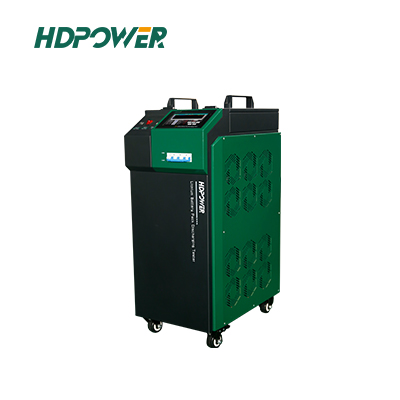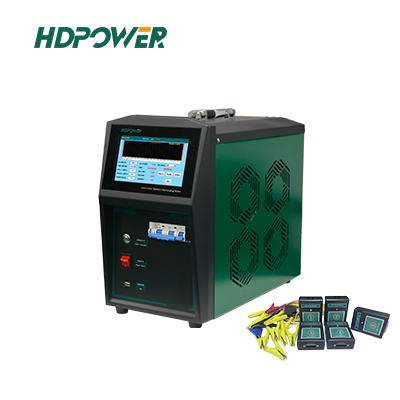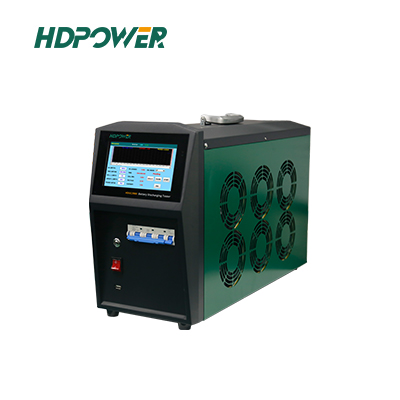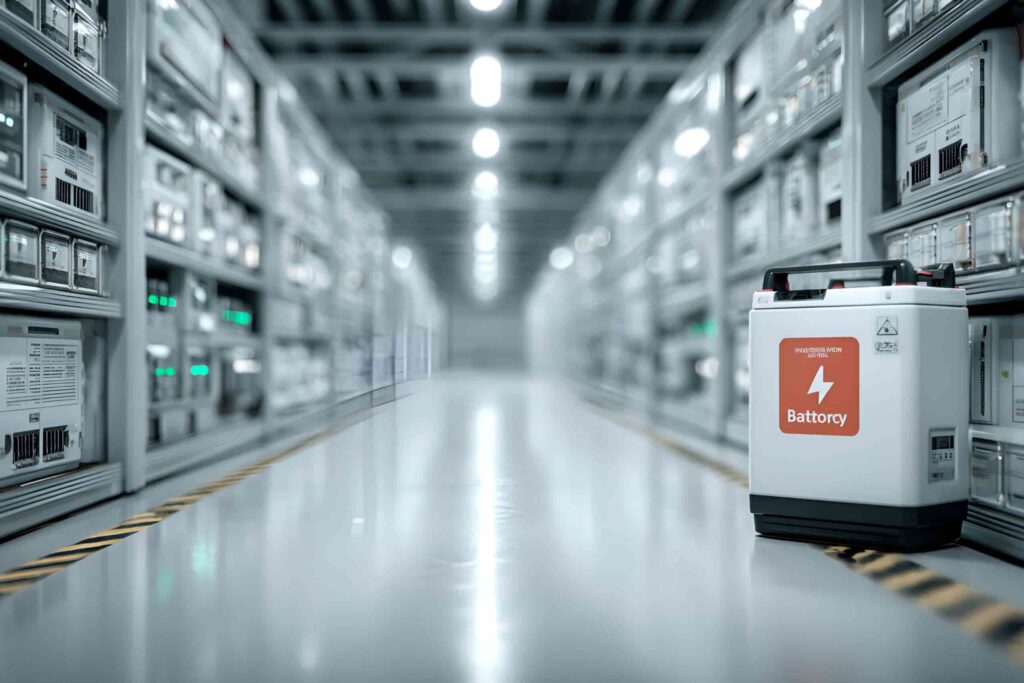
Electric vehicle technology continues to evolve rapidly, pushing the industry toward higher energy density, improved charging efficiency, and safer battery systems. Behind every high-performance EV lies a lithium-ion traction battery pack that must be maintained and tested with accuracy and care. An EV Battery Discharger is one of the most important tools for ensuring the long-term reliability, stability, and serviceability of high-voltage EV lithium packs.
Unlike generic load testers, an EV battery discharger is purpose-built to handle lithium-ion chemistry, high-voltage modules, stringent safety protocols, and real-world discharge profiles. By applying controlled load conditions, it verifies battery health, identifies performance degradation, and supports essential maintenance operations across automotive workshops, fleet management facilities, and EV manufacturing plants.
Why EV Battery Dischargers Are Essential for Lithium-Ion Pack Maintenance
Lithium-ion EV packs experience gradual changes during normal operation—capacity fade, internal resistance increase, thermal stress, and cell imbalance. These factors do not always appear in static voltage measurements. A controlled discharge test exposes hidden degradation trends by placing the battery under realistic load conditions.
Key reasons EV battery dischargers are indispensable:
● Accurate State-of-Charge (SOC) evaluation under controlled discharge
● Verification of real usable capacity (Ah/Wh) at different C-rates
● Detection of abnormal voltage sag caused by aging cells
● Monitoring thermal response under load, preventing thermal runaway risks
● Assessing pack readiness after repair or replacement of modules
● Supporting fleet preventive maintenance
● Ensuring compliance with global EV battery safety standards
In EV service workflows, a standardized discharge cycle is often the only method to confirm whether a lithium pack can still deliver rated performance under driving-equivalent load.

How an EV Battery Discharger Works
A professional lithium battery discharger connects directly to the high-voltage terminals of the lithium battery pack or module. Once connected, the system automatically adjusts its internal load circuitry to draw current precisely according to predefined test parameters.
A typical EV battery discharger provides:
1. Constant Current (CC) Discharge
Simulates steady energy output similar to cruising load.
2. Constant Power (CP) Discharge
Represents real-world acceleration pulses and variable driving conditions.
3. Programmable Load Profiles
Allows simulation of WLTP/NEDC driving cycles or OEM-specific load patterns.
4. Real-Time Data Acquisition
Captures voltage, current, temperature, resistance, SOC, and discharge curve signatures.
5. Intelligent Safety Protections
Built-in protections handle:
● Overvoltage
● Overcurrent
● Overtemperature
● Reverse polarity
● Isolation faults
● Short-circuit conditions
Given that EV packs can exceed 400–800 V, safety and isolation design are crucial elements of any EV battery discharger.
Advanced Engineering Capabilities of Modern EV Battery Dischargers
Modern EV battery dischargers incorporate adaptive safety logic, combining hardware-level protection with intelligent software rules. These include pre-test isolation verification, polarity checks, dynamic voltage window monitoring, short-circuit prevention, load-derating under thermal stress, and controlled shutdown sequences. Together, these capabilities allow the discharger to operate safely even when testing aged, partially damaged, or thermally unstable lithium packs.
In summary, the advanced engineering capabilities of modern EV battery dischargers—including high-voltage safety architecture, programmable dynamic load simulation, multi-node thermal monitoring, precision measurement systems, digital integration, and adaptive protection logic—make them indispensable tools for maintaining and diagnosing today’s complex lithium-ion EV battery packs.
Applications in EV Service, Manufacturing, and Fleet Operations
1. EV Maintenance & After-Sales Service
Workshops use EV battery dischargers to assess battery modules after repair, BMS replacement, or pack reassembly. Controlled discharge verifies thermal stability and capacity consistency before the vehicle is returned to the customer.
2. EV Battery Manufacturing
During end-of-line testing, packs undergo charge-discharge cycles to validate performance before shipment. A discharger ensures that each lithium pack meets output and safety requirements.
3. Fleet Management
Fleet operators use dischargers to monitor battery degradation trends and schedule replacements, thereby reducing unexpected downtime.
4. Battery Recycling & Second-Life Evaluation
EV battery dischargers help identify which cells or modules are suitable for reuse in energy storage applications.
5. Research and Laboratory Testing
EV R&D facilities use high-precision dischargers to study lithium-ion behavior under various stress loads, temperatures, and degradation cycles.
Engineering-Level Advantages of Using an EV Battery Discharger
A purpose-built EV battery discharger provides several benefits over generic discharge systems:
● High-voltage isolation ensures safe testing of 400–800 V packs
● Stable electronic load guarantees repeatable test results
● Advanced thermal monitoring protects cells from damage
● Programmable profiles mimic real driving conditions
● Fast data logging improves diagnostic accuracy
● Professional-grade accuracy supports OEM-level quality control
For workshops and industrial service centers, using specialized equipment dramatically reduces diagnostic time and improves safety during high-voltage operations.
Best Practices for Safe and Effective EV Battery Discharge Testing
Since lithium-ion EV packs contain significant stored energy, strict procedures are essential:
Safety Recommendations
● Always wear EV-rated PPE (high-voltage gloves, insulated tools)
● Disable the vehicle’s high-voltage interlock loop (HVIL) before connecting
● Ensure the discharger has certified isolation and emergency stop design
● Monitor pack temperature throughout the test
● Never discharge below manufacturer-recommended cutoff voltage
● Maintain clear ventilation and fire safety readiness
Testing Recommendations
● Allow the pack to rest before testing to stabilize OCV
● Use discharge currents appropriate for pack capacity (0.2C–0.5C typical)
● Record and store every cycle’s data for trend analysis
● Review voltage sag patterns to identify weak modules
● Verify pack consistency after module replacement or balancing
Conclusion
A EV Battery Discharger is an essential tool for any facility managing, repairing, or validating lithium-ion EV battery systems. By applying controlled, repeatable, and safe load conditions, it provides engineers and technicians with accurate performance data crucial for maintenance decisions and long-term fleet reliability.
As electric mobility expands globally, specialized EV battery discharge equipment becomes a critical element of professional EV service infrastructure. It ensures that high-voltage lithium packs remain safe, stable, and capable of delivering the performance required for daily EV operation—making it a truly reliable solution for pack maintenance.