Introduction
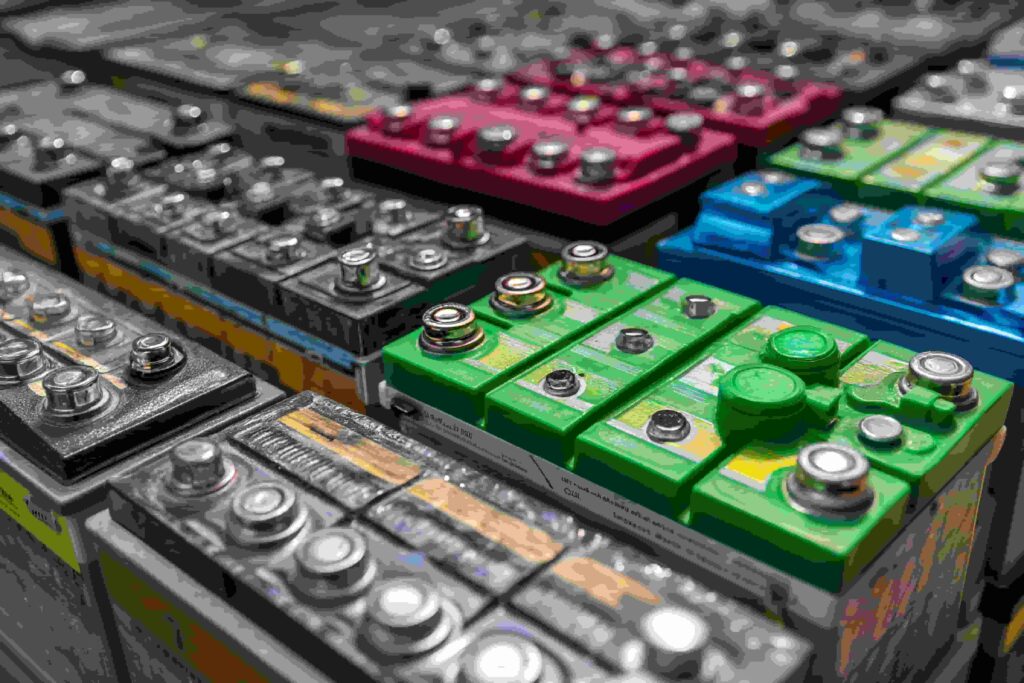
Lead-acid batteries remain widely used in UPS systems, telecommunications, substations, data centers, railway infrastructure, and other backup power applications. Although these batteries are designed for reliable service, their performance can gradually decline because of sulfation, prolonged undercharging, inactivity, repeated deep discharge, and other operating conditions.
When a battery begins to show reduced capacity or weaker discharge performance, replacement is not always the first step. For batteries whose degradation is potentially recoverable, a structured reconditioning process can help maintenance teams evaluate their condition, perform controlled electrical treatment, and verify the result.
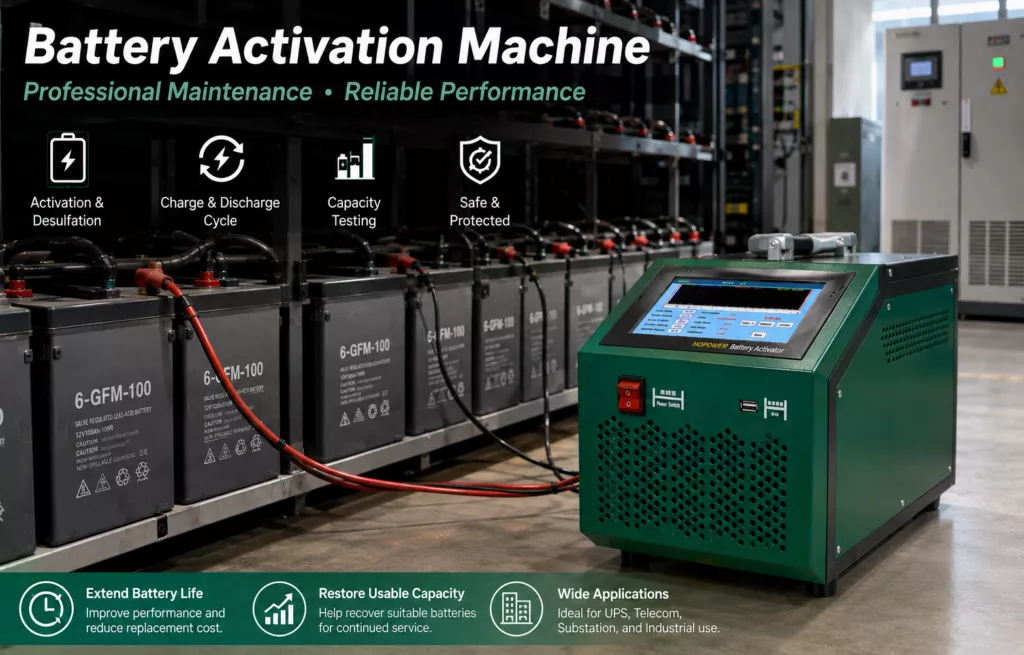
This is where Lead Acid Battery Reconditioning Equipment becomes valuable. Rather than simply charging a battery, professional equipment can integrate controlled charging, discharging, activation, cycling, measurement, and data recording into a repeatable maintenance workflow.
What Is Lead Acid Battery Reconditioning?
Lead acid battery reconditioning is a controlled maintenance process intended to improve the usable performance of a suitable battery after its performance has declined.
It is important to distinguish reconditioning from simply recharging a battery. A conventional charger mainly restores electrical energy. Reconditioning involves a broader process in which technicians first evaluate the battery, select an appropriate maintenance procedure, perform controlled charge/discharge or activation cycles, and then compare the battery’s performance before and after treatment.
A typical industrial workflow can include:
Initial test → Diagnosis → Controlled discharge → Charging → Activation or cycling → Retest → Performance evaluation
This approach is particularly useful when battery voltage alone does not provide enough information about the battery’s actual condition.
For example, a lead-acid battery may reach a normal voltage after charging while still delivering insufficient capacity during a discharge test. Performance verification is therefore an important part of professional battery maintenance.
Why Do Lead-Acid Batteries Need Reconditioning?
Several factors can contribute to declining lead-acid battery performance.
- Sulfation
Sulfation is one of the common causes of performance degradation in lead-acid batteries. During normal battery operation, lead sulfate forms and is normally converted during charging. Under conditions such as prolonged partial charging, undercharging, or extended inactivity, harder sulfate deposits can develop on the plates.
These deposits can reduce the effective reaction area and increase internal resistance, affecting charging and discharging performance.
For suitable batteries, controlled electrical activation may help address some sulfation-related performance loss.
- Long-Term Inactivity
Standby batteries can remain unused for long periods. Although this reduces normal cycling, it does not eliminate battery aging.
UPS batteries, telecom backup batteries, and emergency power batteries may therefore require periodic inspection and maintenance even when they have not experienced frequent discharge events.
- Repeated Deep Discharge
Deep discharge can place additional stress on lead-acid batteries. If batteries repeatedly operate outside their recommended conditions, their usable capacity and overall performance may decline.
- Uneven Battery Condition
In a battery bank, individual batteries or cells may not age at the same rate. One weak unit can affect the reliability of the entire system.
This makes individual testing and targeted maintenance important before deciding whether an entire battery group needs replacement.
How Does Lead Acid Battery Reconditioning Equipment Work?
Professional Lead Acid Battery Reconditioning Equipment supports a controlled sequence rather than relying on a single charging operation.
Step 1: Test the Battery Before Reconditioning
The first step is to establish a baseline.
Technicians may check:
- Battery voltage
- Internal resistance
- Charging response
- Discharge performance
- Available capacity
- Temperature
- Voltage behavior during discharge
A suitable Battery Analyzer can be used for rapid preliminary assessment, helping technicians identify batteries that require more detailed testing.
For larger battery systems, a Battery Capacity Tester can provide a more direct evaluation of usable capacity through controlled discharge.
The purpose of this initial test is simple: determine whether the battery is a suitable candidate for reconditioning and create measurable data for comparison.
Step 2: Controlled Discharge
Controlled discharge provides information that cannot be obtained from open-circuit voltage alone.
A Battery Discharge Tester can apply a defined discharge current while monitoring voltage and other parameters. This allows maintenance personnel to observe how the battery behaves under load.
For industrial applications, controlled discharge also helps establish whether the battery can meet the required backup performance.
Step 3: Controlled Charging
After the initial assessment or discharge stage, the battery can be charged according to an appropriate charging profile.
The charging process should be controlled rather than simply increasing current in an attempt to accelerate recovery. Battery voltage, current, temperature, and operating limits need to be considered according to the battery manufacturer’s requirements and the specific maintenance procedure.
Step 4: Activation and Cycling
For batteries that are considered suitable for further treatment, activation and charge-discharge cycling can be performed.
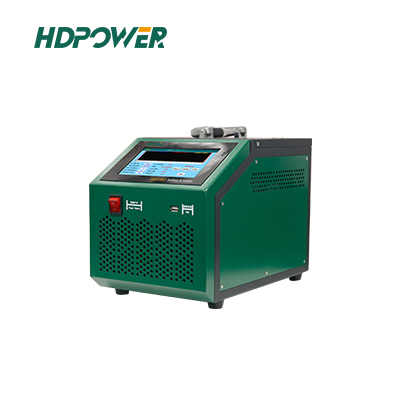
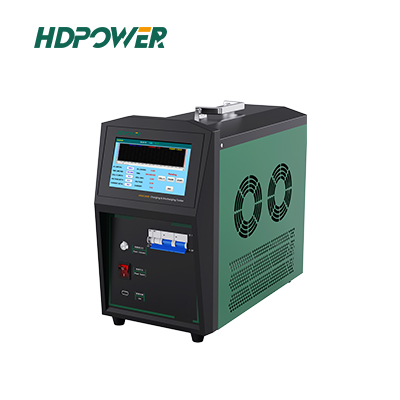
HDPOWER’s HDGC3932 Battery Activator is designed for 2V, 6V, and 12V lead-acid batteries. It integrates constant-current discharge, intelligent charging, and cyclic charge-discharge functions. The equipment uses high-frequency, low-voltage, and high-current characteristics with directional current as part of its approach to addressing lead sulfate deposits and activating battery materials.
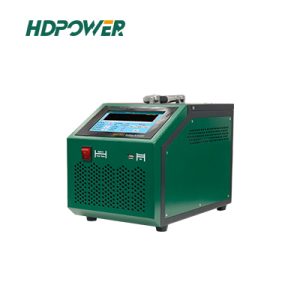
This makes the activator different from a conventional battery charger: its role is not simply to replenish energy, but to support a broader maintenance process involving charging, discharging, activation, and cycling.
Step 5: Retest and Compare the Results
Reconditioning should always be followed by verification.
A battery should not be considered successfully reconditioned simply because its voltage has returned to a normal level after charging.
Instead, technicians can compare measurable parameters before and after treatment, such as:
- Discharge voltage
- Discharge duration
- Available capacity
- Charging behavior
- Internal resistance
- Temperature response
This creates a more objective basis for determining whether the battery can continue operating, requires additional maintenance, or should be replaced.
Reconditioning vs. Conventional Battery Charging
The difference between charging and reconditioning is important for industrial battery maintenance.
A conventional battery charger is primarily designed to restore the battery’s state of charge. It does not necessarily provide the measurement, controlled discharge, activation, or performance verification required for a complete maintenance procedure.
By comparison, a professional reconditioning workflow may combine:
Testing + Charging + Discharging + Activation + Cycling + Verification
This integrated approach is especially useful for critical backup systems where maintenance decisions should be based on measurable performance rather than battery voltage alone.
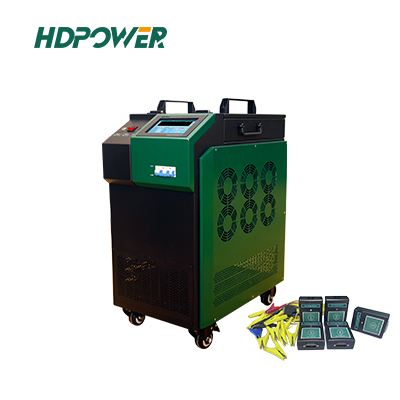
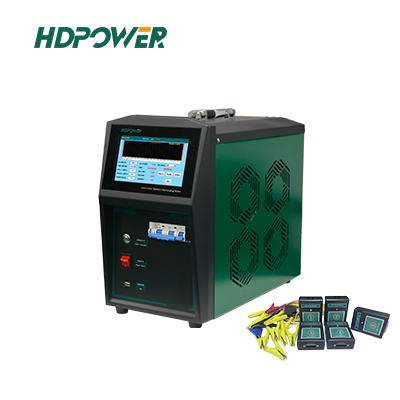
For example, HDPOWER’s product range includes battery analyzers, battery capacity testers, battery discharge testers, and battery activators that can support different stages of an industrial battery maintenance workflow.
Where Is Lead Acid Battery Reconditioning Equipment Used?
UPS Battery Maintenance
UPS systems depend on batteries to provide backup power when the primary electrical supply fails. A weak battery can reduce the actual backup runtime even when the UPS itself is functioning normally.
Reconditioning equipment can be incorporated into preventive maintenance programs to evaluate suitable batteries and verify their performance after maintenance.
Telecom Backup Battery Systems
Telecommunications infrastructure requires dependable backup power to maintain network availability.
Battery maintenance teams can use controlled testing and reconditioning procedures to identify weak batteries before they become a source of unexpected backup-power problems.
Substations and Power Utilities
Stationary lead-acid battery banks support critical DC systems used for protection, control, switching, and other functions.
In these environments, maintenance personnel need measurable battery data rather than relying only on visual inspection or terminal voltage.
Data Centers
Data centers require reliable backup power to reduce the risk associated with utility interruptions.
A structured battery maintenance program can combine rapid screening, controlled discharge testing, charging, activation, and post-maintenance verification.
Battery Maintenance Service Providers
Professional battery service companies may use reconditioning equipment to provide inspection, maintenance, activation, and testing services for multiple industrial customers.
The ability to store test data and generate reports can also improve maintenance traceability.
How to Choose Lead Acid Battery Reconditioning Equipment
Selecting equipment should start with the actual battery and maintenance requirements rather than the equipment name alone.
Check the Battery Voltage Range
Confirm whether the equipment supports the batteries you need to maintain.
For example, HDGC3932 supports 2V, 6V, and 12V lead-acid batteries, with different charge and discharge current ranges for each voltage level.
Check Charging and Discharging Capability
Reconditioning normally involves more than charging. Check whether the equipment supports controlled discharge, charging, and cycling and whether its current range is appropriate for the battery capacity.
Evaluate Measurement and Data Functions
Accurate measurement is important when comparing battery condition before and after treatment.
Data storage, curves, test records, and report generation can also help maintenance teams document the condition of individual batteries and track maintenance results.
Consider Safety Protection
Battery maintenance equipment should include appropriate protection functions for abnormal operating conditions.
Depending on the equipment, these may include over-current, over-temperature, reverse-polarity, short-circuit, and other protective functions.
HDPOWER’s battery activator product information lists protection functions and data/reporting capabilities intended for professional battery maintenance applications.
Match the Equipment to the Maintenance Workflow
The most useful equipment is not necessarily the one with the largest current rating or the greatest number of features.
Instead, consider how the equipment fits into the complete workflow:
Screen → Test → Recondition → Recharge → Discharge → Verify → Report
This approach helps prevent a common maintenance mistake: treating every weak battery as either immediately replaceable or automatically recoverable.
When Should a Battery Be Reconditioned or Replaced?
Reconditioning is not a universal solution for every failed battery.
A battery may be considered for reconditioning when testing indicates a performance decline that may be associated with recoverable conditions such as sulfation, prolonged inactivity, or insufficient cycling.
Replacement may be more appropriate when the battery has severe physical damage, leakage, shorted cells, severe corrosion, or other irreversible failures.
The decision should therefore be based on measured battery condition, manufacturer recommendations, safety requirements, and the operating requirements of the application.
This is why testing before and after reconditioning is so important.
HDPOWER Lead Acid Battery Reconditioning Solution
HDPOWER provides battery testing and maintenance equipment designed for industrial lead-acid battery applications.
The HDGC3932 Battery Activator combines activation, constant-current discharge, intelligent charging, and cyclic charge-discharge functions for 2V, 6V, and 12V lead-acid batteries. It also provides a 7-inch touchscreen, data recording, curve display, protection functions, and report-generation capabilities for maintenance work.
For a complete maintenance workflow, technicians can combine the activator with appropriate Lead Acid Battery Tester and Battery Capacity Testing Equipment according to the battery type, application, and testing requirements.
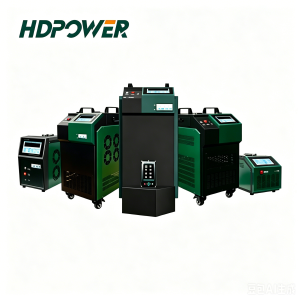
This modular approach allows maintenance teams to separate rapid diagnosis, capacity verification, activation, and final performance evaluation instead of relying on one measurement.
Conclusion
Lead Acid Battery Reconditioning Equipment is best understood as part of a measurable battery maintenance process rather than simply a machine for “repairing” old batteries.
The most practical workflow is:
Test the battery → Identify the degradation condition → Perform controlled charging/discharging → Activate and cycle suitable batteries → Retest performance → Make a maintenance or replacement decision.
For UPS systems, telecommunications, substations, data centers, railway systems, and other critical-power applications, this approach can help maintenance teams make decisions based on actual battery performance.
When the battery condition is potentially recoverable, professional reconditioning equipment can provide a controlled way to combine activation, charging, discharging, cycling, and verification. The result is a more systematic maintenance process with measurable data and better traceability.
For industrial users looking to improve battery maintenance efficiency and avoid unnecessary replacement of suitable lead-acid batteries, Lead Acid Battery Reconditioning Equipment can become an important part of a professional battery testing and maintenance strategy.