Introduction
Lithium battery packs rely on multiple cells connected in series and parallel to deliver the required voltage and capacity. Ideally, the cells within a module should maintain similar voltage, capacity, internal resistance, and charging characteristics. In real-world applications, however, differences gradually develop as batteries experience repeated cycling, temperature variations, aging, and different self-discharge rates.
When these differences become significant, the battery module may no longer operate as a consistent electrical unit. One cell may reach its upper voltage limit earlier during charging, while another may reach its lower limit earlier during discharge. The result can be reduced usable capacity, shortened operating time, and more frequent battery maintenance.
This is why Lithium Battery Module Voltage Balancing is an important process for EV battery service, energy storage maintenance, battery repair, and battery refurbishment.
What Is Lithium Battery Module Voltage Balancing?
Lithium Battery Module Voltage Balancing refers to the process of reducing voltage differences between individual cells within a lithium battery module.
A typical lithium battery module contains multiple cells connected in series. Although the cells may have the same nominal specifications, their actual electrical characteristics can gradually diverge during operation.
Factors such as cell capacity, internal resistance, temperature, self-discharge rate, manufacturing variation, and aging can cause different cells to charge and discharge at different rates.
For example, if one cell has a lower available capacity than the others, it may reach the lower voltage limit earlier during discharge. During charging, a higher-voltage cell may reach the upper voltage limit before the remaining cells are fully charged.
The entire module can therefore become limited by individual cells rather than by the average voltage of the battery.
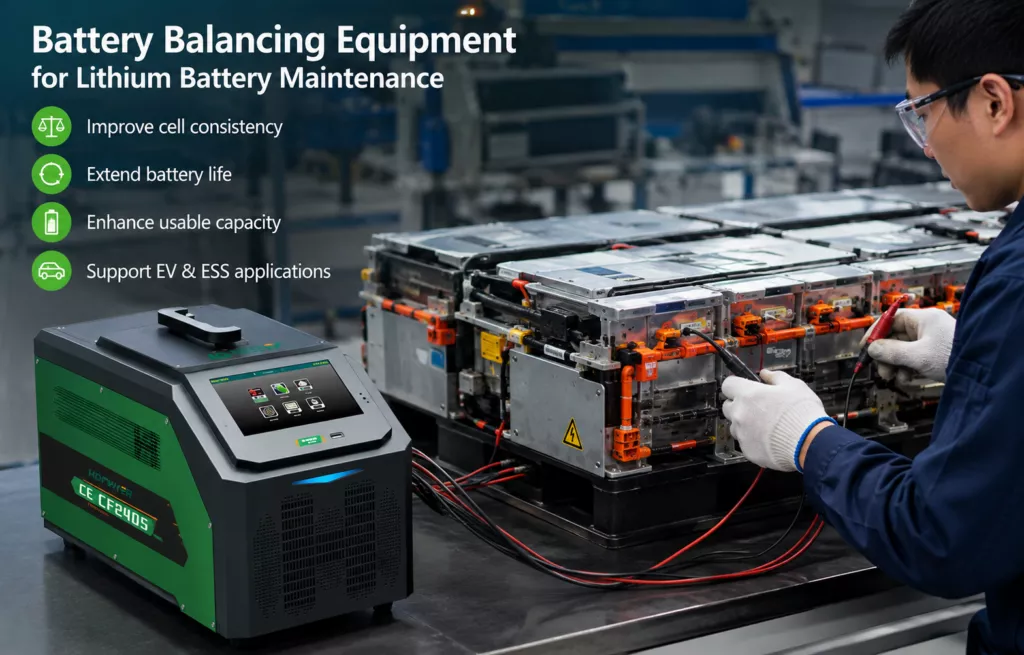
Professional balancing equipment is designed to control the electrical condition of individual cells or groups of cells so that their voltage becomes more consistent.
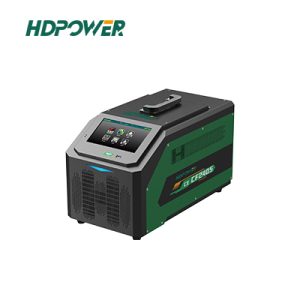
Lithium Battery Equalizing Tester can be used as part of this maintenance process when technicians need controlled charging, discharging, and equalization functions.
Why Does a Battery Module Develop Voltage Differences?
Voltage inconsistency does not necessarily mean that a battery has immediately failed. It can develop gradually during normal service.
Common causes include:
Different Cell Capacity
Cells with different actual capacities will reach charging and discharging limits at different times. Even relatively small capacity differences can become more noticeable after repeated cycles.
Internal Resistance Differences
Cell internal resistance affects voltage response under current. A cell with higher resistance may show a larger voltage deviation during charging or discharging.
Unequal Self-Discharge
If one cell loses charge faster than neighboring cells while the battery is idle, its voltage can gradually become lower than the others.
Temperature Variation
Temperature has a direct influence on lithium battery electrical behavior. Cells operating under different thermal conditions may exhibit different voltage and current characteristics.
Battery Aging
As cells age, their capacity and internal resistance can change at different rates. This can gradually increase the difference between individual cells.
Long-Term Storage
Batteries that remain unused for extended periods may develop differences in state of charge between cells. A maintenance process may therefore be required before the battery returns to service.
For battery technicians, identifying the cause of a voltage difference is important because balancing alone cannot correct every type of battery degradation.
What Happens When Cell Voltage Differences Become Too Large?
The impact of voltage inconsistency depends on the battery chemistry, operating conditions, cell condition, and severity of the difference.
One common problem is that the battery management system reaches a protection threshold because of a single cell.
During charging, the highest-voltage cell may reach its upper limit before the other cells. The BMS may then stop or restrict charging even though other cells have not reached the same level.
During discharge, the lowest-voltage cell may reach its lower limit first. The BMS may again stop discharge to protect the battery.
This can result in:
- Reduced usable capacity
- Shorter operating range
- Earlier charge or discharge cutoff
- Uneven cell aging
- Increased maintenance requirements
- Inconsistent module performance
Therefore, technicians should not evaluate a lithium battery module only by measuring its total pack voltage. Individual cell information is often necessary to identify the actual source of the problem.
How to Test a Lithium Battery Module Before Balancing
Balancing should not automatically be the first operation performed when a voltage difference is discovered.
A structured inspection can help determine whether the difference is caused by normal state-of-charge variation, wiring problems, cell degradation, or another issue.
A practical procedure includes:
Step 1: Measure Individual Cell Voltages
Record the voltage of every cell or cell group within the module.
The objective is to identify the highest and lowest values and determine the overall voltage spread.
Step 2: Check the Battery Configuration
Confirm the number of series-connected cells, nominal voltage, chemistry, and manufacturer-specified operating limits.
This information is necessary when selecting appropriate maintenance parameters.
Step 3: Inspect Connections
Abnormal readings should not always be attributed to the cells themselves. Loose connections, damaged wires, connector resistance, or incorrect measurement points can also produce abnormal voltage readings.
Step 4: Evaluate Cell Condition
If one cell repeatedly shows a significantly different voltage after charging, resting, or discharging, technicians should investigate its capacity and internal resistance before deciding that balancing alone is sufficient.
Step 5: Determine the Maintenance Method
Depending on the test results, the appropriate procedure may include charging, discharging, equalization, cycling, cell replacement, or further diagnostic testing.
This approach is more reliable than simply trying to reduce the voltage difference without understanding its cause.
How Does Lithium Battery Module Voltage Balancing Work?
Professional equipment can use controlled charging, discharging, or equalization processes to reduce the difference between cells.
A lower-voltage cell may receive controlled charging, while a higher-voltage cell may be discharged according to the selected maintenance strategy.
The exact operating method depends on the battery chemistry, cell voltage range, maintenance equipment, and target parameters.
For professional applications, several technical characteristics are particularly important.
High Voltage Measurement Accuracy
When the target is to correct relatively small voltage differences, measurement accuracy becomes critical.
For example, the HDPOWER CE-CF series provides voltage control accuracy of up to ±1 mV and current accuracy of ±10 mA on applicable models.
This level of control allows technicians to monitor cell voltage changes more precisely during maintenance.
Independent Channels
Independent channel control allows different cells or cell groups to be managed separately.
This is particularly useful when individual cells have different initial conditions. The CE-CF series uses independent channels so that connected cells can be managed without one channel directly interfering with another.
Charging, Discharging and Equalization
A practical maintenance system should be able to support different operating conditions rather than treating every battery problem in exactly the same way.
The CE-CF series supports charging, discharging, and equalization maintenance modes, allowing technicians to select a procedure according to the battery condition.
End Depolarization
Voltage can sometimes rebound after an electrical maintenance process is stopped.
For this reason, end-depolarization technology can be useful when the objective is to achieve more stable voltage consistency after equalization. HDPOWER’s CE-CF series incorporates an end-depolarization process as part of its maintenance approach.
Choosing Equipment for Lithium Battery Module Balancing
The appropriate equipment should be selected according to the actual battery rather than simply its advertised maximum current.
Important specifications include:
Battery chemistry:
Confirm compatibility with the chemistry being serviced, such as LFP, NCM, NCA, or LTO.
Cell voltage range:
The equipment should cover the operating voltage range of the individual cells.
Number of cells:
Different battery modules may contain different numbers of series-connected cells. Scalable equipment can be more practical for workshops servicing multiple battery designs.
Balancing current:
Higher current can shorten maintenance time in suitable applications, but the current must remain within the battery manufacturer’s requirements.
Measurement accuracy:
Accurate voltage measurement is particularly important when the target difference is small.
Data management:
For professional maintenance operations, recording test results provides useful traceability and allows technicians to compare conditions before and after maintenance.
Protection functions:
Overvoltage, undervoltage, overcurrent, overtemperature, short-circuit, and connection protection are important when working with lithium battery cells.
The CE-CF series, for example, supports multiple channel configurations, data communication through RS485/USB, and protection functions designed for lithium battery maintenance.
Lithium Battery Module Voltage Balancing for EV Applications
Electric vehicle battery packs contain many interconnected cells and modules, making consistency an important maintenance consideration.
In an EV service center, technicians may encounter a battery pack where the overall voltage appears normal but individual cell or module voltages differ significantly.
In such cases, cell-level measurement can provide more useful information than pack-level voltage alone.
A typical EV battery maintenance workflow can include:
Initial inspection → Cell voltage measurement → Voltage difference analysis → Balancing or maintenance → Verification
The objective is not simply to make every voltage reading identical. Technicians should also determine whether the cells have sufficient capacity and whether any abnormal cell requires replacement.
For broader EV battery service work, Lithium Battery Maintenance Tester can complement module-level balancing by providing controlled charging, discharging, cycling, and performance evaluation. HDPOWER’s CM-CF series is designed for lithium battery maintenance applications involving controlled charge/discharge and cycling operations.

Lithium Battery Module Balancing for Energy Storage
Energy storage systems can also benefit from systematic battery module maintenance.
Large battery systems may contain numerous cells and modules operating through repeated charge-discharge cycles. Over time, differences between cells can increase because of aging, operating temperature, and different electrical characteristics.
For maintenance teams, module-level voltage information can help identify inconsistencies before they develop into larger performance problems.
Depending on the system configuration, balancing may be combined with:
- Cell voltage measurement
- Temperature monitoring
- Capacity testing
- Charge-discharge testing
- Internal resistance testing
- Data recording
- Post-maintenance verification
This creates a more complete maintenance workflow instead of relying on voltage balancing as an isolated operation.
Balancing Does Not Replace Battery Diagnosis
One important principle should always be kept in mind: voltage balancing cannot repair every type of cell degradation.
If a cell has substantially reduced capacity, abnormal self-discharge, excessive internal resistance, or physical damage, balancing its voltage may temporarily reduce the voltage difference without solving the underlying problem.
For this reason, technicians should distinguish between:
Voltage inconsistency
and
Cell degradation or failure
A battery that becomes consistent after balancing and maintains that consistency during subsequent testing may be suitable for continued service.
A cell that quickly deviates again may require additional diagnosis or replacement.
For this reason, Lithium Battery Diagnostics Equipment can be used alongside balancing equipment when a deeper assessment of battery condition is required.

How to Verify the Battery After Balancing
The maintenance process should not end immediately after the voltage difference reaches the target range.
A post-maintenance verification can include:
- Rechecking individual cell voltages.
- Comparing the maximum and minimum cell voltage.
- Monitoring voltage behavior after resting.
- Performing controlled charging or discharging.
- Checking capacity when necessary.
- Recording the final maintenance data.
The purpose is to determine whether the improved voltage consistency is stable under actual operating conditions.
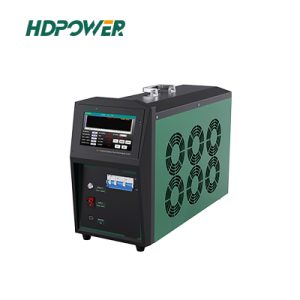
For applications where capacity verification is required, Lithium Battery Pack Discharge Tester can be incorporated into the workflow to evaluate pack-level discharge performance.
This distinction is important because a battery may achieve good voltage consistency while still having reduced capacity due to aging.
CE-CF Lithium Battery Module Maintenance Solution
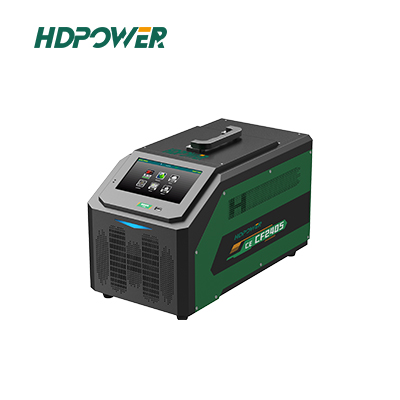
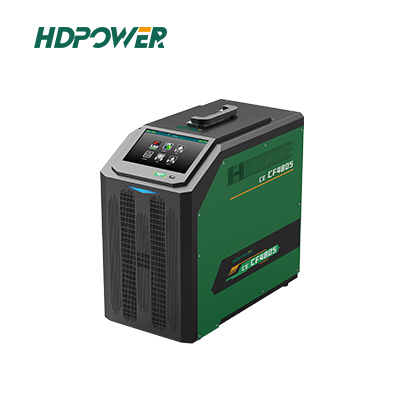
HDPOWER’s CE-CF series is designed specifically for lithium battery module voltage difference maintenance.
The series supports independent channel operation and can perform charging, discharging, and equalization maintenance. Depending on the model, the system supports different channel configurations and can be expanded for multiple battery strings. The equipment is designed for mainstream lithium battery chemistries and provides high-precision voltage and current control.
For high-current maintenance requirements, the CE-CF0530 series provides up to 30 A per channel on applicable configurations and supports automatic charging, discharging, and equalization.
These capabilities make the CE-CF series suitable for applications including EV battery repair, energy storage battery maintenance, battery refurbishment, battery manufacturer after-sales service, and other lithium battery maintenance scenarios.
Conclusion
Lithium Battery Module Voltage Balancing is an important part of maintaining consistency in multi-cell lithium battery systems. Voltage differences can develop because of variations in capacity, internal resistance, self-discharge, temperature, and aging.
A professional maintenance process should begin with individual cell voltage measurement and condition assessment rather than immediately applying a balancing procedure. After balancing, the battery should also be verified through appropriate charging, discharging, capacity, or other electrical tests.
For EV service centers, energy storage maintenance teams, battery repair companies, and battery manufacturers, the right balancing equipment should provide suitable voltage accuracy, balancing current, cell count, chemistry compatibility, independent channel control, data management, and safety protection.
By combining accurate diagnosis with controlled voltage balancing and post-maintenance verification, technicians can establish a more reliable workflow for lithium battery module maintenance and make better-informed decisions about repair, reuse, or replacement.
For lithium battery service applications, the key is not simply reducing the voltage difference. It is understanding why the difference occurred, correcting it with appropriate parameters, and verifying whether the improvement remains stable after maintenance.