-
Introduction
Lithium battery modules are widely used in electric vehicles, industrial energy storage systems, telecommunications backup power, and other applications requiring reliable electrical energy storage. As battery technology continues to develop, manufacturers and service providers need effective methods to evaluate module performance, identify potential defects, and maintain consistent operating characteristics.
Among the essential evaluation methods, Lithium Battery Module Charge Discharge Testing plays an important role in determining whether a battery module can operate within its specified electrical parameters. By applying controlled charging and discharging conditions, engineers can examine voltage behavior, current response, capacity performance, and operating stability.
Unlike a simple voltage measurement, a controlled charge and discharge test provides information about how a battery module performs under actual electrical loads. It helps identify abnormal behavior that may not be apparent during a static inspection.
This article explains the working principles, testing procedures, key evaluation parameters, and equipment selection considerations for lithium battery module testing, with particular attention to electric vehicle and energy storage applications.
-
What Is Lithium Battery Module Charge Discharge Testing?
Lithium battery module charge discharge testing is a process of evaluating a battery module through controlled electrical charging and discharging operations.
A lithium battery module generally consists of multiple individual cells connected in series, parallel, or a combination of both. These cells work together to provide the voltage and capacity required by the target application.
During testing, specialized equipment applies predefined charging or discharging conditions while monitoring relevant electrical parameters. The collected data helps engineers understand the module’s electrical response and identify differences between expected and actual performance.
A typical testing process may include:
- Constant-current charging to evaluate charging behavior.
- Constant-voltage charging to complete the charging stage under controlled conditions.
- Constant-current discharging to examine voltage response under a specified current.
- Constant-power discharging to simulate applications with relatively stable power demand.
- Cyclic charge and discharge operations to observe performance over repeated test cycles.
- Data recording and analysis to support quality inspection and maintenance decisions.
The specific testing program depends on the battery chemistry, module design, rated voltage, capacity, manufacturer specifications, and intended application.
For lithium iron phosphate (LFP) and nickel manganese cobalt (NMC) battery modules, for example, the recommended voltage limits and charging conditions are different. Therefore, test parameters must always follow the relevant battery manufacturer’s specifications.
-
Why Is Lithium Battery Module Performance Testing Important?
Battery modules may experience performance differences during manufacturing, assembly, operation, and long-term storage. Even when individual cells initially meet their specifications, variations in aging, temperature, internal resistance, and usage history can affect the performance of the assembled module.
A systematic testing process provides several practical benefits.
3.1 Quality Control During Manufacturing
Battery manufacturers need to verify module performance before products proceed to subsequent assembly stages or final delivery.
Charge and discharge testing can help identify abnormal voltage behavior, unexpected capacity results, unstable current response, and other issues requiring further investigation.
By establishing consistent test procedures, manufacturers can improve production traceability and make quality evaluation more repeatable.
3.2 Performance Evaluation for Energy Storage Systems
Energy storage systems often contain multiple battery modules connected to form larger battery assemblies.
Differences in module capacity, voltage characteristics, and operating conditions can affect overall system performance. Testing individual modules before installation or replacement helps engineers evaluate whether the modules meet the required electrical specifications.
This is particularly important for commercial and industrial energy storage projects, where operational reliability and maintenance efficiency are essential.
3.3 Maintenance and Troubleshooting
During service life, lithium battery modules may develop abnormal performance characteristics.
For example, a module may reach its discharge voltage limit earlier than expected, exhibit unstable voltage under load, or show inconsistent charging behavior.
A controlled charge and discharge test provides measurable data that can help maintenance technicians determine whether additional inspection, balancing, repair, or replacement is necessary.
3.4 Verification After Repair or Module Replacement
When an energy storage or EV battery system undergoes maintenance, replacement modules should be evaluated before being returned to service.
Testing can help confirm that the replacement module operates within its specified voltage and current limits and that its measured performance is appropriate for the intended system.
-
Key Parameters in Lithium Battery Module Testing
Reliable testing requires more than simply checking whether a module can charge or discharge. Engineers should select appropriate electrical parameters and evaluation criteria according to the battery specifications.
4.1 Voltage
Voltage is one of the most important parameters in lithium battery module testing.
During charging, engineers monitor the voltage increase and confirm that the module remains within the manufacturer’s specified upper voltage limit.
During discharging, the voltage response provides information about how the module performs under different load conditions.
Unexpected voltage fluctuations, early voltage drops, or differences between modules may indicate issues that require further diagnosis.
4.2 Charging and Discharging Current
Current determines the rate at which electrical energy enters or leaves the battery module.
Constant-current (CC) charging and discharging provide controlled operating conditions for evaluating electrical response.
The selected current should be appropriate for the module’s rated capacity and permitted operating range. Excessive current may create unnecessary thermal stress or introduce safety risks.
4.3 Discharge Capacity
Discharge capacity represents the amount of electrical charge delivered during a discharge process, generally expressed in ampere-hours (Ah).
It is commonly calculated by integrating discharge current over time:
Q = ∫ I(t) dt
A controlled discharge test allows engineers to compare measured capacity with the manufacturer’s specified value or an established reference result.
However, the result depends on test current, temperature, cutoff voltage, and other conditions. Meaningful comparisons require consistent testing parameters.
4.4 Power and Energy
Power represents the instantaneous rate of electrical energy transfer and is commonly expressed in watts (W) or kilowatts (kW).
Energy is the total electrical output over a specified period and is generally expressed in watt-hours (Wh) or kilowatt-hours (kWh).
Constant-power discharge testing can be useful when evaluating modules intended for applications with relatively stable power requirements.
4.5 Temperature
Battery temperature influences charging behavior, discharge performance, and long-term reliability.
Where appropriate, temperature monitoring should be included in the test setup. Abnormal temperature increases may indicate excessive current, poor electrical connections, inadequate cooling, or internal battery problems.
Testing must remain within the manufacturer’s permitted temperature range.
-
Common Charge and Discharge Testing Methods
Different testing methods are used depending on the purpose of the evaluation.
5.1 Constant Current (CC) Charging
In constant-current charging, the tester supplies a predefined current to the battery module.
The module voltage gradually increases as charging proceeds. Engineers monitor voltage and temperature to ensure that the charging process remains within the permitted limits.
CC charging is widely used in controlled battery testing because it provides a consistent current condition.
5.2 Constant Voltage (CV) Charging
During constant-voltage charging, the charging equipment maintains a specified voltage while controlling the current according to the battery’s charging characteristics and configured limits.
For lithium-ion batteries, CC-CV charging is a commonly used charging strategy. The transition between the two stages depends on the battery chemistry and manufacturer’s charging requirements.
5.3 Constant Current (CC) Discharging
Constant-current discharging applies a predefined discharge current to the module.
The tester records voltage and discharge time until the configured cutoff condition is reached.
This method is useful for evaluating capacity under a controlled current condition and comparing results between modules tested under the same parameters.
5.4 Constant Power (CP) Discharging
In constant-power discharging, the equipment adjusts discharge current to maintain a predefined power level within its operating limits.
This method is particularly relevant when evaluating modules for applications where the connected system requires relatively stable power output.
CC and CP testing provide different perspectives on module performance. The appropriate method depends on the intended application and the required evaluation criteria.
-
How to Perform a Lithium Battery Module Charge Discharge Test
A standardized procedure helps improve testing consistency and reduce operational risks.
Step 1: Inspect the Battery Module
Before connecting test equipment, check the module’s physical condition, terminals, connectors, insulation, and identification information.
Look for visible damage, swelling, leakage, corrosion, or signs of overheating. Damaged modules should not be tested until they have been assessed by qualified personnel.
Step 2: Confirm Battery Specifications
Identify the battery chemistry, rated voltage, rated capacity, permitted charging current, permitted discharging current, and voltage limits.
Confirm that the tester supports the module’s electrical specifications.
Step 3: Configure the Testing Parameters
Select the appropriate charging or discharging mode and configure the operating current, voltage limits, power settings, test duration, and termination conditions.
The parameters must be consistent with the battery manufacturer’s technical documentation.
Step 4: Connect the Testing Equipment
Connect the battery module to the tester using correctly rated cables and suitable protective devices.
Verify polarity, connection security, insulation, and grounding requirements where applicable.
For high-voltage modules, testing should be performed by trained personnel using appropriate high-voltage safety procedures.
Step 5: Execute the Charge or Discharge Test
Start the configured testing program and monitor voltage, current, temperature, and other available measurements.
If an abnormal condition occurs, stop the test and investigate before continuing.
Step 6: Record and Analyze the Results
After the test, review the recorded data, including voltage changes, current behavior, discharge duration, calculated capacity, and temperature trends where available.
Compare the results with the module’s specifications and previous test records.
Step 7: Generate a Test Report
A structured report should include module identification, testing date, operating conditions, configured parameters, measured results, and any abnormal observations.
This information supports quality traceability, maintenance planning, and subsequent performance comparisons.
-
How to Select Battery Module Charge Discharge Equipment
Selecting suitable equipment is essential for obtaining reliable results and supporting different battery testing requirements.
The following factors should be considered.
7.1 Voltage and Current Range
The equipment must support the battery module’s rated voltage and the required charging and discharging current.
For manufacturers and testing facilities working with different module specifications, configurable operating ranges can provide greater flexibility.
Always verify the equipment’s actual rated limits rather than relying only on general product descriptions.
7.2 Multiple Operating Modes
A versatile tester should support the charging and discharging methods required by the application.
Depending on the model, useful functions may include CC/CV charging, CC/CP discharging, and programmable cyclic testing.
These functions allow engineers to establish different test procedures without relying on separate equipment for every operation.
7.3 Data Recording and Reporting
Automatic data recording helps reduce manual work and makes test results easier to review.
Look for equipment that can record key electrical parameters, store test histories, and export results for further analysis.
Report generation is especially useful for production inspection, maintenance documentation, and quality management.
7.4 Protection and Operational Safety
Battery testing equipment should incorporate suitable protection functions according to its design and application.
Relevant considerations include overvoltage, overcurrent, overheating, reverse polarity, and abnormal operating conditions.
The protection functions available should be checked against the equipment’s technical specifications.
7.5 Compatibility With Different Battery Chemistries
LFP and NMC batteries have different electrical characteristics and charging requirements.
For testing organizations handling multiple battery types, equipment configuration flexibility is important.
The tester should support the required voltage and current ranges and allow test parameters to be configured according to the applicable battery specifications.
-
HDPOWER Solutions for Lithium Battery Charge and Discharge Testing
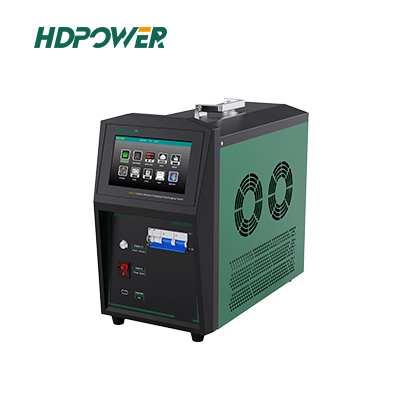
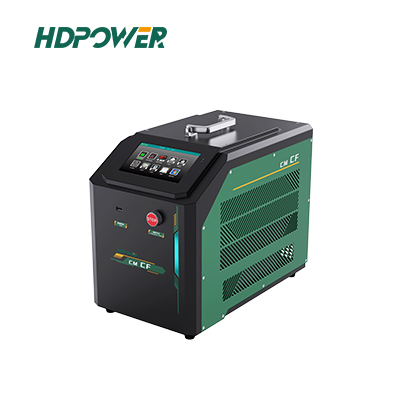
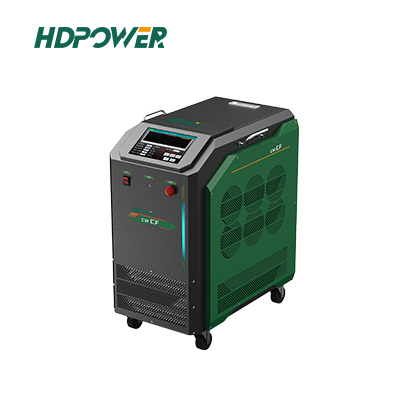
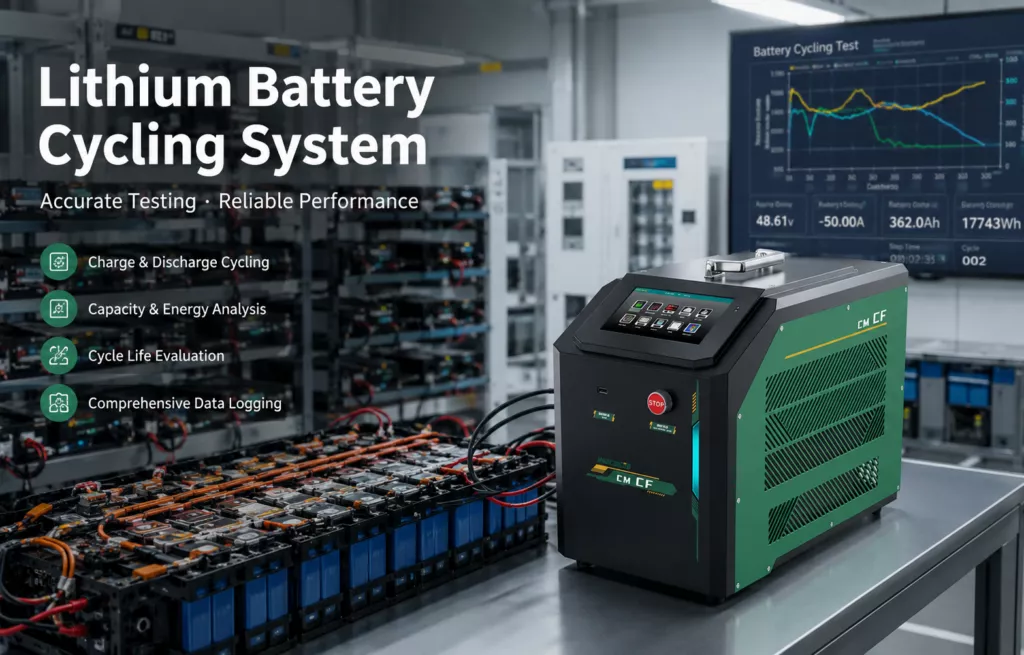
HDPOWER provides a range of lithium battery testing and maintenance solutions for battery manufacturers, EV service providers, energy storage companies, and other industrial users. The CM-CF Series Lithium Battery Charge and Discharge Tester is designed to support controlled charging, discharging, and cyclic testing applications.
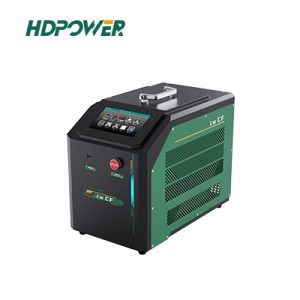
The CM-CF series lithium battery charge and discharge testing equipment is designed to support controlled charging, discharging, and cyclic testing applications.
Depending on the selected model and configuration, available functions may include:
- CC/CV charging and CC/CP discharging modes.
- Programmable charge and discharge cycles.
- Configurable current and voltage parameters.
- Testing support for applicable lithium battery chemistries, including LFP and NMC.
- Test data recording and report export.
- Optional cell voltage and temperature monitoring on supported configurations.
These capabilities help users establish repeatable testing procedures for battery module evaluation, performance comparison, and maintenance verification.
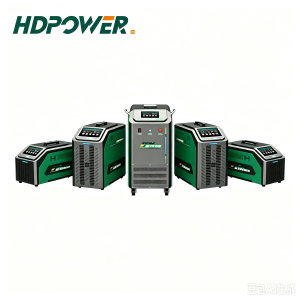
For users evaluating different testing requirements, HDPOWER’s Lithium Battery Tester Series offers solutions for various lithium battery testing and maintenance applications. Users can explore the available models and configurations to identify equipment suitable for their specific voltage, current, and monitoring requirements.
-
Conclusion
Lithium battery module charge discharge testing is an important part of battery quality inspection, performance evaluation, and maintenance management.
By applying controlled CC/CV charging, CC/CP discharging, and appropriate cyclic testing procedures, engineers can evaluate voltage behavior, current response, capacity, and operating stability under defined conditions.
Choosing suitable testing equipment is equally important. Voltage and current range, operating modes, data recording, protection functions, and battery chemistry compatibility should all be considered before making a selection.
For EV battery applications, energy storage projects, and industrial battery testing facilities, HDPOWER’s CM-CF series provides configurable solutions for lithium battery charging and discharging evaluation.
Contact HDPOWER to discuss your battery module testing requirements and explore our Lithium Battery Charge and Discharge Solutions for EV battery testing, energy storage applications, and industrial battery maintenance.