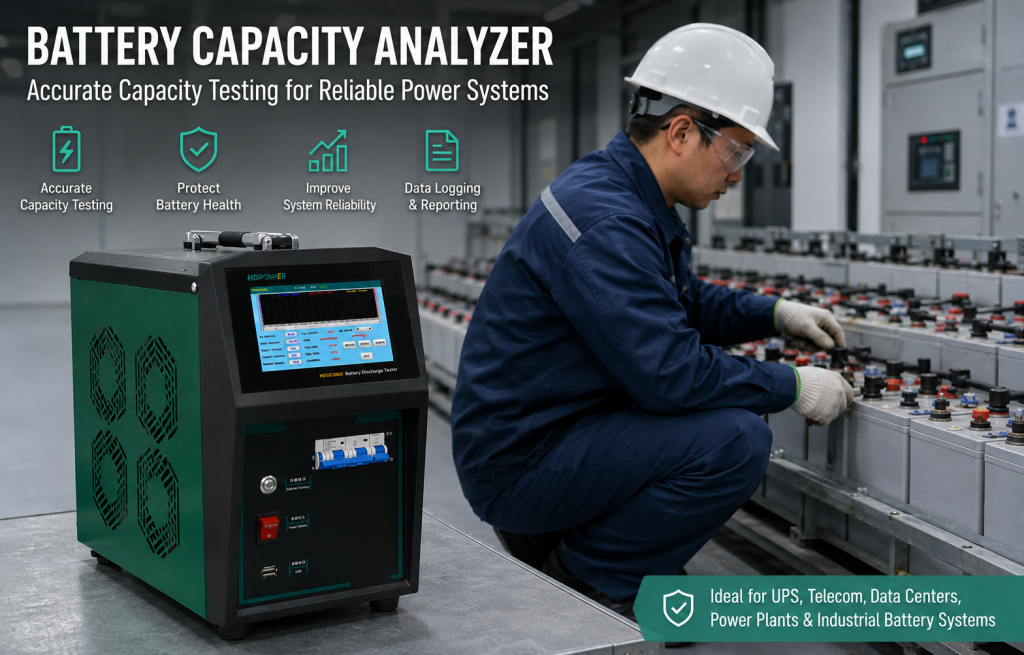
Industrial battery systems play a critical role in maintaining uninterrupted power across data centers, telecommunications networks, substations, transportation infrastructure, and energy storage facilities. When the main power supply fails, these batteries must deliver dependable backup power within a limited response time.
However, battery aging, sulfation, temperature variations, prolonged standby operation, and inconsistent maintenance can gradually reduce battery performance. A battery may show a normal terminal voltage while having significantly reduced usable capacity. Without proper testing, these problems may remain undetected until an actual power outage occurs.
Industrial battery testing provides a systematic way to evaluate battery condition, verify available capacity, identify deteriorating cells, and determine whether a battery system can continue meeting operational requirements.
For maintenance engineers and facility operators, selecting the right testing method and equipment is essential for improving power reliability, reducing unnecessary battery replacement, and maintaining accurate service records.
1. Why Industrial Battery Testing Is Essential
Industrial batteries are often installed in systems where unexpected power interruptions can cause substantial operational and financial losses.
For example, a UPS battery bank must provide sufficient backup time for critical servers and electrical equipment. Telecommunications operators depend on standby batteries to maintain network availability, while substations require reliable DC power for protection, control, and switching operations.
Regular battery testing helps maintenance teams address several important challenges.
Detecting Hidden Capacity Degradation
Battery capacity naturally decreases with age and operating conditions. However, the deterioration rate is not always consistent across individual batteries within the same bank.
A battery can maintain an apparently normal open-circuit voltage but fail to deliver its rated capacity under load.
Capacity testing helps determine how much usable energy a battery can actually provide under defined discharge conditions. This information is particularly important when evaluating aging battery banks and planning replacement schedules.
Identifying Weak Batteries Before Failure
In a series-connected battery string, individual batteries may experience different aging rates.
A single weak battery can affect the performance of the entire string. Identifying abnormal voltage and internal resistance values during routine inspections helps engineers locate batteries that require further investigation.
Improving Maintenance Efficiency
Without standardized testing procedures, maintenance teams may rely heavily on visual inspections and occasional voltage measurements.
Professional testing equipment provides measurable results, allowing engineers to compare historical records, identify performance changes, and make maintenance decisions based on actual battery data.
2. Common Industrial Battery Testing Methods
Different testing methods provide different information. No single measurement can fully describe the condition of an industrial battery.
A practical maintenance program combines rapid diagnostic measurements with controlled discharge testing when accurate capacity verification is required.
2.1 Battery Voltage Measurement
Voltage measurement is one of the simplest ways to inspect battery condition.
Engineers can measure individual battery voltages and compare them with manufacturer specifications or established maintenance limits.
Unusual voltage differences may indicate charging problems, cell imbalance, or battery deterioration.
However, voltage measurement alone cannot accurately determine the remaining usable capacity of a battery.
A battery may show an acceptable voltage at rest but experience excessive voltage drop when a load is applied.
Therefore, voltage measurement should be treated as an initial inspection method rather than a complete capacity assessment.
2.2 Internal Resistance Testing
Internal resistance testing is widely used for routine inspection of industrial battery banks.
As batteries age, their internal electrochemical characteristics change. Increased internal resistance may indicate deterioration, sulfation, corrosion, or other abnormal conditions.
An internal resistance tester measures battery voltage and resistance characteristics, helping maintenance engineers identify batteries that differ significantly from the rest of the string.
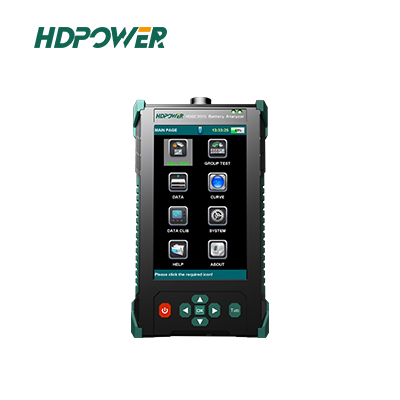
The HDPOWER HDGC3915 uses an AC discharge measurement method and supports individual battery and battery-group measurements. It can perform online and offline testing, providing a convenient solution for routine inspections in UPS rooms, telecommunications facilities, and substations.
However, internal resistance testing is primarily a diagnostic and screening method. It should not automatically replace a controlled discharge test when actual battery capacity needs to be verified.
2.3 Controlled Battery Discharge Testing
Controlled discharge testing is one of the most direct methods of verifying usable battery capacity.
During the test, a battery or battery bank is discharged at a specified current or power level until the defined termination condition is reached.
The testing equipment records important parameters, including:
- Battery voltage
- Discharge current
- Discharge duration
- Discharged capacity
- Individual cell voltage, when supported
For a constant-current discharge test, the basic capacity calculation is:
Capacity (Ah) = Discharge Current (A) × Discharge Time (h)
For example, if a battery delivers 100 A for 8 hours under the specified test conditions, its measured discharge capacity is 800 Ah.
Actual test results must be evaluated against the battery manufacturer’s rated capacity, specified discharge rate, temperature conditions, and termination voltage.
A controlled discharge test provides more meaningful information about battery performance under load than a simple voltage inspection.
2.4 Battery Activation and Maintenance Testing
Some lead-acid batteries experience sulfation and reduced active material utilization after prolonged standby operation or improper charging.
For suitable batteries, controlled charge-discharge cycling and activation procedures may help improve battery performance.
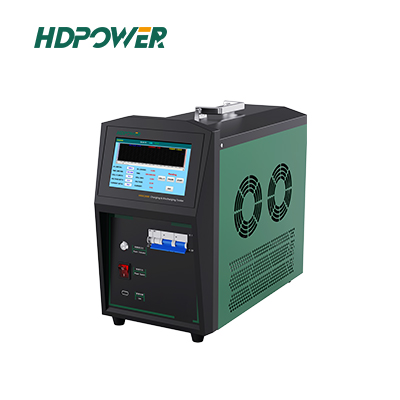
The HDPOWER HDGC3932 Battery Activator integrates constant-current discharge, intelligent charging, and cyclic charge-discharge functions for lead-acid battery maintenance.
It is important to distinguish activation from capacity verification. Activation is a maintenance process, while a subsequent controlled capacity test is needed to determine whether the battery’s performance has improved.
3. Choosing the Right Industrial Battery Testing Equipment
The appropriate testing equipment depends on battery chemistry, system voltage, capacity, maintenance objectives, and operating environment.
A professional testing program may require several complementary instruments.
Battery Analyzers for Rapid Condition Screening
For maintenance teams responsible for inspecting large numbers of individual batteries, portable analyzers offer an efficient way to identify abnormal batteries.
Important selection factors include:
- Internal resistance measurement range and accuracy
- Voltage measurement range
- Individual battery and battery-group testing
- Online and offline measurement capability
- Data storage and report export
- Resistance to electrical interference
The HDPOWER HDGC3915 Battery Analyzer is designed for professional battery inspection. Its AC discharge measurement method supports voltage and internal resistance measurement, helping technicians evaluate battery technical condition and identify batteries requiring additional testing.
Battery Discharge Testers for Capacity Verification
When the objective is to determine actual usable capacity, a controlled discharge tester is generally more appropriate.
For industrial lead-acid battery banks, equipment should be selected according to the DC system voltage and required discharge current.
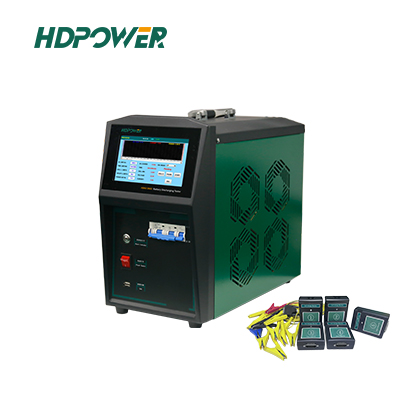
For example, the HDPOWER HDGC3980 Battery Discharging Tester supports multiple industrial DC voltage configurations, including 48V, 110V, 220V, 380V, and 480V systems, depending on the model.
It monitors discharge voltage, current, time, and capacity throughout the testing process. Its 7-inch touchscreen, data storage, and communication interfaces support on-site operation and result management.
For larger battery banks, engineers should also consider maximum discharge current, load control stability, thermal management, individual cell monitoring, and protection functions.
Lithium Battery Pack Discharge Testers
Lithium battery packs used in electric vehicles and energy storage systems require testing equipment designed for their voltage range and battery configuration.
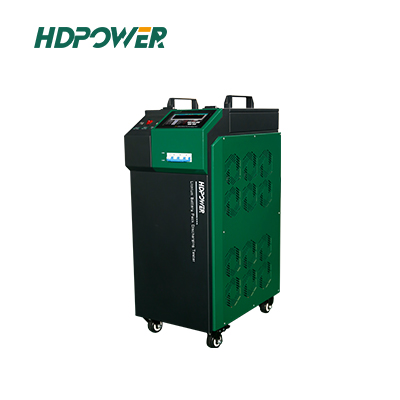
The HDPOWER CP-F series provides controlled constant-current and constant-power discharge functions for lithium battery packs.
The CP-F600 supports a DC voltage range of 10–600V, while the CP-F800 offers a 10–800V range.
These instruments are suitable for controlled discharging during battery repair, storage preparation, transportation, recycling, and other battery maintenance operations.
When selecting lithium battery discharge equipment, engineers should pay particular attention to voltage compatibility, discharge power, current limits, thermal management, and optional cell-level voltage and temperature monitoring.
4. Industrial Applications of Battery Testing
Industrial battery testing is relevant to many sectors where backup power reliability is essential.
UPS Systems and Data Centers
Data centers depend on UPS battery banks to maintain power during utility interruptions and support the transition to backup generators.
Battery capacity verification helps facility managers evaluate whether the available backup capacity meets the required operating duration.
Routine inspections can also identify weak batteries before they affect the reliability of the entire UPS system.
For large data centers, testing equipment should support efficient measurements, repeatable procedures, and exportable reports.
Telecommunications Base Stations
Telecommunications networks frequently use 48V backup battery systems to maintain service during power outages.
Because base stations may be distributed across large geographical areas, maintenance teams need practical equipment for on-site inspection and capacity testing.
Combining internal resistance screening with periodic discharge testing helps operators prioritize maintenance resources and identify batteries that require replacement or further evaluation.
Substations and Power Utilities
Substation DC battery systems supply critical protection, control, monitoring, and switching equipment.
A failure in the DC backup supply can affect the operation of important electrical infrastructure.
Testing procedures should therefore evaluate both individual battery condition and the performance of the complete battery bank.
Suitable discharge testing equipment can help maintenance engineers verify battery capacity under defined operating conditions and maintain traceable inspection records.
Rail Transit and Industrial Facilities
Rail transit systems, industrial control facilities, and emergency power installations also rely on dependable battery backup systems.
These applications may involve different DC voltage configurations and maintenance requirements.
Testing equipment should be selected according to the actual battery system, discharge current, installation environment, and required measurement functions.
Energy Storage Systems
Battery energy storage systems require performance evaluation throughout their operating life.
For lithium battery packs, controlled discharge testing can help evaluate available capacity and discharge behavior during maintenance, troubleshooting, and lifecycle assessment.
For larger systems, testing procedures must account for battery management system limits, pack configuration, temperature conditions, and manufacturer-defined operating parameters.
5. How to Establish an Effective Battery Testing Procedure
Purchasing professional testing equipment is only one part of an effective battery maintenance program. Consistent testing procedures are equally important.
The following workflow provides a practical starting point for industrial battery maintenance teams.
Step 1: Identify Battery Specifications
Record battery chemistry, rated voltage, rated capacity, manufacturer, installation date, and operating environment.
For battery banks, document the number of batteries, connection configuration, and system voltage.
Step 2: Perform Initial Inspections
Check battery appearance, terminal connections, corrosion, leakage, temperature, and other visible abnormalities.
Measure individual battery voltages and record any unusual differences.
Step 3: Conduct Diagnostic Measurements
Use a suitable battery analyzer to measure voltage and internal resistance.
Compare the results with manufacturer recommendations, historical records, and other batteries in the same string.
Step 4: Perform Controlled Capacity Testing
When capacity verification is required, select an appropriate discharge current and termination voltage based on manufacturer specifications and the applicable maintenance procedure.
Monitor the discharge process and record voltage, current, duration, and discharged capacity.
Testing must be conducted with appropriate safety controls to prevent over-discharge, overheating, and unintended interruption of critical loads.
Step 5: Analyze Results and Plan Maintenance
Compare the measured capacity with the rated capacity and previous test results.
Identify batteries that require further investigation, maintenance, replacement, or more frequent monitoring.
For suitable lead-acid batteries, activation and maintenance procedures may be considered before conducting a follow-up capacity test.
Step 6: Generate and Maintain Test Reports
Save test parameters and results for future comparison.
A structured testing record helps maintenance teams identify long-term degradation trends, justify replacement decisions, and improve maintenance planning.
6. Important Factors When Selecting Battery Testing Equipment
For professional users, equipment selection should be based on actual maintenance requirements rather than product specifications alone.
Consider the following factors before purchasing:
Battery Compatibility: Confirm that the equipment supports the required battery chemistry, voltage range, and battery configuration.
Measurement Accuracy: Check voltage and current measurement accuracy, resolution, and the consistency of test results.
Discharge Capacity: Ensure that the maximum discharge current and power are sufficient for the battery bank being tested.
Safety Protection: Evaluate overvoltage, undervoltage, overcurrent, overheating, emergency shutdown, and other relevant protection functions.
Data Management: Storage, USB export, communication interfaces, and report generation can significantly improve maintenance efficiency.
Portability and Field Operation: Equipment used in substations, telecom sites, and distributed backup facilities should be convenient to transport and operate.
Manufacturer Support: For international buyers, technical documentation, customization capabilities, spare parts availability, and after-sales support are also important purchasing considerations.
7. HDPOWER Industrial Battery Testing Solutions
HDPOWER specializes in the development and manufacturing of battery testing, charging, discharging, and maintenance equipment for industrial applications.
Our battery testing solutions cover different testing requirements, from rapid battery condition screening to controlled capacity verification and battery maintenance.
The product portfolio includes:
- HDGC3915 Battery Analyzer: Measures voltage and internal resistance for rapid battery condition assessment.
- HDGC3932 Battery Activator: Integrates charging, discharging, and activation functions for suitable lead-acid battery maintenance.
- HDGC3980 Battery Discharging Tester: Supports controlled discharge testing and capacity measurement for industrial lead-acid battery banks.
- CP-F600 / CP-F800 Lithium Battery Pack Discharge Testers: Provide controlled discharge functions for lithium battery packs with different voltage requirements.
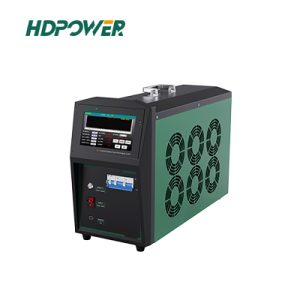
These products are designed for applications in UPS systems, telecommunications, power utilities, substations, rail transit, data centers, and energy storage.
As a battery testing equipment manufacturer, HDPOWER can provide product recommendations according to battery chemistry, system voltage, discharge current, and specific testing requirements.
Whether you are upgrading an existing battery maintenance program, establishing a new testing laboratory, or sourcing equipment for distributed backup power systems, selecting the right testing solution is essential for obtaining reliable and actionable results.
8. Frequently Asked Questions About Industrial Battery Testing
Q1: How often should industrial batteries be tested?
Testing frequency depends on battery chemistry, manufacturer recommendations, operating conditions, system criticality, and applicable maintenance standards. Critical backup systems generally require routine inspections and scheduled performance or capacity tests.
Q2: Can internal resistance testing replace a battery capacity test?
No. Internal resistance testing is useful for identifying abnormal battery conditions, but it does not directly measure the total usable capacity delivered during a discharge cycle. A controlled discharge test is needed when actual capacity verification is required.
Q3: What is the difference between a battery analyzer and a battery discharge tester?
A battery analyzer typically measures parameters such as voltage and internal resistance for rapid condition screening. A battery discharge tester applies a controlled load and records discharge performance to determine usable capacity.
Q4: Can the same equipment test lead-acid and lithium batteries?
Not necessarily. Lead-acid and lithium batteries have different voltage characteristics, charging requirements, protection mechanisms, and operating limits. Equipment should be selected according to the specific battery chemistry and application.
Q5: What information should I provide when requesting a battery testing equipment quotation?
It is helpful to provide battery chemistry, rated voltage, capacity, battery quantity, discharge current requirements, application, and preferred testing functions. These details allow the manufacturer to recommend a more suitable configuration.
Looking for reliable industrial battery testing equipment?
Contact HDPOWER with your battery specifications and testing requirements. Our engineering team can help you identify suitable testing equipment for your UPS, telecommunications, substation, industrial, or energy storage applications.