Industrial lead-acid batteries rarely age at the same rate. Differences in temperature, charging conditions, connections and operating history can cause units in the same bank to perform differently. A weak unit may affect the complete backup system.
For maintenance teams, the challenge is to determine whether an individual unit is suitable for conditioning, select a compatible procedure and verify the result with recorded data. This matters in UPS installations, telecommunications sites, substations and power plants where backup power must be dependable.
Lead acid battery cell conditioning is a controlled maintenance process that uses appropriate charging and discharging operations to address certain recoverable performance problems. It is not a universal repair method, and it cannot reverse every form of battery aging. This guide explains how industrial users can approach individual 2V, 6V and 12V lead-acid battery conditioning, and where dedicated equipment such as the HDPOWER HDGC3932 can fit into a professional maintenance workflow.
1. Why Individual Cells Need a Different Maintenance Approach
A battery bank is only as dependable as its weakest components. In a series-connected string, the same current passes through each cell or battery unit, but individual units may respond differently as they age. One cell may reach its discharge limit earlier, accept charge differently, or show a voltage response that differs from the rest of the string.
Treating the whole bank as if every cell were in the same condition can hide these differences. Replacing an entire group without further assessment may also increase maintenance costs when only a limited number of units have deteriorated.
Individual conditioning provides a more targeted option when inspection and testing indicate that a cell has a recoverable performance issue. It allows maintenance personnel to work on a compatible unit under controlled conditions, rather than applying an identical procedure to every battery in the installation.
A low voltage reading alone does not prove that a battery can be recovered. The cause may be sulfation, undercharging, a poor connection, electrolyte problems or internal damage. Diagnosis must come before treatment.
2. What Is Lead-Acid Battery Cell Conditioning?
Cell conditioning refers to a managed sequence of electrical operations intended to improve the performance of a battery that has not suffered irreversible damage. Depending on the battery design and its condition, the procedure may include controlled charging, constant-current discharging and repeated charge-discharge cycles.
During normal lead-acid battery operation, lead sulfate forms as the battery discharges and is converted during charging. If a battery remains undercharged or partially charged for extended periods, some sulfate deposits may become more difficult to convert through ordinary charging. Appropriate conditioning may help address recoverable conditions, but the result depends on the battery’s construction, age, history and actual state of health.
Conditioning should not be confused with equalization charging, routine recharging or capacity testing. These processes have different purposes and must be selected according to the battery manufacturer’s instructions. Sealed VRLA, AGM and gel batteries have specific charging limits. A procedure suitable for one design may damage another.
For this reason, professional maintenance requires more than a device that supplies current. It requires a defined procedure, compatible operating parameters, safety monitoring and a way to document what happened.
3. When Should an Individual Cell Be Considered for Conditioning?
Investigate persistent performance decline, including:
- Repeatedly abnormal voltage behavior compared with similar units under comparable conditions.
- Reduced discharge duration or delivered capacity.
- Unusual charging response, such as reaching a voltage limit too quickly or accepting current differently from expected.
- A history of prolonged partial-state-of-charge operation or insufficient charging.
- A measurable performance difference that remains after checking terminals, interconnections and the normal charging system.
These observations are not proof that conditioning will work. Review battery type, capacity, charging requirements, temperature and service history. Internal resistance, electrolyte condition and controlled discharge results may provide further evidence.
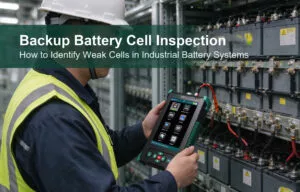
For a more detailed approach to identifying abnormal units, see our guide to Backup Battery Cell Inspection.
A cell with a cracked or swollen case, leakage, severe corrosion, suspected internal short circuit, abnormal heating or other structural damage should not be put through an activation process. It should be isolated and handled under the site’s battery safety and replacement procedures. Do not attempt to recover a battery simply because replacement is expensive.
4. A Practical Workflow for Individual Battery Conditioning
A consistent workflow avoids arbitrary settings and makes results easier to compare.
Step 1: Confirm Battery Type and Condition
Identify whether the unit is a flooded lead-acid, AGM, gel or another lead-acid design. Confirm its nominal voltage, rated capacity, manufacturer and service history. Inspect the case, terminals, connections and surrounding area. Check for leakage, deformation, corrosion and signs of overheating.
Before connecting any equipment, confirm that the battery is within the equipment’s supported voltage and current range. Review the manufacturer’s charging limits and the site’s electrical safety procedure. If the battery’s condition is uncertain or damage is suspected, stop and arrange a qualified inspection.
Step 2: Record Baseline Measurements
Record the battery’s initial terminal voltage and temperature, along with relevant test conditions. Where the maintenance plan requires it, conduct an appropriate capacity or discharge test using a suitable instrument and a defined test procedure.
A baseline is essential: voltage immediately after charging is not verified discharge capacity. Record the date, battery ID, test current, duration, cutoff criteria and results.
Step 3: Select a Compatible Conditioning Procedure
Choose charging and discharging parameters according to the battery manufacturer’s specifications, battery type and measured condition. Do not copy settings from another battery simply because its nominal voltage is the same. Capacity, construction and allowable charge rates also matter.
A dedicated activator can support constant-current discharge, intelligent charging and repeated cycles. Set suitable termination conditions and monitor voltage, current and temperature. Stop if abnormal heating, unstable voltage or a protection alarm occurs.
Step 4: Monitor and Document the Process
Record operating parameters and the battery’s response at each stage. Trends in voltage, current, temperature and discharge duration are more useful than one final reading.
Step 5: Verify the Result
After conditioning, allow the battery to reach the required rest or stabilization condition specified by the test procedure. Repeat the relevant measurements under comparable conditions. Compare the results with the baseline and the battery manufacturer’s acceptance criteria.
If the battery does not meet the required performance level, do not keep repeating cycles without technical justification. The decision may be monitoring, further diagnosis or replacement.
5. Considerations for 2V, 6V and 12V Lead-Acid Batteries
Nominal voltage is not the only parameter. Batteries with the same voltage may have different capacities, designs and allowable charging currents.
2V cells are commonly used as individual units in industrial stationary battery strings. Their maintenance is often part of a larger DC backup system, so the cell’s role, string configuration and site procedure must be understood before it is disconnected or serviced.
6V batteries may be found in particular industrial and standby applications. Their internal construction and capacity vary by model. The operator should confirm the manufacturer’s charging limits rather than assume that a 6V unit can use settings derived from a 2V cell.
12V batteries are widely used in UPS and other backup-power configurations. They may contain multiple internal cells, so terminal measurements represent the complete 12V unit rather than each internal cell individually. If the design does not provide access to individual internal cells, maintenance should be performed at the battery-unit level and in accordance with the manufacturer’s instructions.
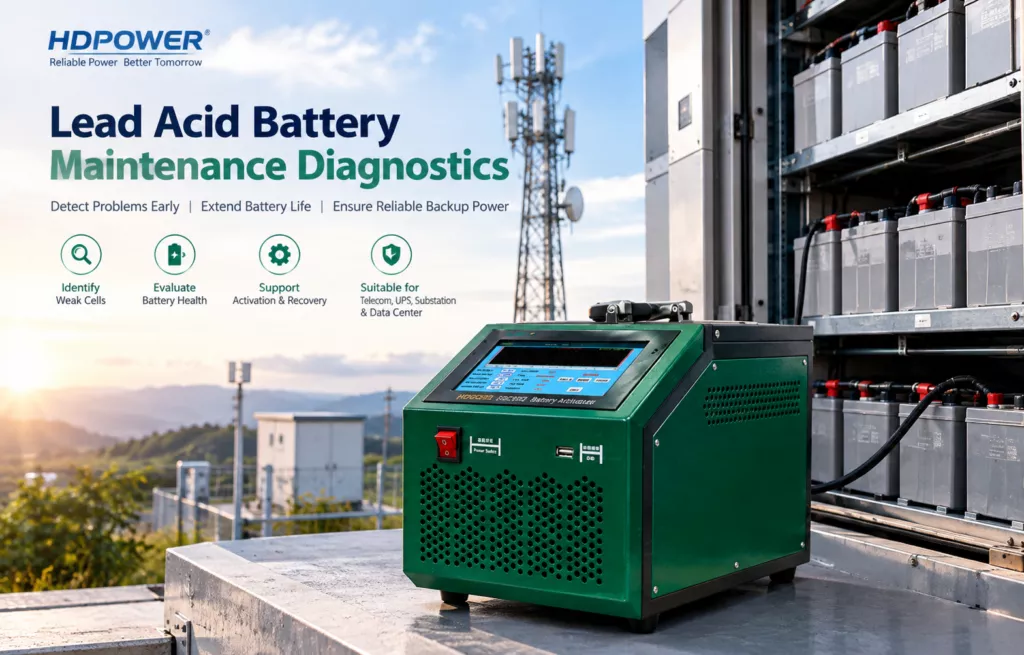
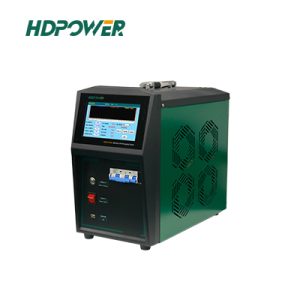
The HDGC3932 is designed for 2V, 6V and 12V lead-acid battery applications. Its published voltage range is 1.5–16V, with separate discharge and charge current ranges for the three nominal voltage classes. These ranges help users assess equipment compatibility, but they are not recommended settings for every battery. Actual parameters must be selected according to the battery specifications and condition.
6. Why Controlled Charge-Discharge Capability Matters
A conventional charger is primarily intended to recharge a battery. Individual conditioning may require a more structured sequence that combines charging, discharging and repeated cycles. Using dedicated equipment can make it easier to configure and repeat these operations while monitoring the battery’s response.
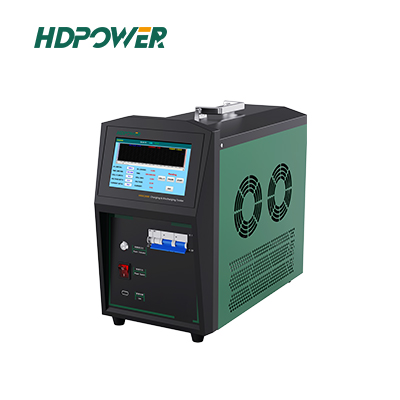
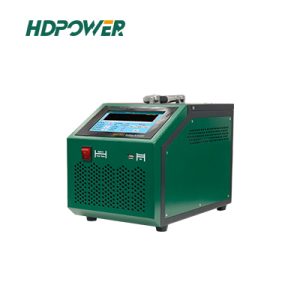
The HDPOWER HDGC3932 integrates constant-current discharge, intelligent charging and cyclical charge-discharge functions. It uses a high-frequency, low-voltage, high-current activation approach as part of its conditioning process. The purpose is to support maintenance of suitable lead-acid batteries with recoverable performance problems; it should not be interpreted as a guarantee that every aged or damaged battery can be restored.
The instrument provides a 7-inch LCD touchscreen, preset operating templates, data storage and communication through RS485 and USB. Its protection functions include over-temperature, over-current and current-runaway shutdown, as well as alarms for certain abnormal connection conditions. The equipment also provides voltage and current curves, data tables and report generation in Excel and Word formats.
These functions help service teams configure procedures, review operating data and retain records. Operators must be trained and follow battery-manufacturer requirements.
7. How to Evaluate Conditioning Results
Evaluate maintenance by measurable performance, not appearance or post-charge voltage alone.
Compare pre- and post-conditioning results using the same test method wherever possible. Relevant indicators may include:
- Terminal voltage measured under defined conditions.
- Discharge duration at a specified current.
- Delivered capacity calculated from the controlled discharge test.
- Voltage behavior during charging and discharging.
- Temperature trends and any protection events.
- Whether the battery meets the manufacturer’s or site’s acceptance criteria.
Higher open-circuit voltage does not prove that usable capacity has returned. Use a controlled discharge test for capacity verification. If results remain below the required threshold, consider replacement or further diagnosis.
For critical installations, keep reports with the battery’s maintenance history to identify recurring weak units, compare performance and support replacement planning.
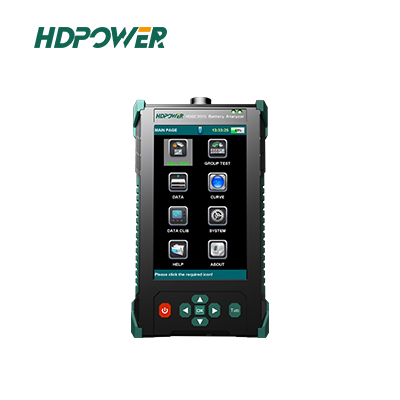
Where capacity verification is required, professional Battery Capacity Testing Equipment can provide additional discharge-test data to support maintenance decisions.
8. Applications in Critical Backup Power Systems
Telecommunications sites: Backup batteries support network availability during interruptions to the main supply. Maintenance teams may need to assess individual units in a battery string and document their condition across geographically distributed sites.
UPS and data centers: Battery reliability is part of the continuity plan for critical loads. A structured maintenance process helps distinguish units that may be suitable for conditioning from those that should be replaced.
Substations and power plants: Stationary DC systems support protection, control and emergency operations. Battery maintenance must follow strict site procedures, with traceable test records and clear acceptance criteria.
Industrial battery service providers: Contractors may handle different battery types and capacities for multiple customers. Preset procedures, repeatable measurements and exportable reports can help standardize service documentation.
Conditioning is only one part of battery lifecycle management; inspection, routine charging, capacity testing, environmental control and timely replacement remain essential.
9. HDPOWER HDGC3932 for 2V, 6V and 12V Battery Conditioning
For maintenance teams working with individual lead-acid batteries, the HDPOWER HDGC3932 combines activation, charging and discharging functions in one instrument. It is designed for 2V, 6V and 12V applications and supports configurable operating procedures for suitable batteries.
Its high-frequency, low-voltage, high-current activation technology works alongside constant-current discharge, intelligent charging and cyclic charge-discharge operation. The touchscreen interface and preset templates help operators configure procedures, while data storage, curve viewing and Excel/Word report generation support maintenance records and result review.
The HDGC3932 is intended for telecom maintenance contractors, UPS service providers, power utilities and industrial battery maintenance teams.
Before selecting equipment, confirm voltage, capacity, battery construction, required current, power supply and service conditions. Clarify whether the task is conditioning, capacity verification or both; they may require different procedures and complementary instruments.
For technical specifications, configuration details and application discussions, visit the HDGC3932 Lead-Acid Battery Activator or contact HDPOWER with your battery type and maintenance requirements.
See the HDGC3932 Battery Activator in Action
Discover how the HDPOWER HDGC3932 supports individual lead-acid battery maintenance through controlled charging, discharging, and activation cycles. Watch the product video to explore its operation, touchscreen interface, and practical features for maintaining 2V, 6V, and 12V lead-acid batteries.
Conclusion
Individual lead-acid battery conditioning is most useful when it is treated as a controlled, evidence-based maintenance activity rather than a guaranteed repair. The process begins with inspection and diagnosis, continues with battery-compatible charging and discharging operations, and ends with performance verification against a recorded baseline and defined acceptance criteria.
For 2V, 6V and 12V industrial lead-acid batteries, dedicated equipment such as the HDPOWER HDGC3932 can support this workflow through integrated activation, charging, discharging, monitoring and reporting functions. The key is to apply the correct procedure to the correct battery, observe safety limits and use measured results to decide whether to return the unit to service, monitor it or replace it.