Introduction
UPS systems are designed to provide uninterrupted power when the main power supply fails. However, the reliability of a UPS system depends not only on the UPS itself but also on the condition of its backup battery bank. A battery may show normal voltage during routine inspection while having significantly reduced usable capacity.
This is why UPS battery charge discharge testing is an important part of preventive battery maintenance. By controlling both charging and discharging processes, maintenance engineers can evaluate how a battery performs under defined electrical conditions, identify aging or underperforming batteries, and determine whether further maintenance or replacement is required.
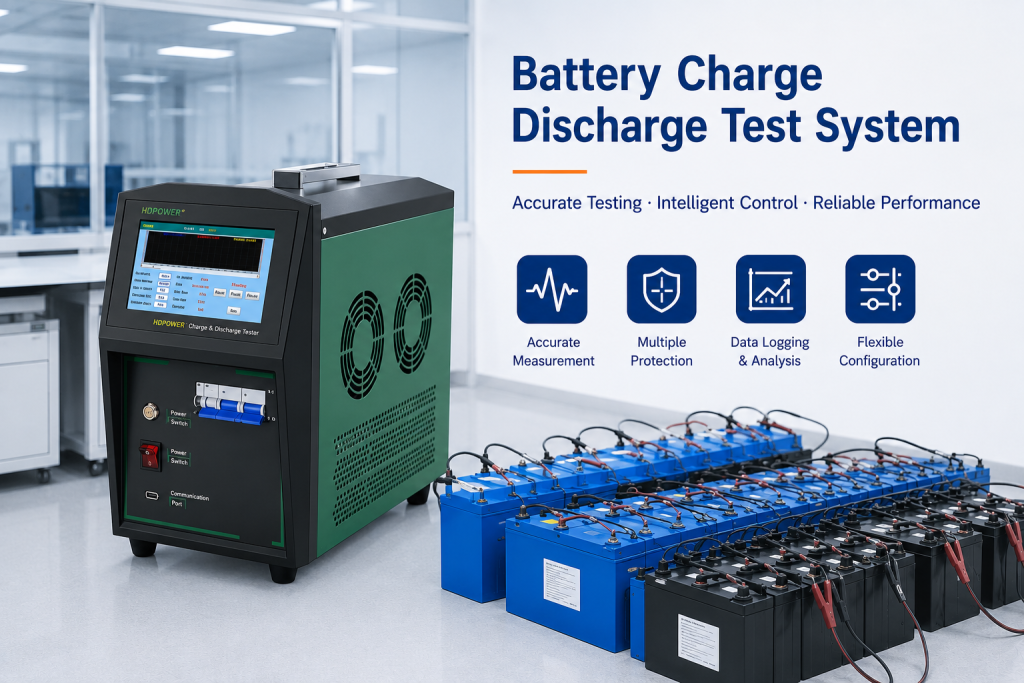
For industrial UPS systems using lead-acid batteries, a professional charging and discharging tester can combine capacity verification, controlled charging, discharge testing, activation, data recording, and report generation in one workflow.
Why UPS Battery Charge Discharge Testing Matters
A UPS battery operates differently when it is floating in standby mode and when it is required to provide emergency power. Measuring open-circuit voltage or terminal voltage alone cannot fully demonstrate whether the battery can deliver its rated backup capacity.
Controlled discharge testing provides more useful information because the battery is evaluated under a defined load. Engineers can observe voltage, current, discharge duration, and other parameters throughout the test.
Regular testing can help identify:
- Batteries with reduced usable capacity
- Weak cells within a battery string
- Abnormal voltage drops during discharge
- Charging problems
- Capacity degradation caused by aging
- Batteries requiring activation or further maintenance
- Battery strings that may not provide the expected backup time
For critical facilities such as data centers, telecom networks, substations, and industrial control rooms, this information can be important for preventive maintenance planning.
For a broader introduction to industrial battery diagnostics, you can internally link this section to Battery Testing Equipment.
What Is UPS Battery Charge Discharge Testing?
UPS battery charge discharge testing combines controlled charging and controlled discharge into a structured maintenance or diagnostic process.
During charging, the tester supplies the battery with a controlled current or voltage according to the selected charging mode. During discharge, the tester applies a controlled load and records the battery’s electrical response.
A typical test may include:
- Initial battery condition inspection
- Battery voltage and connection verification
- Controlled discharge
- Voltage and current monitoring
- Capacity evaluation
- Controlled recharge
- Activation or maintenance cycles when required
- Data analysis and report generation
The exact procedure depends on the battery chemistry, rated voltage, capacity, manufacturer requirements, and UPS system configuration.
For industrial lead-acid battery banks, constant-current discharge is commonly used for capacity evaluation because the discharge conditions can be clearly defined and compared between different tests.
How Does a UPS Battery Discharge Test Work?
A controlled discharge test begins by connecting the battery bank to a suitable discharge tester.
The operator sets the required test parameters, such as discharge current, voltage limits, and test duration. The equipment then applies the defined load while continuously monitoring the battery.
During the test, important parameters include:
- Battery voltage
- Discharge current
- Discharge time
- Individual cell voltage, when supported
- Capacity calculation
- Voltage variation
- End-of-discharge condition
The relationship between voltage, current, and time provides useful information about the battery’s actual performance.
For example, a battery that reaches the specified end voltage much earlier than expected may indicate reduced capacity or an abnormal condition. Similarly, a significant voltage difference between cells in the same string may indicate that further investigation is necessary.
For more information about controlled discharge methods, an appropriate internal link can be added to Battery Discharge Testing.
Why Charging Is Also Important
Discharge testing shows how a battery delivers energy, but charging performance is another important part of battery maintenance.
A battery that cannot accept or retain charge properly may not be ready for the next power outage even if it passes a basic voltage check.
Depending on the battery and application, professional equipment may support several charging modes, including:
- Constant-current charging
- Constant-voltage charging
- Current-limited charging
- Trickle charging
- Float charging
- Programmable charging cycles
Combining charging and discharge functions allows engineers to perform a more complete maintenance procedure without switching between multiple pieces of equipment.
For lead-acid batteries affected by sulfation or reduced activity, controlled activation cycles may also be used as part of a maintenance strategy. However, activation should not be considered a replacement for battery replacement when a battery has reached the end of its serviceable life.
UPS Battery Capacity Testing vs. Voltage Testing
Voltage measurement is useful for routine inspection, but it does not provide the same information as a controlled capacity test.
A battery can show an apparently normal voltage while having insufficient capacity to support the connected UPS load for the required period.
The key difference is the testing objective:
| Method | Main Purpose |
| Voltage measurement | Check basic electrical condition |
| Internal resistance measurement | Identify abnormal resistance and potential weak batteries |
| Discharge testing | Evaluate actual discharge performance |
| Capacity testing | Estimate usable battery capacity |
| Charging testing | Evaluate charging response |
| Charge/discharge cycling | Evaluate performance during repeated operation |
For this reason, UPS battery maintenance programs often use several complementary testing methods rather than relying on one measurement.
Choosing UPS Battery Charge Discharge Test Equipment
Selecting suitable equipment is critical because UPS battery systems can have significantly different voltage and current requirements.
Before purchasing equipment, engineers should evaluate at least the following factors.
- Battery Voltage Range
The tester must match the nominal voltage and actual operating voltage of the battery system.
Industrial UPS and DC backup systems may use different voltage configurations, so selecting equipment with an appropriate voltage range is essential.
- Discharge Current
The required discharge current depends on the battery capacity, test method, and testing objective.
For larger battery banks, the equipment may need a higher current capability or parallel operation to achieve the required test conditions.
- Charging Capability
If the equipment will be used for both charging and discharging, engineers should check the available charging current, voltage range, and charging modes.
A system supporting multiple charging modes provides greater flexibility for different battery maintenance procedures.
- Data Recording and Reporting
Manual recording of voltage and current data can be time-consuming and may introduce errors.
Professional testing equipment should provide automatic data recording and preferably generate test reports containing measurement data, curves, and capacity results.
This is particularly useful when battery maintenance records need to be retained for periodic inspections or service documentation.
- Protection Functions
Battery testing involves relatively high currents, so protection functions are important.
Depending on the equipment design, useful protection functions may include overcurrent protection, short-circuit protection, reverse-connection protection, over-temperature protection, and emergency shutdown.
HDGC3985 for Industrial UPS Battery Testing
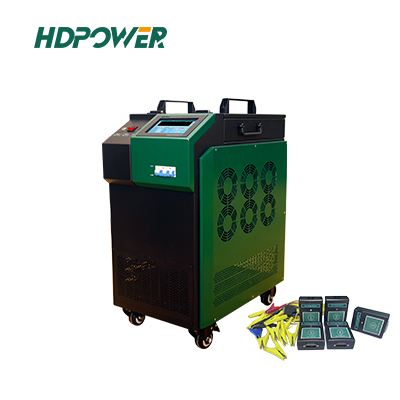
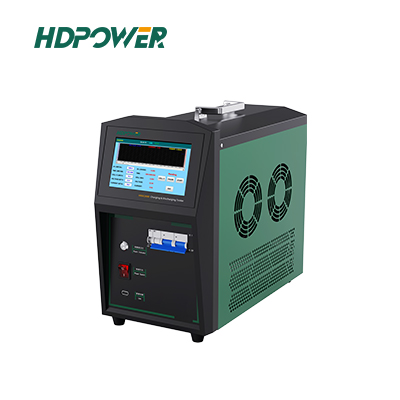
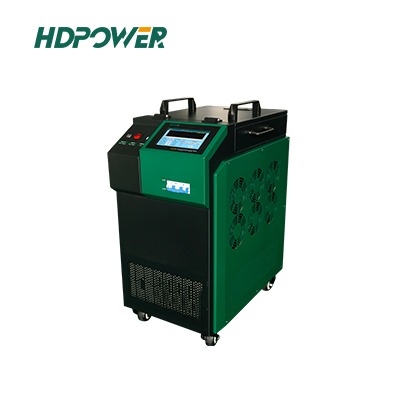
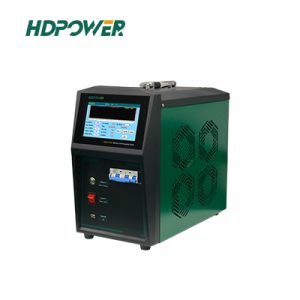
HDPOWER’s HDGC3985 Battery Charging and Discharging Tester is designed for industrial battery maintenance and controlled charge/discharge testing.
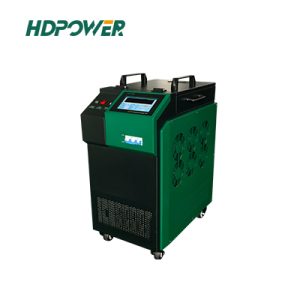
The equipment supports multiple operating modes, including constant-current discharge, constant-power discharge, constant-current charging, constant-voltage current-limiting charging, and trickle/float charging.
For maintenance teams, this allows charging, discharging, activation, and capacity-related testing to be handled through one platform.
The HDGC3985 supports different industrial DC battery system configurations, including 48V, 110V, 220V, 380V, and 480V systems, with model-dependent voltage and current ranges. Its discharge current can reach up to 300A on the 48V configuration, while parallel operation can be used when higher discharge current is required.
The equipment also features a 7-inch touchscreen and supports professional data analysis. Test information can be displayed through voltage and current curves, cell-related data, and other test results, with reports available for further analysis and documentation.
Applications Beyond UPS Systems
Although UPS systems are an important application, industrial battery charge discharge testing is also relevant to other critical backup power environments.
Telecom Base Stations
Telecommunication systems depend on backup batteries to maintain communication during power interruptions. Regular testing can help maintenance teams identify aging batteries before they affect network reliability.
Substations and Power Utilities
DC battery systems in substations support protection, control, and switching equipment. Controlled testing helps verify whether the battery bank can provide the required backup power when the AC supply is unavailable.
Data Centers
Data centers require reliable backup power to maintain critical IT infrastructure. Battery testing can be integrated into preventive maintenance programs to evaluate battery capacity and identify abnormal performance.
Rail Transit
Railway and rail transit systems use batteries for various backup and control functions. Battery testing helps maintenance teams verify battery performance under defined operating conditions.
Industrial Backup Power
Factories, control systems, emergency systems, and other industrial facilities may use lead-acid battery banks as standby power sources. Charge/discharge testing can help establish a more data-driven maintenance schedule.
Best Practices for UPS Battery Testing
A reliable testing program should be systematic rather than performed only after a battery problem occurs.
First, establish baseline data when the battery system is new or known to be in good condition. Future test results can then be compared against historical records.
Second, use consistent test conditions whenever possible. Changes in discharge current, temperature, test duration, or cutoff voltage can affect the results and make historical comparison more difficult.
Third, combine different diagnostic methods. Capacity testing, voltage monitoring, internal resistance testing, and visual inspection can provide different perspectives on battery condition.
Fourth, maintain complete test records. A report containing test date, battery identification, electrical parameters, voltage curves, capacity results, and maintenance actions can help engineers track degradation over time.
Finally, safety procedures should always be followed. Industrial battery banks can contain high voltage and high current energy, so qualified personnel should conduct testing according to the battery manufacturer’s instructions and the applicable electrical safety procedures.
For a complete maintenance workflow, you can also visit our UPS Battery Maintenance Tools.
Conclusion
UPS battery reliability cannot be determined from voltage readings alone. UPS battery charge discharge testing provides a controlled way to evaluate battery performance, verify usable capacity, examine charging behavior, and identify batteries that require further maintenance or replacement.
For industrial users, the right testing equipment should match the battery voltage, current requirements, testing objectives, and application environment. Features such as multiple charging and discharge modes, automatic data recording, capacity analysis, protection functions, and report generation can make routine battery maintenance more efficient and traceable.
For UPS systems, telecom infrastructure, substations, data centers, and other industrial backup power applications, a professional battery charging and discharging tester can become an important part of a preventive maintenance program.
HDPOWER provides battery testing and maintenance equipment for industrial applications, including charging, discharge testing, capacity verification, activation, and battery condition analysis. For a specific UPS battery configuration, engineers can select the appropriate equipment according to system voltage, battery type, current requirements, and required test procedure.