Introduction
As lithium-ion batteries move into higher-voltage electric vehicles, energy storage systems, industrial equipment, and battery recycling, testing a complete battery pack requires more than a simple voltage measurement. Engineers and service teams need controlled discharge, accurate electrical measurements, reliable protection, and traceable test data to evaluate how a battery pack performs under defined operating conditions.
This is where Lithium Battery Load Testing Equipment becomes valuable. Unlike a basic handheld battery tester designed for quick diagnostics, industrial load testing equipment is built to handle higher voltage, greater energy, longer discharge periods, and more demanding battery-pack applications.
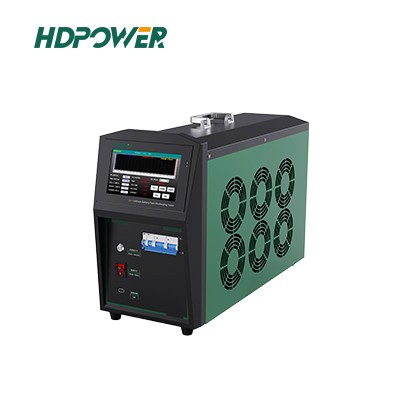
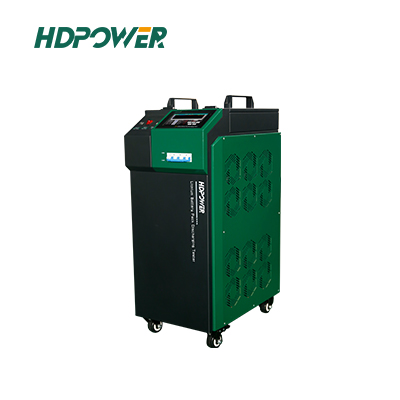
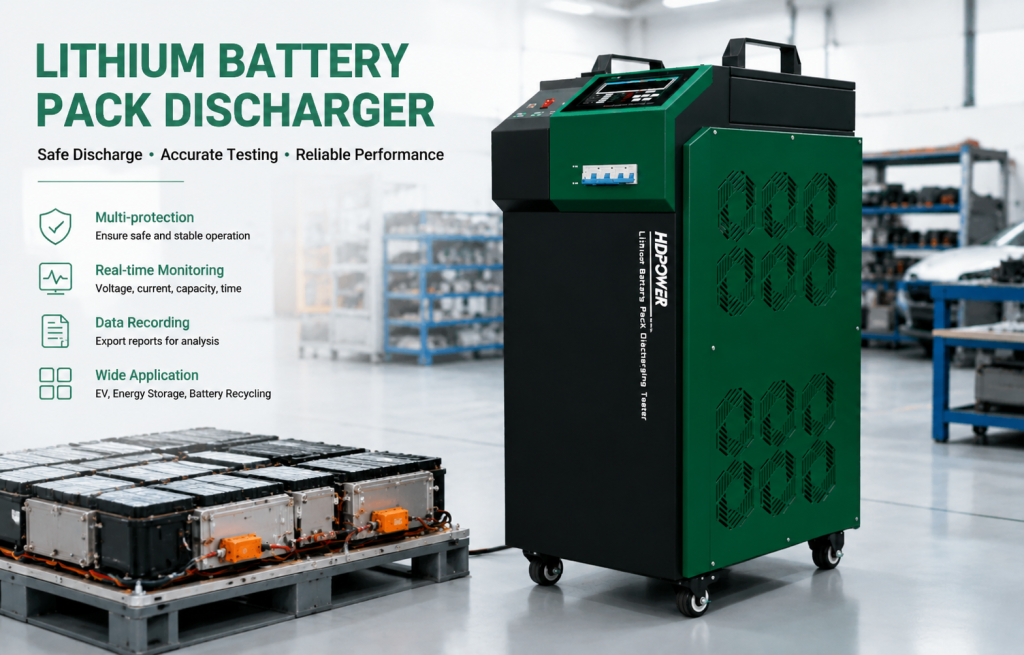
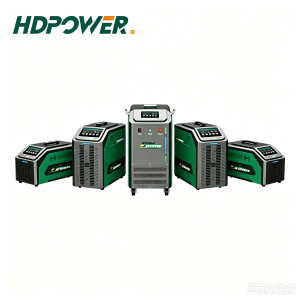
For EV and ESS applications in particular, the right equipment can help engineers verify battery performance, identify abnormal packs, perform controlled energy release, and support maintenance or recycling workflows. HDPOWER provides high-voltage lithium battery discharge solutions designed for these industrial requirements, including CP-F600 and CP-F800 models supporting battery pack discharge applications up to 600V and 800V respectively.
What Is Lithium Battery Load Testing Equipment?
Lithium battery load testing equipment is an industrial testing system used to apply a controlled electrical load to a lithium battery, battery module, or battery pack while monitoring important electrical parameters.
Depending on the application, the equipment may control discharge current or discharge power and continuously record parameters such as:
- Battery voltage
- Discharge current
- Discharge power
- Discharge time
- Discharged capacity
- Cut-off voltage
- Discharge curves
- Test status and alarms
The purpose is not simply to determine whether a battery has voltage. Instead, the equipment provides a controlled way to evaluate the battery under a defined discharge condition.
For high-voltage battery packs, this distinction is especially important. A pack can show an acceptable voltage at rest while behaving differently when subjected to a controlled load. Professional testing equipment therefore gives engineers a more practical method for evaluating pack performance and preparing batteries for maintenance, storage, transportation, repair, or recycling.
Why High-Voltage Battery Packs Need Specialized Equipment
Battery voltage and energy capacity have increased significantly in modern EV and energy storage applications. As a result, testing equipment must be designed around the actual electrical characteristics of the battery pack.
A low-voltage handheld tester may be suitable for quick inspection of individual cells, but it is not necessarily appropriate for a high-voltage battery pack.
Industrial battery pack testing equipment should be selected according to several factors.
- Wide Voltage Range
The first consideration is whether the equipment can safely operate within the voltage range of the battery being tested.
For EV battery packs, energy storage batteries, and recycled battery systems, voltage can vary considerably between applications. HDPOWER’s CP-F600 supports DC 10–600V, while CP-F800 supports DC 10–800V, providing options for different high-voltage battery pack requirements.
- Appropriate Discharge Power
Voltage alone does not determine the testing capability of a load system. Engineers should also consider maximum discharge current and power.
For example, a high-capacity battery pack may require substantial power dissipation during a discharge test. The equipment must therefore be capable of handling the expected energy without exceeding its thermal or electrical limits.
A properly selected system should match the battery’s voltage, current, energy capacity, and expected test duration.
- Constant Current and Constant Power Modes
Different test procedures require different load strategies.
Constant current (CC) discharge maintains a specified current throughout the test, while constant power (CP) discharge adjusts current as battery voltage changes to maintain the required power level.
Having both modes gives engineers greater flexibility when testing different battery packs and operating conditions.
This is particularly useful when the objective is to compare packs under standardized conditions or simulate specific energy-release requirements.
- Reliable Cut-Off Control
Battery discharge should not continue indefinitely. A professional system needs configurable cut-off conditions based on voltage, time, capacity, or other defined parameters.
Accurate cut-off control helps prevent inappropriate over-discharge and allows different battery test procedures to be repeated consistently.
Key Applications of Lithium Battery Load Testing Equipment
The industrial applications of lithium battery load testing equipment extend beyond laboratory testing. The equipment can support several stages of a battery’s lifecycle.
EV Battery Pack Testing
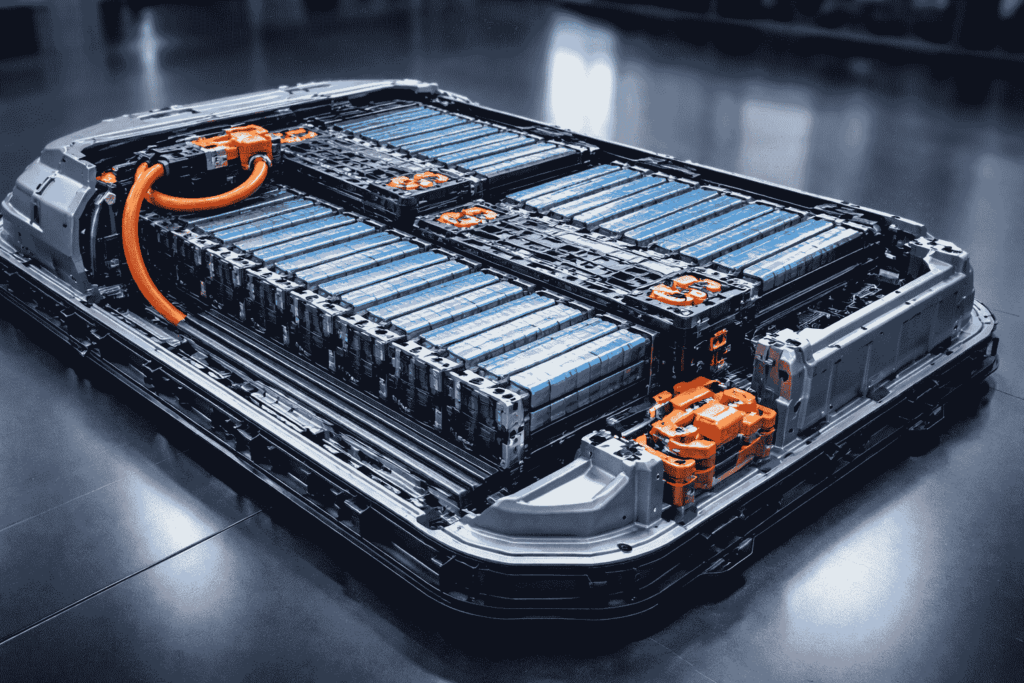
Electric vehicle battery packs contain multiple modules and cells connected into a high-voltage system. Testing the complete pack can help service providers evaluate its discharge behavior before further maintenance or repair.
For EV workshops and battery service centers, controlled discharge is also important when a battery pack needs to be safely reduced to a lower energy level before dismantling or repair.
In these situations, high-voltage Lithium ion Battery Discharger equipment can provide a practical solution for controlled energy release.

Energy Storage System Testing
Energy storage systems require reliable battery performance because a large number of cells and modules may operate together.
Load testing equipment can be used during commissioning, maintenance, troubleshooting, and performance verification. Engineers can record voltage, current, power, and discharge behavior to establish a clearer picture of the condition of the battery system.
For larger ESS projects, equipment selection should consider the battery voltage range, discharge power, test duration, cooling requirements, and data-management capabilities.
Battery Recycling and Second-Life Applications
Battery recycling and second-life battery businesses have different testing requirements from new battery manufacturing.
Before dismantling, transporting, sorting, or processing a used battery pack, controlled discharge may be required to reduce stored electrical energy. After that, testing can help determine whether the battery is suitable for recycling or potential second-life applications.
This makes high-voltage discharge equipment particularly useful for battery recycling companies and service providers working with used EV and ESS packs.
Battery Manufacturing and R&D
Battery manufacturers and research laboratories may also use load testing equipment for pack-level performance evaluation.
The equipment can support repeatable discharge procedures, parameter recording, and comparative testing between different battery packs. When integrated into a broader Lithium Battery Tester Series, load testing can become one part of a complete battery evaluation workflow.
Load Testing Equipment vs. Other Battery Testing Tools
Not every battery problem requires the same testing method.
A battery internal resistance tester is useful for quickly identifying electrical differences between cells or batteries. A capacity tester focuses on determining usable capacity through controlled discharge. A charge/discharge tester can perform both charging and discharging processes.
Load testing equipment, however, focuses on applying a controlled electrical load and observing how the battery responds.
For example:
| Equipment Type | Main Purpose | Typical Application |
| Internal Resistance Tester | Measure resistance and voltage | Cell and battery screening |
| Capacity Tester | Verify discharge capacity | Battery capacity evaluation |
| Charge/Discharge Tester | Perform charging and discharging | R&D and battery maintenance |
| Load Testing Equipment | Apply controlled electrical load | Pack performance and controlled discharge |
| Battery Discharger | Safely release stored energy | EV, ESS, recycling and service |
For a complete battery maintenance workflow, these technologies can complement one another rather than replace each other.
How to Choose the Right Lithium Battery Load Testing Equipment
Before purchasing equipment, engineers should define the actual battery testing scenario instead of selecting a model based only on maximum voltage.
Consider the following questions:
What is the battery voltage range?
The equipment must cover the minimum and maximum voltage of the battery pack.
What discharge current or power is required?
The load capacity should match the intended test procedure and battery energy level.
Is constant current or constant power required?
Applications with different testing objectives may require different discharge modes.
How long will the test run?
Long-duration testing increases thermal-management requirements and should be considered when selecting equipment.
What data needs to be recorded?
For professional maintenance and R&D, voltage, current, capacity, time, and discharge curves can provide valuable documentation.
What protection functions are available?
Over-temperature, over-current, abnormal-condition alarms, reverse-polarity protection, and automatic shutdown are important considerations for industrial battery testing equipment. HDPOWER’s equipment range incorporates multiple protection functions for battery testing and maintenance applications.
Is the equipment intended for field service or a fixed testing area?
Portable equipment can be advantageous for service teams, while higher-power systems may be better suited to workshops, recycling facilities, laboratories, and production environments.
Why Choose HDPOWER for Lithium Battery Load Testing?
HDPOWER develops battery testing and maintenance equipment for power systems, telecommunications, rail transit, energy storage, automotive applications, and other industrial fields. Its product portfolio includes battery discharge testers, lithium battery dischargers, battery load testers, battery capacity testers, and lithium battery charge/discharge equipment.
For high-voltage lithium battery applications, CP-F600 and CP-F800 are particularly relevant when controlled battery-pack discharge is required.
This allows customers to select equipment according to the actual battery voltage, discharge requirements, application environment, and testing objectives instead of relying on a one-size-fits-all tester.
Build a More Reliable Battery Testing Workflow
Lithium battery testing is becoming increasingly important as EVs, energy storage systems, and battery recycling continue to expand. For high-voltage battery packs, reliable testing requires equipment capable of handling the electrical energy involved while maintaining accurate control and detailed data recording.
The right Lithium Battery Discharge Equipment can support controlled energy release, pack evaluation, maintenance, recycling, and service operations. Combined with capacity testing, internal resistance measurement, and charge/discharge analysis, it can form a more complete battery testing workflow.
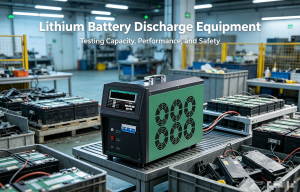
When selecting Lithium Battery Load Testing Equipment, focus on the complete application rather than a single specification. Voltage range, discharge power, operating modes, cut-off control, safety protection, data recording, and long-term reliability should all be considered.
For EV battery service centers, ESS operators, battery recycling companies, laboratories, and industrial battery manufacturers, choosing equipment that matches the battery pack and testing process can improve testing efficiency while providing more consistent and traceable results.