Introduction
Battery performance can decline gradually without obvious warning signs. A battery may still show a normal terminal voltage while its internal condition has already deteriorated. For UPS systems, telecommunications infrastructure, data centers, substations, rail transit and industrial backup power systems, identifying weak batteries before failure is essential for maintaining reliable power availability.
A Battery Condition Analyzer provides a practical way to evaluate the electrical condition of batteries by measuring key parameters such as voltage, internal resistance and conductance. Instead of relying on visual inspection or voltage measurement alone, professional battery diagnostic equipment provides more useful information for identifying aging batteries, comparing battery consistency and planning preventive maintenance.
For industrial battery maintenance teams, the goal is not simply to determine whether a battery is working today. The more important question is whether the battery can continue to provide reliable performance when backup power is actually required.
What Is a Battery Condition Analyzer?
A Battery Condition Analyzer is a diagnostic instrument designed to evaluate the condition and performance of batteries through electrical measurements. Depending on the equipment design, it can measure parameters such as battery voltage, internal resistance and conductance, while storing test results for comparison and analysis.
Battery condition testing is particularly important for battery banks containing multiple cells or batteries connected in series. Even when the entire battery bank appears to operate normally, individual batteries may deteriorate at different rates. One weak battery can reduce the reliability of the complete system.
A professional Battery Analyzer helps maintenance personnel test individual batteries as well as battery groups, identify abnormal measurements and create a more systematic battery maintenance process.
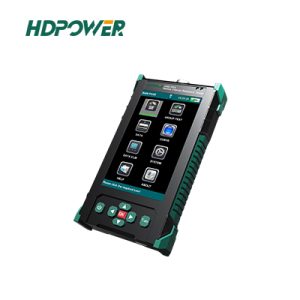
For industrial applications, battery condition analysis can support:
- Preventive battery maintenance
- Early identification of weak batteries
- Battery bank consistency evaluation
- Aging trend analysis
- Battery replacement decisions
- UPS and telecom backup power maintenance
- Battery quality inspection
The objective is to turn battery measurements into actionable maintenance information rather than relying only on periodic visual inspection.
Why Battery Condition Testing Is Important
Battery degradation is influenced by many factors, including operating temperature, charging conditions, discharge cycles, age and maintenance practices. Over time, these factors can cause capacity loss, increasing internal resistance and deteriorating discharge performance.
One of the problems with conventional battery inspection is that terminal voltage alone does not provide a complete picture of battery health. A battery can maintain a seemingly normal voltage while its ability to deliver current has already declined.
For this reason, professional battery condition testing combines multiple electrical indicators to provide a more useful assessment.
Regular testing can help maintenance teams answer several important questions:
- Which batteries are showing abnormal characteristics?
- Are batteries in the same bank maintaining consistent performance?
- Which batteries require closer monitoring?
- Is battery aging occurring gradually or rapidly?
- Should a particular battery be replaced before the next maintenance cycle?
- Can the existing battery bank continue to provide reliable backup power?
This approach changes battery maintenance from reactive replacement to condition-based maintenance.
Internal Resistance: A Key Indicator of Battery Condition
Internal resistance is one of the most useful parameters for evaluating battery condition. It represents the resistance encountered by current inside the battery and affects voltage stability and discharge performance.
As a battery ages or deteriorates, its internal resistance may increase. A significant difference in internal resistance between batteries of the same type and application can also indicate abnormal battery condition.
A professional Battery Internal Resistance Tester can quickly measure resistance and voltage without requiring a full capacity discharge test for every routine inspection.
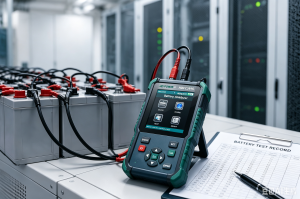
Internal resistance testing is useful for:
- Detecting aging batteries
- Finding abnormal batteries in a battery string
- Comparing battery consistency
- Supporting battery replacement decisions
- Tracking battery condition over time
- Reducing unnecessary battery replacement
However, internal resistance should not be interpreted as the only indicator of battery health. Battery condition depends on multiple factors, and maintenance personnel should consider voltage, resistance, application history and, when necessary, actual capacity testing.
This is why a Battery Condition Analyzer that combines several measurement functions can provide more practical information than a simple voltage meter.
How Does a Battery Condition Analyzer Work?
The basic testing process is straightforward.
First, the technician connects the analyzer to the battery or battery group. The instrument measures the battery’s electrical parameters and displays the results on the screen. Depending on the analyzer, the measurement may include voltage, internal resistance and conductance.
The measured data can then be compared with reference values or previous test records.
For battery banks, technicians can test batteries individually and compare their measurements. A battery showing a significant deviation from the rest of the group deserves additional inspection.
This comparison is especially useful because absolute values do not always tell the complete story. For example, batteries of the same model, age and operating environment should normally have relatively consistent electrical characteristics. A sudden increase in resistance or a significant deviation from neighboring batteries can provide an early warning.
Advanced battery analyzers can also store large amounts of testing data and export results for further analysis. This makes it possible to establish historical records and monitor battery condition over multiple maintenance cycles.
Battery Condition Analyzer vs. Battery Capacity Tester
Battery condition analysis and battery capacity testing are related, but they are not exactly the same.
A battery capacity test determines how much usable energy a battery can actually deliver under controlled charge and discharge conditions. It provides direct information about available capacity but can require considerably more time and operational preparation.
A Battery Condition Analyzer, on the other hand, is generally better suited to fast routine inspection. By measuring parameters such as voltage and internal resistance, technicians can quickly identify batteries that may require further investigation.
For many industrial maintenance programs, the two methods can complement each other.
A typical strategy is:
- Perform routine condition testing on the battery bank.
- Identify batteries with abnormal measurements.
- Compare results with historical records and neighboring batteries.
- Perform detailed capacity testing when necessary.
- Replace or maintain batteries according to the test results.
This approach can reduce unnecessary full capacity tests while ensuring that suspicious batteries receive additional attention.
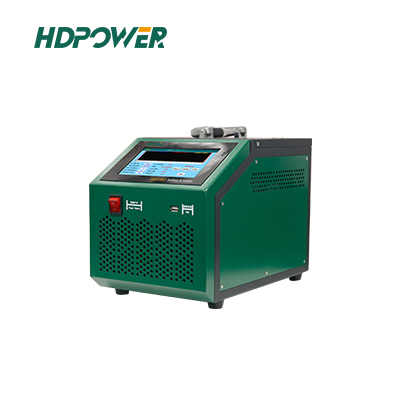
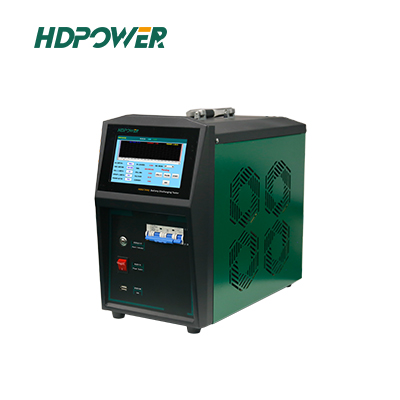
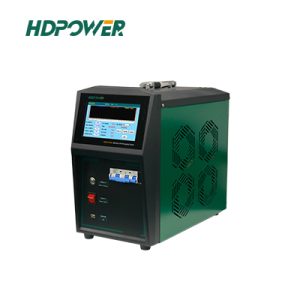
For detailed capacity verification, a dedicated Battery Capacity Tester is more appropriate because it can perform controlled discharge testing and evaluate actual battery capacity.
Applications of Battery Condition Analyzers
UPS Battery Maintenance
UPS systems depend on batteries to provide emergency power when the primary power supply fails. A weak battery can therefore become a critical point of failure.
Regular battery condition testing helps UPS maintenance teams identify abnormal batteries before an emergency occurs. Measuring voltage and internal resistance provides useful information for battery inspection and replacement planning.
HDPOWER’s battery analyzers are designed for applications including data center UPS battery testing and can help maintenance engineers identify weak batteries during routine inspections.
Telecom Base Stations
Communication base stations commonly use battery banks as backup power sources. Because many sites operate continuously and may be distributed across different locations, efficient field testing is important.
A portable analyzer allows technicians to check batteries on site and compare individual battery measurements. This can help identify aging batteries and reduce the risk of unexpected communication interruptions.
Substations and Power Utilities
DC battery systems in substations support protection, control and emergency power functions. Battery failure can affect the reliability of critical electrical equipment.
A Battery Condition Analyzer can be used during periodic maintenance to measure battery voltage and internal resistance, identify abnormal batteries and create inspection records.
Data Centers
Data centers require highly reliable backup power systems. Battery condition testing is an important part of UPS preventive maintenance because battery degradation may not be obvious during normal operation.
Regular measurement and historical data comparison can help maintenance teams identify changes in battery condition and schedule corrective action before backup power performance is compromised.
Rail Transit and Industrial Systems
Railway signaling, emergency power systems and industrial facilities may also depend on battery banks. In these environments, maintenance personnel need testing equipment that is portable, reliable and capable of providing rapid measurements.
A handheld analyzer can simplify field inspections and reduce the time required to evaluate individual batteries.
What Should You Look for in a Battery Condition Analyzer?
Choosing the right analyzer depends on the battery type, application and maintenance requirements.
- Measurement Accuracy
Accurate measurement is essential when comparing batteries with small differences in internal resistance or voltage. The instrument should provide sufficient resolution and stable measurement performance.
- Multiple Measurement Parameters
An analyzer that measures both voltage and internal resistance provides more useful information than a device that only measures voltage. Conductance measurement and other diagnostic functions can provide additional reference information.
- Online Testing Capability
For large battery systems, disconnecting bus bars or taking equipment offline can increase maintenance time and operational risk. Online testing capability can therefore be an important feature for industrial applications.
HDGC3915 supports online and offline measurement without disassembling or disconnecting the bus bar and is designed with anti-interference capability for field testing.
- Data Storage and Reporting
Battery maintenance is more effective when test results can be stored and compared over time. Large storage capacity, USB data export and report generation can help maintenance teams create standardized battery inspection records.
- Portability
For telecom sites, substations and distributed backup power systems, a lightweight handheld instrument can significantly improve testing efficiency.
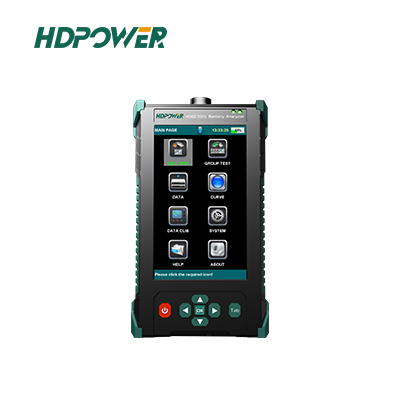
HDGC3915 uses a handheld design with a 5-inch touchscreen and weighs approximately 0.45 kg, making it suitable for single-operator field inspections.
HDGC3915 Battery Analyzer for Professional Battery Condition Testing
For maintenance teams that need rapid battery condition assessment, the HDGC3915 is designed to combine internal resistance and voltage measurement in a portable testing instrument.
The HDGC3915 adopts an AC discharge test method to measure battery voltage and internal resistance and uses the results to evaluate battery capacity and technical condition. It supports both individual battery and battery group measurements.
Its internal resistance measurement range is 0.01 mΩ to 120 mΩ, while the voltage measurement range is 1.000 V to 25 V. The instrument also supports conductance measurement from 20 to 19,990 S.
For maintenance applications, the analyzer provides several practical functions:
- Online and offline battery testing
- Single battery and battery group measurement
- 5-inch color touchscreen
- Built-in reference values for battery internal resistance
- Large data storage capacity
- USB data export
- Excel and Word report generation
- Portable handheld design
These functions make the HDGC3915 suitable for UPS rooms, telecom base stations, substations, data centers, rail transit systems and battery manufacturing applications.
For customers looking for professional battery diagnostic equipment, the HDGC3915 can be used as part of a preventive battery maintenance program to quickly identify batteries that require further testing or replacement.
Build a More Reliable Battery Maintenance Strategy
Battery failure is often the result of gradual degradation rather than a sudden event. The challenge for maintenance teams is to identify this degradation early enough to take action.
A Battery Condition Analyzer provides a practical solution by combining electrical measurements with historical data and battery-to-battery comparison. Instead of replacing batteries based only on age or reacting after a failure, maintenance teams can make more informed decisions based on actual test results.
For routine inspection, internal resistance and voltage testing can quickly identify abnormal batteries. When deeper verification is required, capacity testing can be added to determine the actual performance of the battery.
This layered testing strategy can help reduce unnecessary replacement, improve maintenance efficiency and increase the reliability of critical backup power systems.
Whether the application is a UPS room, telecom base station, substation, data center or industrial battery bank, professional battery condition analysis provides valuable information for preventive maintenance.
By combining accurate measurements, portable testing equipment and systematic data management, engineers can identify weak batteries earlier, plan maintenance more effectively and improve the long-term reliability of battery-powered systems.